IN Brief:
- Astute Group will present Oxley's existing defence lighting capabilities at electronica in Munich on 10–13 November 2026.
- The portfolio covers tailored LED assemblies for aircraft, ships and land vehicles, including night vision compatible installations.
- Oxley combines optical, mechanical, electrical and software engineering with prototyping and environmental testing facilities.
Astute Group will feature specialist LED lighting developed by British manufacturer Oxley at electronica 2026 in Munich, with attention to the installation requirements of military aircraft, naval vessels and land vehicles. The planned presentation covers existing design and manufacturing capabilities rather than a newly launched lighting system or an announced defence procurement contract.
Astute outlined the programme on 21 October, ahead of the exhibition at Messe München from 10 to 13 November. Its technical team will be available in Hall C5, Stand 421, to discuss applications where standard lamps do not meet the available space, optical output, mounting or environmental requirements. Oxley is one of several manufacturers represented in Astute’s wider electronics programme at the show.
The specification of a light begins with the function it must perform. Cockpit illumination allows instruments and controls to be read, while exterior aircraft lighting can indicate position, support taxiing or illuminate an area during landing. On a ship, navigation, bridge and flight deck lighting have different requirements; vehicle interior and external lamps introduce further combinations of visibility, power supply and physical protection.
Oxley’s work covers optical, mechanical, electrical and software engineering, allowing the light source, its housing and its control arrangements to be developed together. An installation may demand a particular beam direction or intensity, but it must also fit available structure and operate within the platform’s electrical and environmental limits. Changing one part of the assembly can alter the requirements imposed on others.
Night vision compatibility is a particular consideration for military aircraft. Goggles amplify selected light reaching their sensors, and unsuitable cockpit or external illumination can interfere with the image seen by the wearer. Lighting therefore needs an appropriate spectral output as well as sufficient visible illumination for personnel who must read controls and perform their tasks.
Oxley manufactures night vision imaging system compatible cockpit components and offers upgrade services for aircraft already in service. Its established range includes floodlights, panel illumination, warning indicators and optical filters. The company describes retrofit experience covering several fixed-wing and rotary-wing aircraft types, although compatibility and approval still depend on the particular equipment and aircraft configuration.
Some installations also require infrared lighting for specified operating modes. Oxley offers visible, infrared and dual-mode products, but the purpose of a particular lamp must be distinguished from the complete aircraft’s operational capability. An individual night vision compatible component does not establish that every other source of light, display or external fitting on the platform meets the same requirement.
External aviation lights present additional constraints because their beam pattern, position and mechanical shape influence whether the intended area can be illuminated or an aircraft can be seen as required. The optical design must be considered alongside the surrounding airframe, available electrical supply and the environmental conditions associated with the mounting position. A standard lamp may be unsuitable even when its nominal light output is adequate.
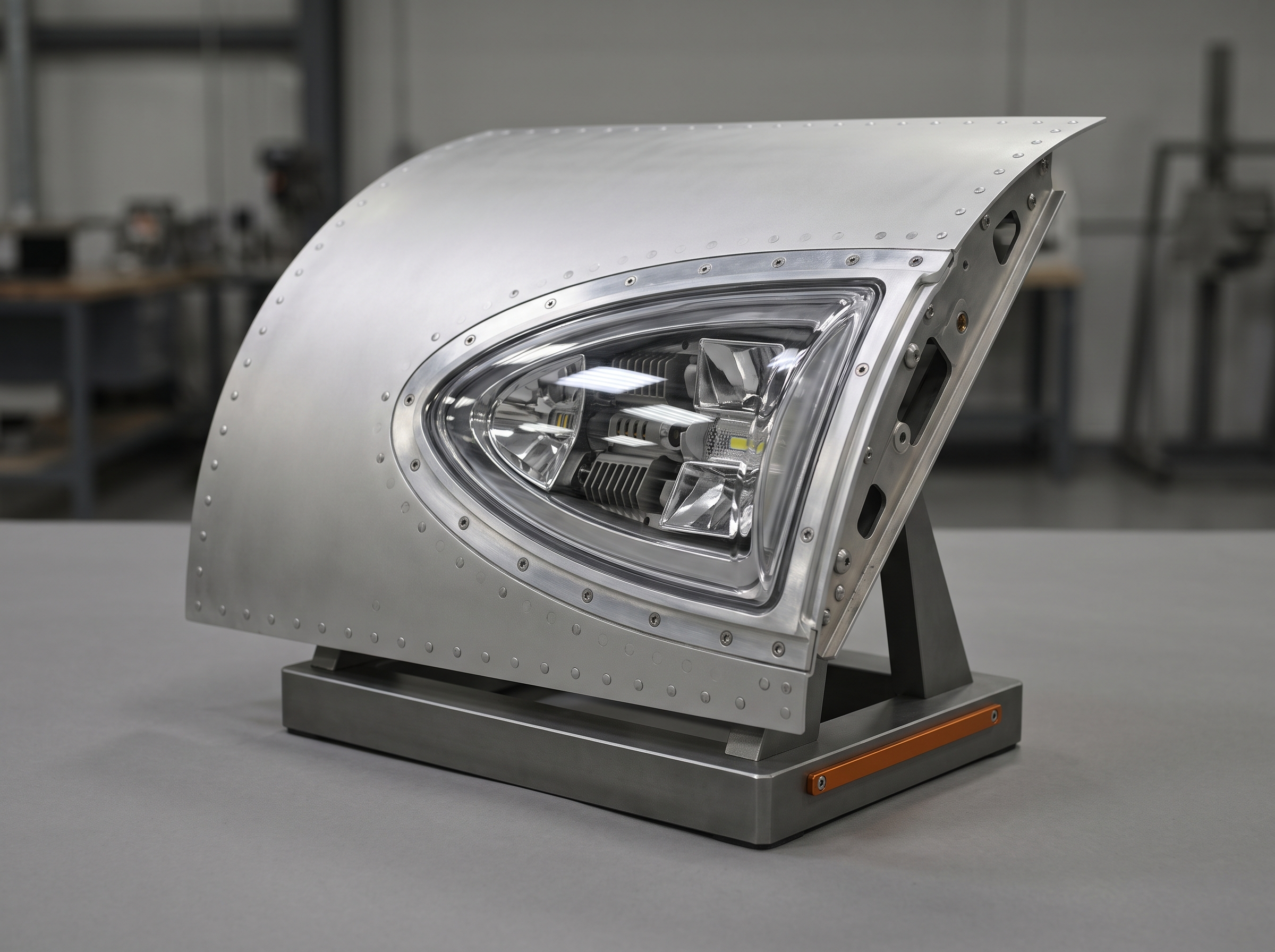
Oxley can develop complete LED fairing assemblies, integrating the light into a housing shaped around the specified structure. The arrangement is useful when a curved or restricted installation leaves insufficient room for a conventional fitting. Fairing design can also influence the position of electrical connections and how the assembly can be fitted, inspected or replaced during maintenance.
On naval vessels, Oxley’s existing portfolio includes navigation and signal lights, bridge and compartment lighting, flight deck equipment and landing aids. The company identifies its LED navigation lights as equipment used on the Royal Navy’s Queen Elizabeth-class aircraft carriers. That is an established installation reference, not an order announced in connection with the forthcoming exhibition.
Flight deck lighting may need to remain usable by ship personnel while avoiding interference with aircraft crews using night vision goggles. Oxley’s product range therefore includes equipment developed for marine and aviation requirements, where sealing, electrical characteristics, optical output and physical resistance can influence the final selection. Applicable test and certification requirements vary according to the proposed installation.
Land vehicle lighting introduces its own constraints, particularly in confined crew compartments. Oxley offers compact interior lamps with visible and night vision compatible variants, alongside external infrared options. One established mini floodlight design is rated for 28V DC operation and a temperature range from minus 40°C to plus 70°C, although those figures apply to that product rather than to Oxley’s entire lighting portfolio.
Electrical integration requires more than matching a nominal voltage. The lighting controller, switching and dimming functions must be compatible with the vehicle or aircraft wiring and the intended operating modes. Electronics also generate heat, making the thermal arrangement and allowable component temperatures part of the installation assessment, particularly where airflow or available housing space is restricted.
Electromagnetic compatibility becomes important when electronic lighting operates near communications, navigation and sensing equipment. Switching circuits and power conversion can introduce unwanted disturbances, while the light itself must remain operational in the electromagnetic environment specified for the platform. The relevant design and testing measures depend on the product and its installation rather than on a universal claim of compatibility.
Oxley’s in-house test facilities cover optical performance, vibration, mechanical conditions, temperature, altitude, waterproofing, humidity and salt spray exposure. The company also has an anechoic chamber for electromagnetic compatibility assessment before formal external approval where that is required. Access to these facilities supports verification during development but is not evidence that every product has completed every available test.
The manufacturer reports a 25-person multidisciplinary design team and prototyping resources including five-axis CNC machining, a lathe and access to three-dimensional printing. These capabilities allow mechanical and optical arrangements to be evaluated before production tooling and final manufacturing processes are settled. Customer drawings, installation envelopes and operating specifications remain necessary inputs to a bespoke project.
Testing can expose conflicts that are difficult to resolve after equipment has been installed on a platform. A housing that meets its mechanical envelope may leave insufficient room for thermal management, while a change to an optical filter can affect usable output. Refining the assembly before qualification may reduce later integration changes, although the outcome remains dependent on the programme’s actual test results.
Astute is an authorised distributor and design-in partner for Oxley, supplying access to its lighting and electronics range alongside component sourcing and technical support. That relationship predates the October exhibition promotion. Discussions at electronica will concern requirements for prospective designs and upgrades, rather than a newly announced distribution agreement or a specified contract award.
The companies have not identified a new aircraft, vessel or military vehicle programme selected for installation through the exhibition campaign. Nor have they disclosed a new certification, production quantity or product launch associated with the lighting presentation. The technical offering consists of existing Oxley capabilities that can be adapted and qualified against individual customer requirements.
Astute will present the range at Hall C5, Stand 421, from 10 to 13 November. Potential projects arising from those discussions would still require agreed specifications, engineering work, the applicable tests and a commercial decision before any new lighting assembly entered production or service.