IN Brief:
- SOCOM’s FY2027 MQ-9 funding shifts the Reaper toward air-launched effects and swarm control.
- Planned elements include Group 2 ISR drones, Group 3 signature-managed drones, swarm carrier pods, and human-machine interfaces.
- The change points to growing production demand for attritable drones, podded launch systems, and modular command architectures.
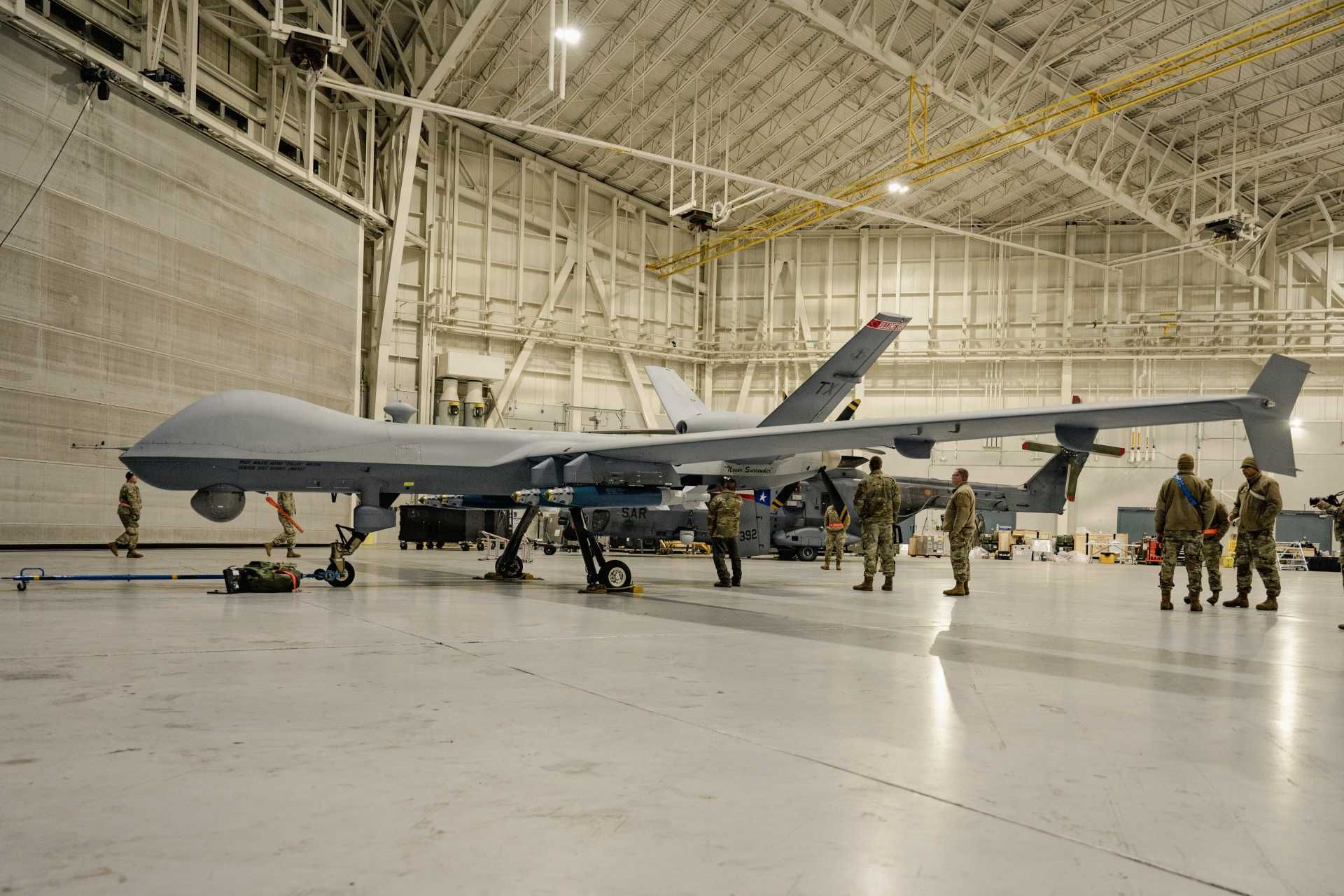
US Special Operations Command is moving the MQ-9 Reaper toward a new role as a control node for smaller unmanned systems, using FY2027 funding to support air-launched effects, swarm carrier pods, and human-machine interfaces.
The shift sits within the Adaptive Airborne Enterprise effort, which moves the MQ-9 beyond single-platform intelligence, surveillance, reconnaissance, and strike missions. The aircraft becomes the centre of a wider network of smaller drones able to extend sensing, communications, decoy, electronic warfare, and targeting functions into contested areas.
The FY2027 request includes funding for 93 Group 2 ISR air-launched effects, 10 Group 3 signature-managed drones, 16 swarm carrier pods, and five ground interfaces for human-machine teaming. Group 2 drones are smaller systems operating at lower altitudes, while Group 3 systems offer greater endurance and mission capacity.
The approach allows the MQ-9 to remain farther from the densest threat zones while subordinate systems move forward. Reaper becomes a launch, control, and coordination layer for distributed effects.
Attritable systems reshape the supply chain
The funding does not simply add more MQ-9 airframes. It creates demand for mission kits, podded launch hardware, small drone inventories, operator interfaces, integration software, and support equipment.
Suppliers will need to produce UAV airframes, batteries, datalinks, payload bays, autopilots, electronic warfare modules, and containerised launch systems at useful scale. These systems must be low enough in cost to be used aggressively, but robust enough to operate in contested electromagnetic and air defence environments.
Human-machine interfaces set the practical limit
A swarm architecture only scales if operators can manage multiple unmanned systems without being overwhelmed by feeds, alerts, tasking options, and manual control demands.
The key production outputs are now software, autonomy, interface design, and mission management tools as much as airframes. The MQ-9’s next phase depends on turning an established unmanned aircraft into a practical airborne gateway for distributed unmanned warfare.