IN Brief:
- Anduril UK, BAE Systems, Tekever, and Thales UK have been selected for the next Project NYX phase.
- The £10m effort will assess autonomous drones intended to support British Army Apache helicopters.
- Up to two companies are expected to move into prototype design before a final partner is selected.
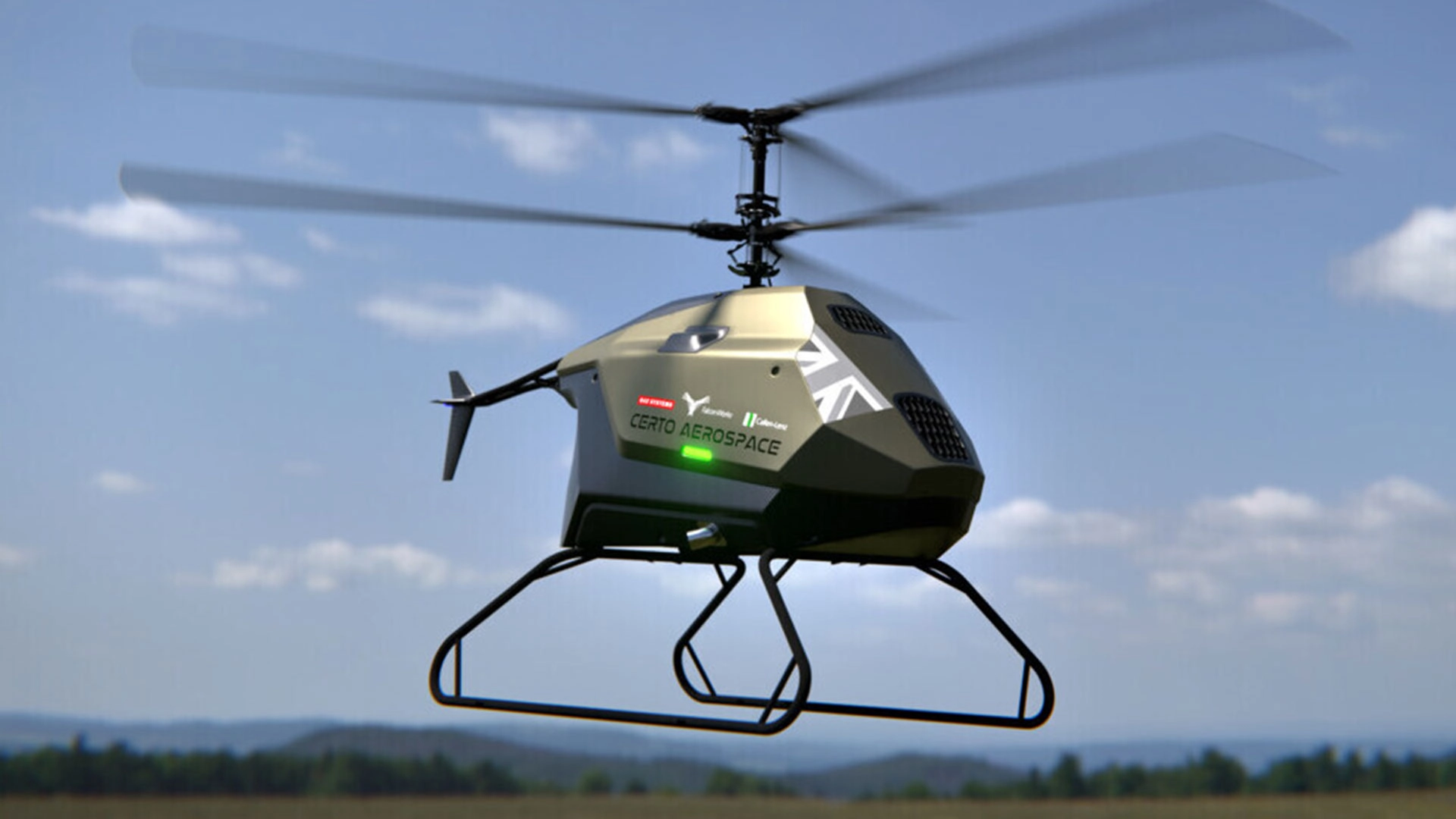
The UK Ministry of Defence has selected Anduril Industries UK, BAE Systems Operations, Tekever, and Thales UK to develop autonomous support drones for British Army Apache helicopters under Project NYX.
The four companies have been offered contracts through a £10m Army aviation demonstrator programme. Their designs will be assessed during the coming months, with up to two companies expected to move into prototype design in autumn 2026. An operational variant is planned for fielding by 2030, provided the prototype work delivers a viable route into service.
Project NYX is intended to create uncrewed aircraft that can operate alongside AH-64E Apache crews as loyal wingman systems. The drones are being developed for roles including reconnaissance, precision strike, target acquisition, and electronic warfare in contested environments. They are expected to operate autonomously, giving Apache crews access to additional data and effects without requiring them to fly the aircraft directly. Decisions involving weapon use will remain under human control.
The selected companies give the programme a broad industrial mix. Anduril UK brings autonomy and attritable systems experience, BAE Systems contributes established aerospace and mission-system capability, Tekever adds unmanned aircraft and ISR expertise, and Thales UK brings sensors, electronic systems, and integration depth. That combination reflects the way uncrewed air systems are now produced: not as airframes alone, but as packages of autonomy, payloads, data links, support equipment, and operational software.
A loyal wingman for an attack helicopter creates a particularly demanding integration problem. Rotary-wing aircraft operate close to the battlespace, where terrain, electronic attack, air defence, and short decision cycles place pressure on sensors and communications. A supporting drone must be useful enough to extend the Apache’s reach, but simple enough to fit into Army aviation procedures, training, maintenance, and sustainment.
That balance will shape the manufacturing challenge. The aircraft will need flight endurance, robust communications, modular payload capacity, safety assurance, launch and recovery practicality, and software able to function under degraded conditions. Payloads for reconnaissance, electronic warfare, communications relay, or strike each impose different size, weight, power, and cooling demands. The winning system will need an architecture that can absorb future payloads without forcing a redesign of the whole aircraft.
Project NYX is being delivered with UK Defence Innovation as the delivery agent, bringing commercial, engineering, and safety expertise into the procurement process. That delivery route acknowledges a recurring problem in autonomy programmes: demonstrators can move quickly, but acquisition-grade systems need safety cases, configuration control, secure software, repeatable production, documentation, spares, and training packages.
Autonomous combat aircraft are already moving from concept to production planning across several markets. The European manufacturing foothold being created for the Kaal Bhairava autonomous combat UAV through Kaal Bhairava production node gives Indian combat UAV a European foothold shows how industry is preparing for demand that extends beyond experimental fleets. Project NYX sits in a different class of air vehicle, but it faces the same production question: how quickly autonomy can be converted into deployable, supportable capability.
The British Army’s requirement also widens the discussion around crewed-uncrewed teaming. Much of the debate has focused on fast jets and future combat aircraft, but Army aviation may offer a more immediate and practical route. An Apache working with a supporting drone could push sensors forward, complicate enemy targeting, extend electronic warfare reach, or support target hand-off while keeping the crewed helicopter farther from risk.
Software assurance will be central to any fielded system. Autonomy that performs well in a controlled test range must still behave predictably in cluttered, contested, and electronically degraded environments. Defence users will need confidence in how the system prioritises tasks, responds to lost links, handles navigation errors, manages payloads, and returns data to the crewed aircraft or wider command network.
For UK industry, the programme could generate demand across airframes, avionics, payloads, autonomy software, data links, simulation, mission planning tools, training systems, and support equipment. Even a relatively small operational fleet would require production capacity for spares, attrition replacement, upgrades, and through-life maintenance. Systems intended to operate closer to threat also tend to require a different cost model from traditional aircraft, with greater tolerance for loss and faster refresh cycles.
The next phase will expose which industrial teams can move beyond concept design. Prototypes will need to show that autonomy, payload integration, communications, and supportability can be brought together in a package the Army can operate. For the UK, Project NYX gives domestic and allied suppliers a route into one of the most consequential areas of future aviation: uncrewed systems that are not separate from crewed platforms, but built around them.