IN Brief:
- India has moved its Advanced Medium Combat Aircraft programme into a private-sector-led competition.
- Tata Advanced Systems, L&T-BEL, and Bharat Forge-BEML are expected to compete for fifth-generation fighter work.
- The programme will test India’s ability to industrialise stealth structures, avionics, propulsion integration, and mission systems.
India’s Advanced Medium Combat Aircraft programme has moved into a new industrial phase, with three private-sector-led teams brought into the tender process for the country’s planned fifth-generation fighter.
The competition is expected to involve Tata Advanced Systems, a Larsen & Toubro-Bharat Electronics Limited team, and a Bharat Forge-BEML consortium. AMCA is intended to give India a sovereign fifth-generation combat aircraft capability, reducing long-term dependence on imported platforms, foreign upgrade routes, and externally controlled technology roadmaps.
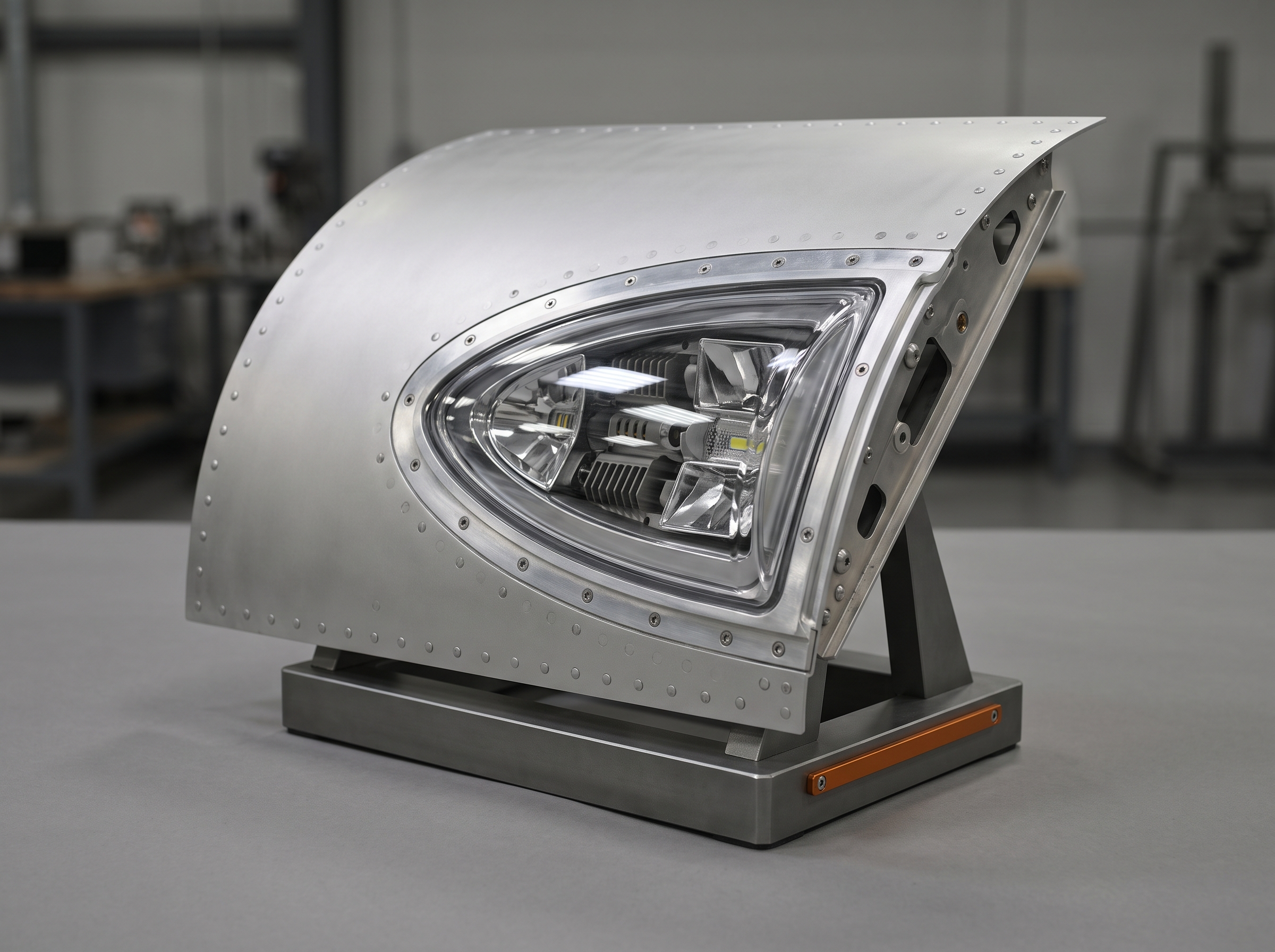
The aircraft is expected to be a twin-engine platform with low-observable shaping, internal weapons carriage, modern avionics, and networked mission capability. Those requirements place the programme well beyond routine aircraft assembly. Stealth aircraft production depends on tight control of surface finish, structures, coatings, apertures, thermal management, and system packaging, with less tolerance for late-stage adjustment than conventional fighter manufacturing.
India’s choice to bring private-sector teams into the process widens the industrial base behind the programme. Tata Advanced Systems has built a position in aerospace structures, aircraft assemblies, and defence systems work. L&T brings heavy engineering, precision manufacturing, and defence integration capability, while BEL remains central to India’s military electronics base. Bharat Forge and BEML add further depth in heavy manufacturing, platform engineering, and defence production.
That breadth will be tested by the complexity of AMCA. A fifth-generation aircraft requires far more than a capable airframe. Mission computers, sensors, embedded software, power systems, wiring, actuation, displays, antennas, and weapons interfaces all need to be built into an integrated architecture from the start. Internal weapons bays, low-observable surfaces, and embedded electronic systems leave little room for the modular additions that have shaped many legacy upgrade programmes.
India’s combat-air modernisation is already moving across several tracks. The country continues to upgrade existing fleets, including work on Su-30MKI electronic warfare capabilities, while also pursuing indigenous production routes for future aircraft. AMCA occupies the harder end of that spectrum, where design ambition and production maturity have to develop together.
The programme will also require a stronger supplier ecosystem around specialised materials, tooling, qualification, and test infrastructure. Low-observable aircraft production places unusual pressure on quality assurance and repeatability. Coatings have to be applied consistently, apertures and panels have to meet strict tolerances, and structural assemblies must preserve both aerodynamic and signature-management performance. Each of those areas brings manufacturing risk if supply chains are shallow or processes remain immature.
Engine availability remains one of the larger strategic questions. Advanced fighter programmes often hinge on propulsion choices, particularly where domestic capability, foreign technology access, and upgrade potential intersect. Even where imported engines are used in early production, long-term sovereignty depends on control over integration, support, overhaul, and potential future replacement.
The private-sector structure could bring greater competition and capacity, but it will require clear decisions on workshare, intellectual property, risk, and accountability. Combat aircraft programmes can lose momentum when responsibility is spread too widely without a firm production authority. A successful industrial model would need to balance national participation with disciplined configuration control and schedule management.
AMCA also arrives in a market where fifth-generation capability is increasingly tied to wider force integration. Stealth is no longer treated as a standalone attribute. Aircraft are expected to operate with off-board sensors, uncrewed systems, electronic attack assets, and networked weapons. That places additional pressure on software development, secure communications, and mission-system upgrade paths.
For India, the tender is therefore not only about selecting an industrial team. It is a step towards deciding how the country wants to build, support, and evolve a sovereign combat-air platform over several decades. The strongest outcome would be a production model that creates durable capability across structures, electronics, software, and sustainment rather than a narrow final-assembly line.
The programme still faces the familiar risks of advanced fighter development: cost growth, schedule slippage, propulsion dependency, flight-test complexity, and supplier readiness. Bringing major private-sector groups into the competition gives India a broader industrial base to draw from, but the next phase will show whether that base can be organised around the production discipline that a stealth fighter demands.