IN Brief:
- Saab has presented the first Gripen F two-seat fighter developed with Brazilian industrial participation.
- The aircraft is combat-capable and includes an independent second cockpit for training and operational mission roles.
- The programme links fighter production to technology transfer, workforce development, and long-term Brazilian aerospace capability.
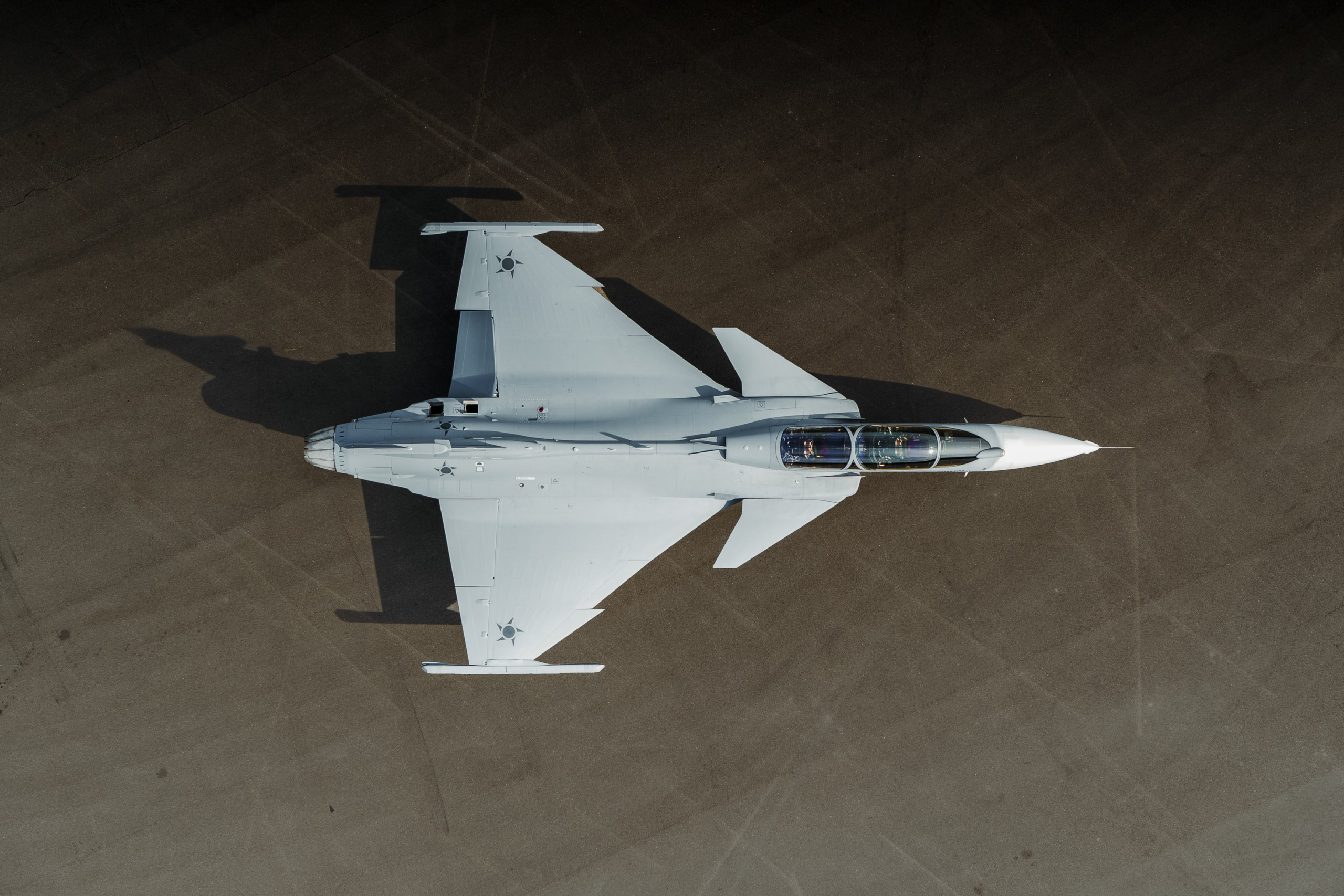
Saab has presented the first Gripen F two-seat fighter at Linköping, marking a major production milestone in Sweden’s combat-air partnership with Brazil.
Brazil is the launch customer for the Gripen F, having ordered 36 aircraft in 2014: 28 Gripen E single-seat fighters and eight Gripen F two-seat aircraft. Deliveries of Gripen aircraft to Brazil began in 2020, and 11 aircraft have already been handed over. The newly presented Gripen F will now move through Saab’s flight-test campaign before delivery.
The two-seat variant is designed for both training and operational missions. Its independent second cockpit allows instructors, weapons officers, or mission specialists to operate in a live tactical environment, rather than limiting the aircraft to basic conversion training. That configuration brings additional complexity into aircraft production, systems integration, and certification.
Adding a second cockpit changes more than the fuselage layout. It introduces extra displays, controls, wiring, software interfaces, oxygen and environmental systems, ejection-seat integration, human-machine interface work, and mission-system redundancy. Saab has to prove that the aircraft retains combat performance while adding the instructional and operational flexibility that Brazil requires.
Brazilian industry has played a central role in the programme. Hundreds of Brazilian engineers and technicians have been trained through the technology-transfer framework, supporting domestic expertise in aircraft development, production, maintenance, and future upgrades. The programme is therefore not just an aircraft acquisition. It is a capability-building route for Brazil’s aerospace sector.
Fighter exports increasingly depend on this kind of industrial participation. Customers want technology access, domestic support capability, skilled jobs, and a clearer route to long-term sovereignty over fleet sustainment. Aircraft performance still matters, but governments also judge whether a programme strengthens national industry and reduces reliance on foreign support for every upgrade or repair.
Sweden faces its own fighter-production questions as Gripen demand expands, a challenge explored in Gripen plan tests Sweden’s fighter capacity. The Gripen F rollout sits inside that capacity debate. Saab must balance Swedish requirements, Brazilian deliveries, future export customers, and long-term support while operating a fighter production base smaller than those behind larger US and multinational programmes.
The F model also arrives as air forces reassess how crewed aircraft will work alongside uncrewed systems, electronic warfare, and long-range weapons. Two-seat fighters retain value where mission complexity creates high workload or where advanced instruction needs to replicate operational conditions. For Brazil, Gripen F can support training while preserving a combat role, giving the fleet more flexibility than a dedicated trainer would offer.
Flight testing will be the next major filter. Saab will need to validate aircraft handling, cockpit integration, mission-system behaviour, sensor operation, crew coordination, and safety across the configuration. Any two-seat combat aircraft brings a larger test matrix than its external appearance suggests, particularly when both cockpits require independent mission functionality.
Industrial coordination between Sweden and Brazil will also shape the programme’s long-term value. Shared development and technology transfer can deepen capability, but they demand disciplined configuration control. Software baselines, documentation, supplier changes, maintenance procedures, and future upgrades must remain aligned across two national industrial systems.
Gripen F has already attracted interest beyond Brazil, with Thailand and Colombia also ordering the two-seat variant. Early production learning from the Brazilian aircraft will therefore influence export confidence. A smooth test and delivery phase would strengthen Saab’s position in a fighter market where many countries want advanced capability without the scale or cost of larger platforms.
The programme also sits alongside wider UK and European combat-air manufacturing questions, including the industrial momentum behind GCAP. Current-generation fighters are expected to remain in production, upgrade, and support for years while next-generation programmes mature. That gives companies such as Saab a continuing window, provided they can deliver aircraft and sustainment capacity at credible pace.