IN Brief:
- American Rheinmetall is investing $41 million across facilities in Michigan, Ohio, and Maine.
- The investment supports programmes including XM30, Mobile Tactical Cannon, Common Tactical Truck, and Common Autonomous Multi-Domain Launcher.
- New machining, inspection, tooling, and automation capacity targets the production bottlenecks behind US land-systems modernisation.
American Rheinmetall is investing $41 million across six US manufacturing facilities, expanding industrial capacity for combat vehicles, artillery-related systems, autonomous launchers, tactical trucks, and defence components.
The investment covers sites in Michigan, Ohio, and Maine. Around $12 million has already been executed, with $26 million under way and further spending planned. Rather than waiting for new-build factories, the company is upgrading existing facilities with larger machine tools, improved inspection capability, turret-production equipment, tooling, and automation.
The programme supports US modernisation priorities including XM30, Mobile Tactical Cannon, Common Tactical Truck, and the Common Autonomous Multi-Domain Launcher. It also strengthens capacity for missile-related subsystems and mobility work. Those programmes pull together heavy structures, powertrains, turrets, launch equipment, electronics, sensors, software, and support systems, placing pressure on a manufacturing base that has spent years operating below Cold War-era depth.
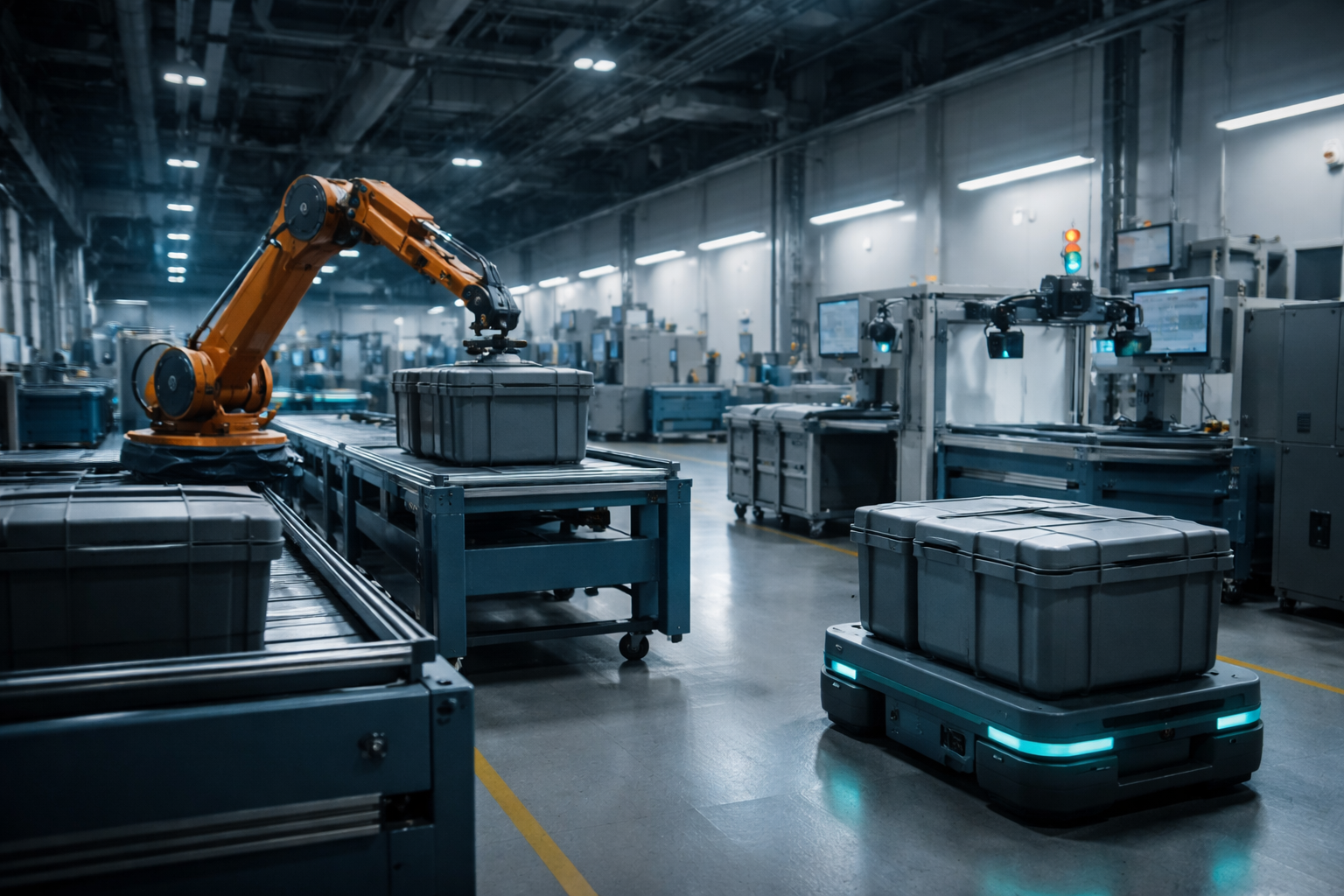
American Rheinmetall is adding equipment including a 65-foot bridge mill for full vehicle hull structures, gear grinding capacity, five-axis machining centres, turret-building upgrades, coordinate-measuring capability, track and wheel tooling, cure presses, and automation. These are the assets that determine whether prototype ambition can turn into repeatable production.
The US Army’s XM30 programme illustrates the challenge. Replacing the Bradley is not only a vehicle design competition. It requires hull production, survivability systems, weapons integration, electronics, software, power management, and supportability to mature into an industrial system. Large-format machining, metrology, and turret capacity become decisive once a programme moves from demonstration into production readiness.
Mobile Tactical Cannon and CAML add different manufacturing pressures. Artillery and launcher systems need structural strength, precision assembly, recoil management, mobility performance, remote or autonomous control, and rugged electronics. They combine traditional heavy engineering with digital control systems, making production facilities responsible for both metalworking discipline and systems integration.
Tactical trucks bring scale into the equation. Logistics vehicles may attract less attention than combat platforms, but they determine whether forces can move, resupply, and sustain themselves. Large fleets need predictable production, domestic supply chains, and long-term parts availability. The German fleet expansion covered in Rheinmetall order expands German logistics fleet reflects the same wider demand for mobility and support capacity.
The US investment also speaks to a broader industrial-base problem. Land systems rely on machining, gears, castings, forgings, welding, driveline components, electronics, optics, tracks, tyres, and skilled trades. Many of those capabilities cannot be expanded quickly after a crisis begins. Machine tools have long lead times, suppliers need qualification, and experienced operators take years to develop.
Using existing facilities should help American Rheinmetall move faster, but it also creates sequencing challenges. Installing major equipment, training teams, reorganising production layouts, and introducing new inspection processes can disrupt current work if poorly managed. Defence manufacturers expanding capacity have to raise throughput while maintaining quality, documentation, and delivery commitments.
The investment positions the company for programmes whose final production volumes are still taking shape. Waiting until contract award to expand capacity risks missing delivery schedules; investing too early carries utilisation risk. In the current market, where US and allied forces are reassessing stockpiles, mobility, fires, and armoured mass, capacity itself has become a competitive advantage.
Automation will help, but it will not remove the need for skilled labour. Heavy defence manufacturing still depends on machinists, welders, inspectors, manufacturing engineers, maintenance teams, and production managers who understand military tolerances and documentation requirements. Equipment purchases need to be matched by workforce development and supplier alignment.
American Rheinmetall’s investment shows how land-systems modernisation is moving from design work into industrial positioning. The companies most likely to win and sustain major programmes are those able to show production readiness before orders reach peak volume. In a market short of heavy manufacturing capacity, the factory floor is becoming part of the offer.