IN Brief:
- Denmark has been cleared for a potential $842m purchase of up to 200 JASSM-ER cruise missiles.
- The package links F-35 integration, cruise missile production, diagnostics, spares, training, and sustainment.
- Nordic long-range strike procurement is adding further pressure to Western complex-weapons supply chains.
Denmark has been cleared for a potential $842m purchase of up to 200 AGM-158B JASSM-ER cruise missiles, giving its F-35 fleet a future long-range strike option and adding another Nordic requirement to the Western precision-weapons production pipeline.
The proposed sale would place Denmark among the allied air forces seeking deeper stand-off strike capacity as NATO planning adjusts to a more heavily armed European threat environment. The JASSM-ER is a stealthy, air-launched cruise missile designed to strike defended targets from distance. For Denmark, it would expand the F-35’s role from advanced sensing, defensive counter-air, and strike support into deeper precision attack.
A sale of this type is not limited to missile bodies. The package also draws in support equipment, spare parts, diagnostic systems, mission planning, logistics, training, and integration activity. Each area carries its own production and sustainment burden, and each sits within a wider US-led weapons supply chain already stretched by demand for guided rockets, artillery, air-defence interceptors, and long-range strike weapons.
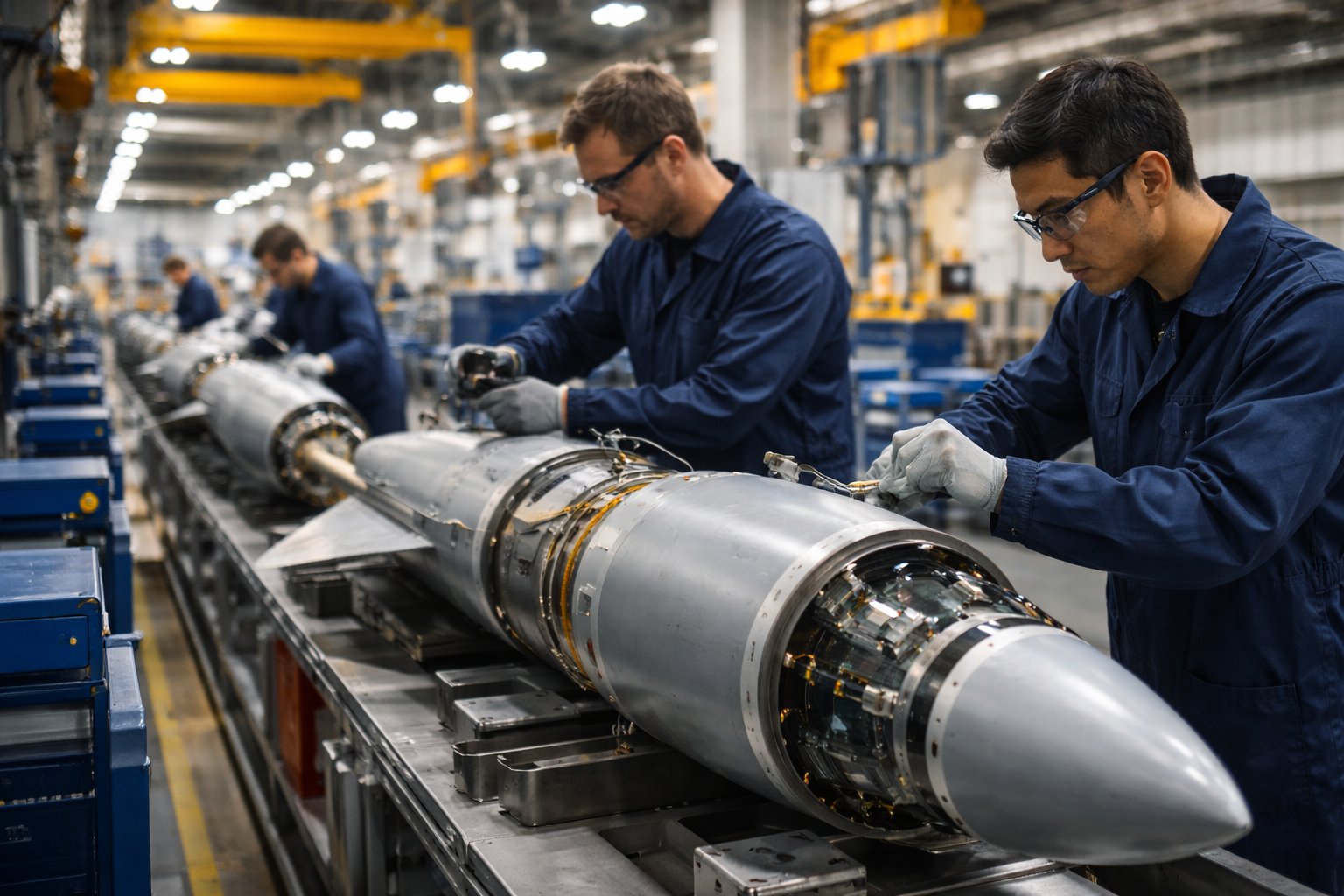
Lockheed Martin remains central to JASSM production, but the programme depends on a supplier base covering propulsion, low-observable structures, navigation, warheads, electronics, software, datalinks, and test equipment. Cruise missile output is difficult to surge quickly because many components are specialised, tightly qualified, and subject to strict security and export controls. Additional allied demand gives production planners more volume, but it also increases pressure on supplier scheduling, skilled labour, and test capacity.
For Denmark, the JASSM-ER would make the F-35 a more strategically flexible platform. The aircraft’s sensors, data fusion, and survivability support the strike mission, but the operational value of the missile depends on the wider system around it. Weapons loading, software compatibility, mission-data files, aircrew training, storage, maintenance, and sustainment all become part of the capability. The missile must be absorbed into an air force, not merely bought for its inventory.
The Danish case also reflects a wider Nordic shift. Denmark, Norway, and Finland are all moving through F-35 force development, while Sweden is strengthening its air and missile posture through its own industrial path. As Nordic air forces become more tightly connected to NATO planning, long-range strike becomes a production, stockpile, and interoperability issue rather than a purely national procurement choice. Shared operating concepts will increase the pressure on common support, training, and resupply planning.
Western long-range fires are already moving through a major production rethink. The combat use of PrSM, explored in PrSM combat debut tests long-range fires model, shows how missile programmes are being judged not only by range and precision, but by whether production can sustain credible stockpiles. Denmark’s JASSM-ER pathway belongs to the same pattern. Complex weapons are becoming the central currency of deterrence, but their supply chains were not built for unlimited demand.
The industrial balance remains difficult. Governments want credible inventories quickly, while industry needs stable orders before committing capital to new facilities, supplier expansion, energetics capacity, and skilled labour pipelines. Missile production depends on long-lead materials, qualified components, specialised test infrastructure, and export-controlled knowledge. A single purchase approval may be politically simple compared with the years of industrial coordination needed to deliver and sustain the weapons.
The sale would also reinforce the F-35’s role as a strike integration hub for allied air forces. The aircraft is increasingly treated as a sensor, command, and weapons platform able to work with long-range effects rather than simply deliver short-range air-to-ground munitions. That creates continued demand for software baselines, weapons certification, mission-data updates, and interoperability testing. The weapon’s usefulness depends on the aircraft architecture remaining current.
European alternatives and complementary systems will face the same manufacturing constraints. Designing capable weapons is hard enough; producing enough of them, storing them safely, training crews to use them, and replacing stocks at wartime consumption rates is harder. Denmark’s potential buy underlines how quickly European demand for long-range precision weapons is becoming a supply-chain problem.
The proposed JASSM-ER purchase is therefore an F-35 enhancement and a missile-industrial signal at the same time. For Denmark, it would deepen national strike capacity. For allied industry, it adds another requirement to a complex-weapons pipeline that will have to expand if deterrence planning is to be matched by physical stockpiles.