IN Brief:
- Airbus has presented a broad uncrewed systems portfolio at ILA Berlin, including U145, U760 Ravenstorm, and U740 Valkyrie activity.
- The portfolio spans logistics, surveillance, collaborative combat aircraft, and air-launched effects.
- The approach places uncrewed aircraft at the centre of Europe’s future aerospace manufacturing base.
Airbus has used ILA Berlin to present a broad European uncrewed aircraft portfolio, placing autonomous helicopters, tactical UAVs, collaborative combat aircraft, and future air-launched effects into a more coherent defence aerospace offer.
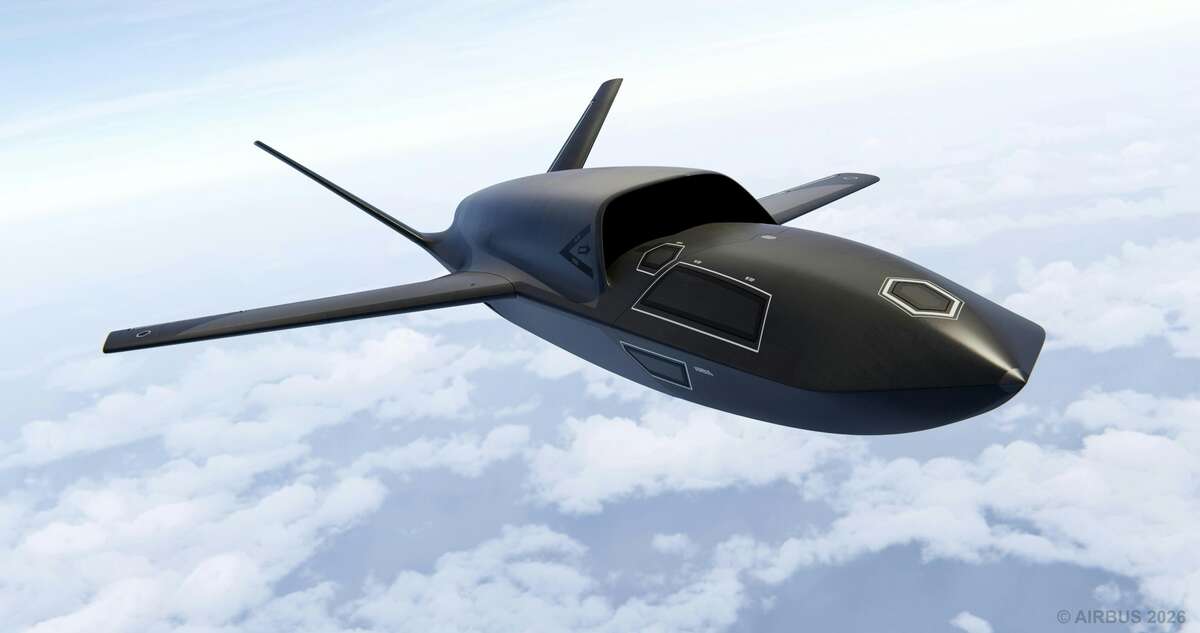
The line-up includes the Airbus U145, an uncrewed version of the H145 helicopter being developed for civil and military roles. Cargo supply is a primary mission, while surveillance, disaster response, firefighting, armed scouting, and drone mothership applications are also being positioned within the design. Airbus is also presenting the U760 Ravenstorm and U740 Valkyrie within its collaborative combat aircraft activity.
The portfolio moves across several uncrewed markets at once rather than limiting the company to one category of drone. Vertical-lift autonomy, tactical UAVs, loyal-wingman-style systems, and air-launched effects each carry different production requirements, but all depend on autonomy software, secure datalinks, mission payloads, modular architectures, and reliable upgrade paths.
The U145 draws on the existing H145 helicopter industrial base, giving Airbus a mature airframe, supply chain, and maintenance ecosystem from which to build. Converting a crewed aircraft family into an uncrewed system still brings flight-control architecture, redundancy, remote operation, certification, detect-and-avoid logic, mission autonomy, and safety cases into the foreground.
Logistics and support missions give an autonomous H145-derived platform an immediate operational role. Ammunition, medical supplies, batteries, sensors, and critical spares all need to move through risky areas, especially when distributed forces cannot rely on conventional road convoys or prepared landing sites. Uncrewed vertical lift reduces crew exposure while preserving payload flexibility.
Collaborative combat aircraft bring a different industrial challenge. Europe wants uncrewed systems able to support crewed fighters with sensing, electronic warfare, decoy, strike, and communications roles. Those aircraft must be affordable enough to buy in useful numbers, yet capable enough to survive in contested airspace. That balance between cost and capability will decide whether European systems move beyond demonstrators.
The work sits alongside Europe’s unsettled combat-air landscape. GCAP has moved into its first international work package through Edgewing’s early industrial role, while the FCAS divide has exposed the difficulty of aligning national requirements, industrial workshare, and future fighter design authority. Airbus’ uncrewed portfolio gives Europe another route to advance autonomy, teaming, and mission systems while larger crewed programmes absorb political and commercial pressure.
Industrialisation will separate credible programmes from display-floor ambition. European defence aerospace has no shortage of technology demonstrators, but customers increasingly want qualified systems with defined production routes, support models, open interfaces, and upgrade capacity. A drone portfolio only becomes useful when delivery rates, lifecycle costs, spares, training, and integration with national command systems are clear.
Supply-chain readiness will shape the pace. Uncrewed aircraft require composite structures, propulsion systems, actuators, sensors, edge processors, encrypted communications, batteries, payload bays, ground stations, and software validation. Collaborative combat aircraft add low-observable shaping, flight-test complexity, weapons interfaces, and mission autonomy. Sovereign systems require component resilience as well as prime-contractor architecture.
ILA Berlin gives Airbus a platform in a market where Germany remains central to European defence aerospace, air defence, and future combat aircraft debates. Presenting drones as a family rather than as isolated products signals that uncrewed aircraft are moving from adjunct capability into core platform planning.
Procurement discipline will now do as much as engineering ambition to shape the portfolio. Customers will want common interfaces across systems, modular payloads, and autonomy that can be certified, updated, and trusted. Suppliers will need enough programme visibility to invest in production tooling and workforce skills. Military authorities will need routes for qualifying autonomous aircraft that operate near crewed platforms and civilian airspace.
Airbus’ Berlin display points toward a broader European shift: uncrewed systems are becoming a manufacturing base of their own, not a peripheral technology stream attached to fighter procurement. Whether the U145, U760 Ravenstorm, U740 Valkyrie, and related systems mature into deployable products will depend on production realism as much as design ambition.