IN Brief:
- HII has received a five-year, $418m US Navy contract for shipboard elevator and cargo-handling support.
- The work covers aircraft carriers, amphibious ships, technical repairs, training, and rapid-response teams.
- The contract shows how specialist sustainment systems underpin naval readiness and deployed fleet availability.
HII has secured a five-year, $418m US Navy contract to repair, maintain, and support shipboard elevators, cargo-handling systems, and related equipment across aircraft carriers and amphibious ships.
The contract was awarded through Naval Sea Systems Command and will be carried out by HII’s Mission Technologies division. The work includes engineering, maintenance, technical repair, sailor training, and rapid-response support for deployed and forward-based ships.
Shipboard elevators rarely attract attention outside naval engineering circles, yet they are central to how aircraft carriers and amphibious ships operate. Elevators move aircraft, weapons, stores, and equipment between decks, while cargo-handling systems support the flow of material across ships that may be operating far from fixed infrastructure. A fault in these systems can affect sortie generation, logistics, maintenance, and mission tempo.
Fleet availability is therefore tied to thousands of mechanical, electrical, hydraulic, control, and safety-critical systems functioning reliably under maritime conditions. Hull numbers and major weapons systems dominate procurement debates, but operational output often depends on less visible equipment kept running by specialist sustainment teams.
For industry, shipboard elevator support is a demanding engineering market. These systems operate in confined shipboard spaces, exposed to corrosion, vibration, shock, heavy loads, and strict safety requirements. Components must be repaired, replaced, certified, and supported without disrupting ship schedules. The workforce needs platform knowledge, equipment familiarity, and the ability to respond quickly when deployed ships cannot wait for lengthy repair cycles.
HII’s wider role as a major US naval shipbuilder gives it visibility across construction, modernisation, and lifecycle support. That connection between new-build and sustainment is valuable, since maintenance problems often feed back into future design decisions. Equipment that is difficult to access, repair, or certify at sea creates long-term readiness and cost penalties.
Sustainment has become strategically important as Western navies try to maintain presence with limited fleet size and ageing ships. New hulls take years to build, while improved availability can generate operational benefit more quickly. Maintenance contracts that appear narrow can therefore have a direct effect on fleet output.
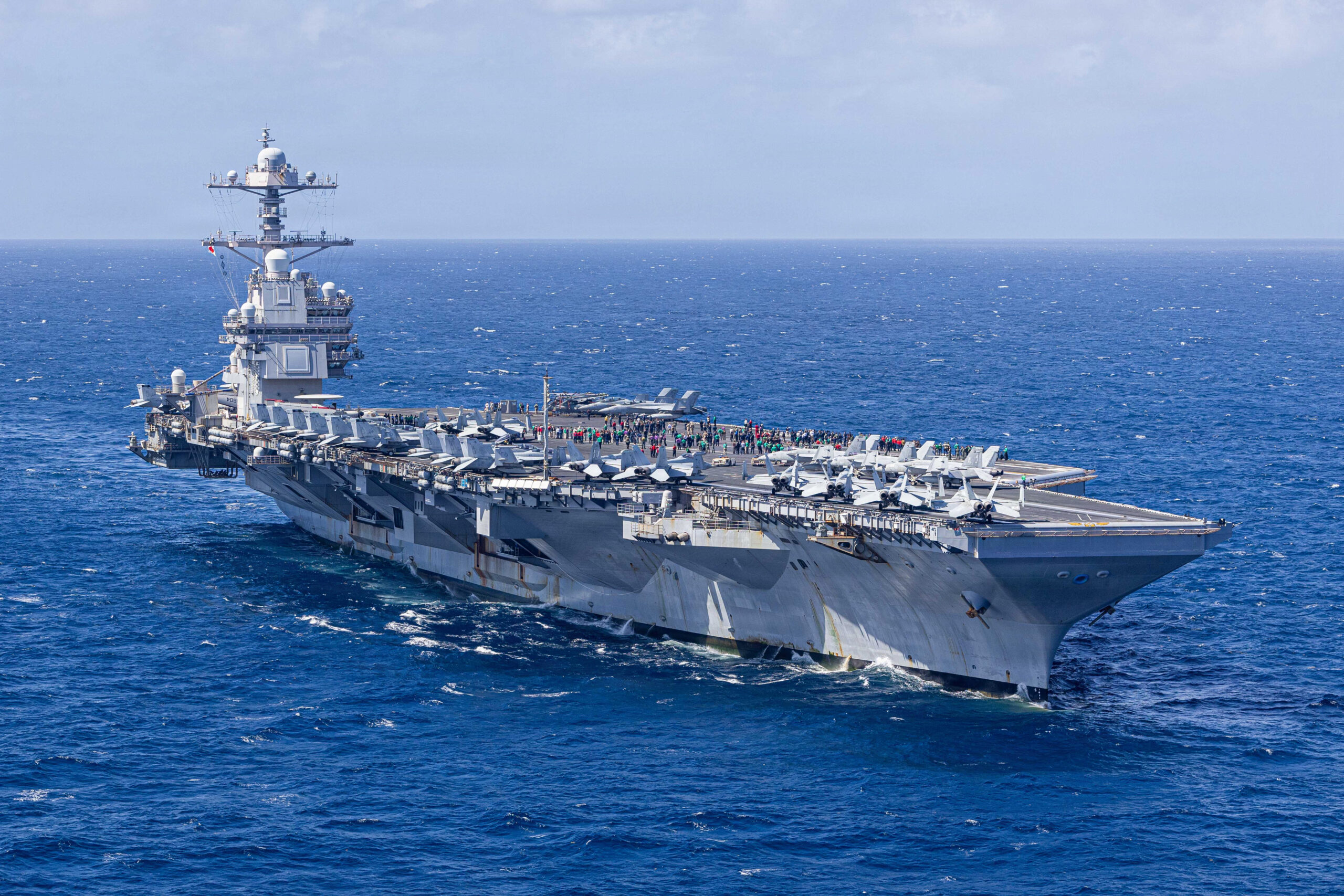
Aircraft carriers and amphibious assault ships are central to US force projection, and their combat value depends on the daily rhythm of shipboard movement. Aircraft need to be moved safely and efficiently. Weapons and stores must reach the right places. Maintenance teams require access to equipment and spare parts. Cargo-handling failures can ripple through the ship in ways that are operationally significant even when the failed system is not a weapon.
The same logic applies to amphibious ships, where elevator and cargo systems support embarked Marines, vehicles, aircraft, supplies, and mission equipment. As distributed operations place more pressure on maritime logistics, the ability to move material efficiently within a ship and across a deployed force becomes part of operational resilience.
The industrial base behind this work is not easy to regenerate. Naval sustainment needs skilled labour, spare parts, technical data, specialist tooling, and responsive support arrangements. If those capabilities thin out, ships become harder to repair when demand rises. Contracts of this type help preserve the workforce and supplier capacity that would be essential during a crisis.
Lifecycle support is also increasingly relevant to new equipment procurement. A system that cannot be repaired, trained on, upgraded, and supported at sea is not fully fielded, even if it performs well during acceptance. For naval manufacturers, maintainability and support documentation are now part of capability delivery rather than administrative add-ons.
The US Navy’s future fleet plans will continue to draw attention around submarines, destroyers, frigates, carriers, and unmanned systems. The current fleet’s readiness, however, will depend on specialised maintenance programmes that keep critical shipboard machinery operating. Elevators and cargo-handling systems occupy a modest physical footprint, but they sit close to the daily mechanics of naval power.
HII’s contract will not carry the glamour of a new ship order. It does, however, reflect the industrial reality behind deployed readiness: carriers and amphibious ships remain operational because specialist systems are maintained, repaired, and supported before failure becomes a fleet-level problem.