IN Brief:
- Diehl Defence has presented the IRIS-T SLS MK 4 short-range air-defence system.
- The mobile system is designed to protect troops and critical infrastructure against airborne threats.
- Its production chain spans missiles, radars, command-and-control, vehicle integration, and counter-UAS effectors.
Diehl Defence has presented the IRIS-T SLS MK 4, a highly mobile short-range air-defence system designed to protect troops on the move and critical infrastructure against a widening range of airborne threats.
The fourth-generation system has an effective range of 12km and altitude coverage of up to 6km. It forms part of Diehl’s wider IRIS-T surface-launched family, one of Europe’s most visible ground-based air-defence product lines. The MK 4 configuration brings launcher, sensing, command-and-control, and effector capacity into a compact mobile package.
Short-range air defence has re-entered European procurement at speed. Drones, loitering munitions, cruise missiles, helicopters, low-flying aircraft, and precision weapons now threaten headquarters, logistics nodes, armoured units, ammunition sites, and fixed infrastructure. A small number of high-end systems around strategic targets is no longer enough. Mobile layers have to move with forces and operate across a broader footprint.
IRIS-T SLS MK 4 sits in that layer. Its value comes from the integration of missile performance, target detection, fire-control speed, platform mobility, and network connectivity. A short-range air-defence vehicle has to detect, decide, fire, and relocate, while feeding into a wider air picture and surviving the same field conditions as the units it protects.
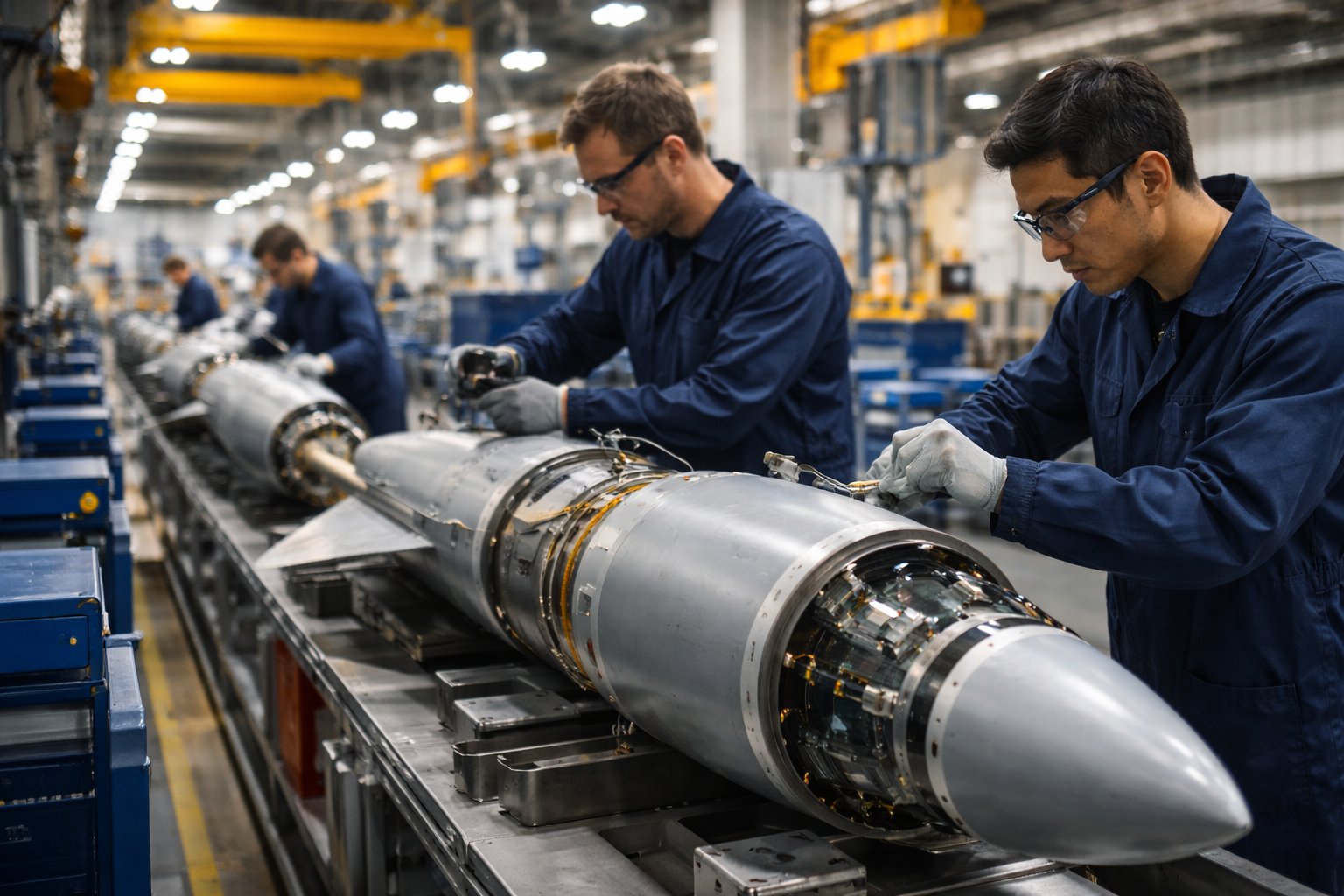
The production chain is dense. Missile output depends on seekers, propulsion, warheads, fuzes, actuators, canisters, electronics, final assembly, and test capacity. Vehicle integration adds power management, radar and sensor installation, environmental hardening, command software, electromagnetic compatibility, and crew ergonomics. Counter-UAS growth brings additional effectors, electronic-warfare links, and layered engagement logic.
European demand is already pulling suppliers in several directions. Ukraine has increased urgency around interceptor stocks and mobile protection. NATO planners are rebuilding air-defence depth after years of underinvestment. Critical infrastructure operators now face a drone threat that was once viewed mainly as a battlefield issue.
The UK’s own air-defence production pressures are visible in the race from Skyhammer to DragonFire, where missile, laser, and counter-drone requirements all sit inside a broader manufacturing question. Users need effectors that are capable, available, and affordable enough to be used against large numbers of low-cost aerial threats.
Brigade-level protection is moving in the same direction. Saab’s Swedish brigade air-defence work shows how short-range systems, sensors, and command networks are becoming a funded part of force design. Launchers that cannot share data or operate inside a common air picture will struggle as threats arrive in mixed salvos.
The MK 4 broadens the IRIS-T family into a more mobile and tactically distributed role. That creates opportunities across NATO, but it also places strain on production capacity. Missile demand is already high, and adding further mobile configurations means the supply chain must support more launchers, more integration work, more spares, and more test throughput.
The cost-per-engagement problem will shape customer decisions. High-performance interceptors are essential against certain threats, but they cannot be the only answer to every drone. A modern short-range air-defence system has to work with cheaper effectors, guns, electronic attack, sensors, and command software. The vehicle becomes a node in a layered defence rather than a single-purpose missile platform.
Sustainment will define operational value as much as firing performance. Mobile air-defence systems need trained crews, reload systems, maintenance support, software updates, simulator capacity, spares, and secure communications. Fielding the launcher is only the first stage; keeping it operational under dispersed conditions is the harder industrial test.
IRIS-T SLS MK 4 reflects a European market buying survivability for manoeuvre forces, logistics nodes, and infrastructure. Diehl now has to turn strong demand into repeatable production and support, while customers decide how many mobile air-defence layers they can afford to field before the next threat cycle arrives.