IN Brief:
- Palladyne AI will manufacture, integrate, and market IAI’s HARPY, HAROP, and Mini HARPY loitering munitions for US defence customers.
- The arrangement gives Palladyne exclusive US production and marketing rights, subject to milestones.
- The deal connects Israeli loitering-munition designs with US assembly, adaptation, autonomy integration, and domestic manufacturing requirements.
Palladyne AI and Israel Aerospace Industries have formed a strategic partnership to manufacture, integrate, and market IAI’s HARPY, HAROP, and Mini HARPY loitering munitions for US defence customers.
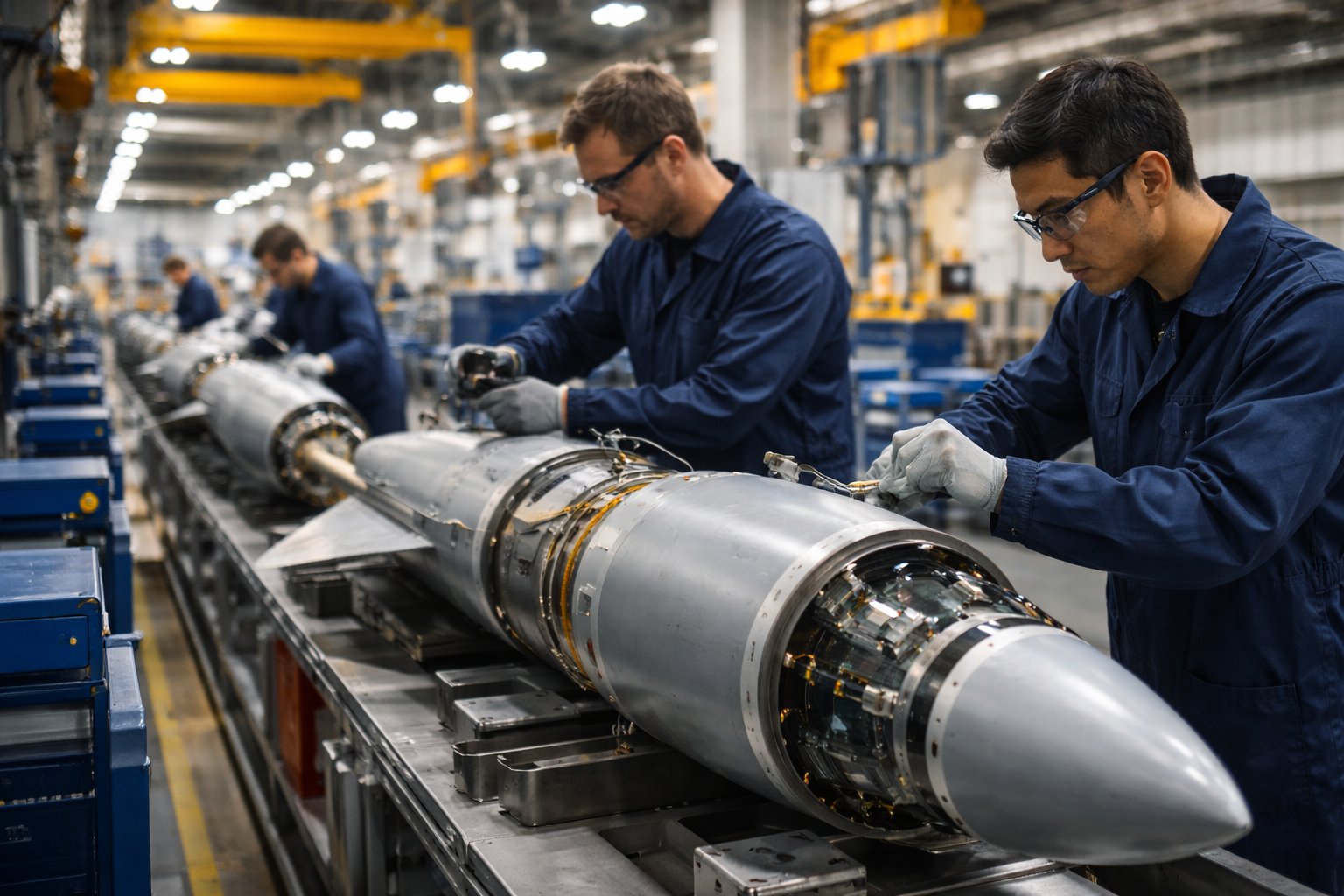
The arrangement gives Palladyne AI exclusive US production and marketing rights for the systems, subject to milestones, with IAI providing engineering support and key subsystems. Palladyne will adapt the munitions to US operational requirements while establishing a domestic route for assembly and integration.
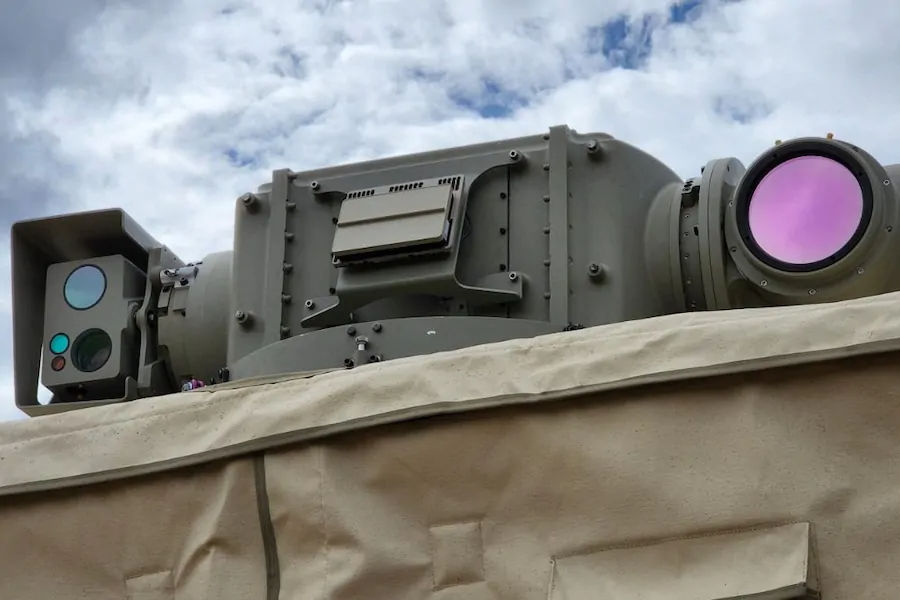
IAI’s HARPY and HAROP systems are long-established loitering munitions associated with suppression and destruction of enemy air defences. Mini HARPY brings electro-optical/infrared and anti-radiation seeker capability into a smaller tactical package. The partnership offers US customers access to mature designs while shortening the path toward domestic production and support.
Loitering munitions sit between UAVs and missiles, which makes them difficult to produce under a single industrial model. They need airframes, propulsion, seekers, warheads, datalinks, launch equipment, mission software, safe storage, transport certification, and final test processes. They also require the quality discipline of munitions production and the software evolution expected of autonomous systems.
The US defence market is searching for strike mass at speed. Large missiles remain essential, but they are expensive, complex, and often produced at rates that cannot match high-volume operational demand. Loitering munitions offer another layer: persistent, precision-capable, and potentially more scalable than traditional guided weapons for certain target sets.
A domestic production route gives the partnership a practical advantage. Foreign-designed systems can move faster into US programmes when a domestic company can handle adaptation, assembly, qualification, supply-chain management, training support, and sustainment. That model may become more common as the Pentagon looks for proven technologies that can be Americanised rather than recreated through long development cycles.
Autonomy will be closely watched. Palladyne’s wider work in AI-enabled control gives the company a route to add mission-management and cooperative behaviours to systems that already have combat-proven design heritage. Adding autonomy to loitering munitions can improve scale and reduce operator burden, but it also introduces requirements around certification, testing, rules of engagement, cybersecurity, and command authority.
The same trend is visible across other offensive technology developments. Uvision’s CORTEX mission-management system points toward loitering munitions linked through AI-enabled control, while Türkiye’s İHA-230 air-launched ballistic strike capability shows how unmanned platforms are being paired with heavier stand-off effects. Strike systems are becoming software-heavy networks, not isolated munitions.
Scaling production will bring familiar constraints. Seekers, inertial sensors, propulsion systems, datalinks, batteries, composite structures, explosive filling, launch containers, and ground-control equipment all have to be available in volume. More advanced seekers and autonomy increase dependence on electronics, software assurance, and test facilities, each of which can become a bottleneck.
Training and sustainment also sit behind procurement. Loitering munitions are consumable, but their support ecosystem is not. Customers need simulators, storage processes, launcher maintenance, mission planning tools, software updates, spare ground equipment, and disposal procedures. Domestic assembly can support those layers more effectively than a purely overseas supply path.
The partnership also speaks to air-defence suppression requirements. HARPY and HAROP were built around the problem of finding and attacking emitters, a role that has become more relevant as mobile air-defence systems proliferate. As adversaries field more radar-guided, networked, and mobile protection, demand for loitering munitions able to hunt or pressure those systems is likely to grow.
The agreement gives Palladyne a route into a high-demand offensive technology segment without waiting for a clean-sheet design to mature. IAI gains a pathway into US domestic assembly and customer adaptation. The strength of the partnership will depend on whether proven Israeli designs can be combined with US production discipline, autonomy development, and procurement requirements quickly enough to meet a market that is already moving.