IN Brief:
- Kongsberg and DRASS have formed a partnership for advanced underwater defence systems.
- The work will combine UUVs, ISR, sonar, navigation, compact submarines, and manned-unmanned teaming.
- The agreement strengthens Europe’s industrial base for subsea sensing, robotics, and naval integration.
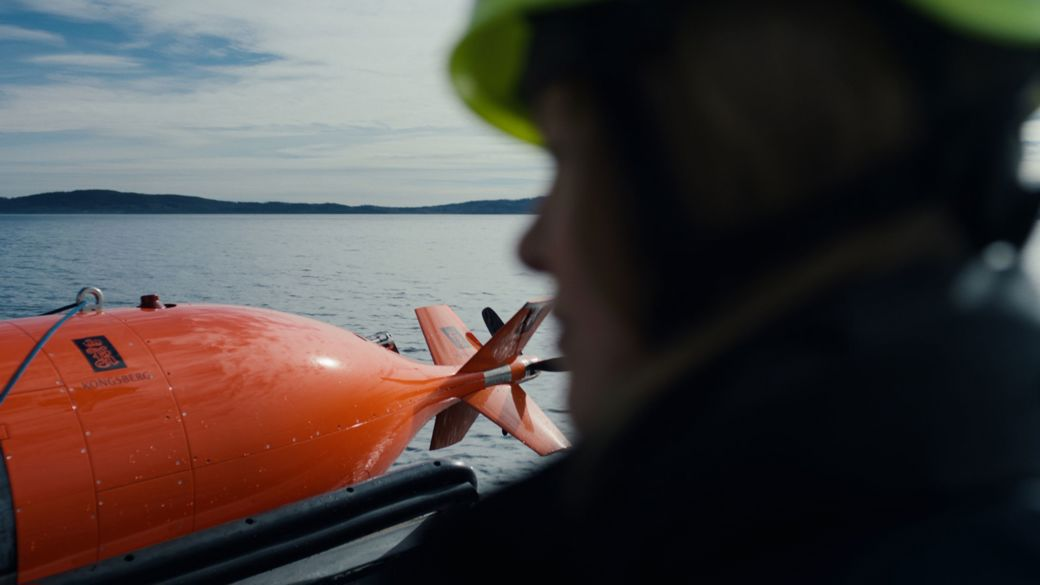
Kongsberg and DRASS have signed a strategic partnership to develop advanced underwater defence systems, combining Norwegian autonomy and systems-integration expertise with Italian subsea engineering and compact submarine capability.
The partnership will support the exchange of technologies, systems, payloads, and operational architectures. Its focus includes unmanned underwater vehicles, maritime ISR, manned-unmanned teaming, sonar, navigation, sensors, payload integration, compact submarines, pressure-tolerant battery modules, and optronic periscope technology.
Underwater defence is moving beyond the traditional submarine-centred market into a wider domain of autonomous vehicles, seabed sensors, compact platforms, distributed sensing, and hybrid crewed-uncrewed architectures. Navies now have to monitor ports, littoral approaches, cables, pipelines, chokepoints, offshore infrastructure, and deeper-water operating areas, while preserving scarce crewed submarines for missions where their endurance, stealth, and payload remain essential.
Subsea systems place unforgiving demands on industry. Pressure, corrosion, acoustic conditions, limited communications, energy density, recovery risk, and maintenance access all shape the design. Aerial drones can often trade endurance, payload, and survivability against cost. Underwater systems leave less room for compromise, with batteries, navigation, hull integrity, acoustic performance, payload access, mission planning, and recovery methods all becoming core engineering disciplines.
Kongsberg brings established capability in autonomous underwater vehicles, sonar, navigation systems, sensors, and integration. DRASS brings a century of subsea engineering experience across compact submarines, swimmer delivery vehicles, rescue systems, diving technology, payload integration, and pressure-tolerant modules. The combination connects autonomy and sensing with the platform engineering needed to operate beneath the surface for meaningful periods.
As critical undersea infrastructure receives more attention, demand for persistent underwater awareness is widening. Pipelines, cables, offshore energy installations, military ports, and maritime approaches are difficult to protect with crewed assets alone. UUVs and compact systems can extend coverage, although only when they are reliable enough to be trusted, recoverable enough to be practical, and integrated enough to feed useful data into naval command structures.
That dependence on support infrastructure is already visible in the surface fleet, where missile reload and replenishment constraints have exposed how much naval firepower relies on equipment, logistics, and industrial preparation beyond the launcher itself.
Manned-unmanned teaming beneath the surface will require particularly careful design. Compact submarines and crewed underwater platforms may need to deploy, recover, communicate with, or coordinate UUVs in environments where radio communications are unavailable. Acoustic communications, inertial navigation, autonomy, mission pre-planning, and standardised payload interfaces become the practical foundation for operational use.
Manufacturing maturity will separate deployable underwater systems from technology demonstrators. A navy buying a fleet of UUVs needs consistent hulls, battery safety evidence, qualified sensors, software version control, support documentation, training packages, and maintenance schedules. It also needs launch-and-recovery procedures that work in realistic conditions rather than controlled trials.
Europe has strong pockets of subsea capability, but demand is broadening across NATO and partner navies. The Baltic, North Sea, Mediterranean, and Arctic each bring different sensing, infrastructure protection, and littoral security problems. A Kongsberg–DRASS combination could gain strength from that diversity if it turns complementary technologies into interoperable architectures rather than bespoke project work.
The partnership places Europe’s subsea industrial base into a broader move toward distributed maritime systems. Sensors, compact platforms, UUVs, batteries, sonar, payloads, and command architectures are converging, and the companies able to make those elements interoperable, maintainable, and producible will help define the next generation of undersea defence manufacturing.