IN Brief:
- EM&E Group will supply 47 SENTINEL naval weapon stations to the Portuguese Navy.
- The order covers SENTINEL 2.0 and SENTINEL 30 systems through NSPA procurement.
- The contract strengthens European naval remote weapon production and NATO-standard integration routes.
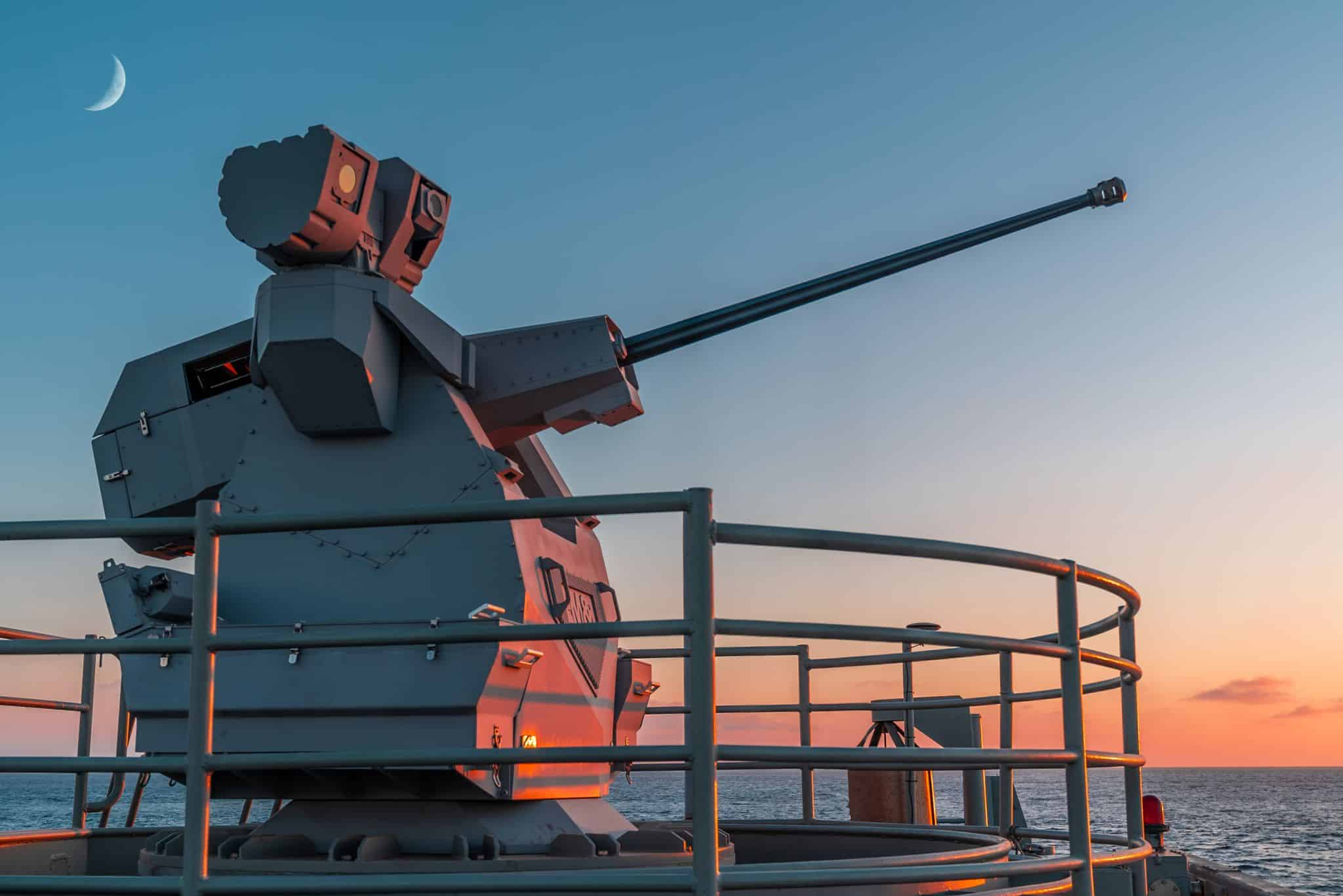
EM&E Group will supply 47 naval weapon stations to the Portuguese Navy through the NATO Support and Procurement Agency, strengthening the Spanish company’s position in Europe’s remote weapon station market.
The contract will be carried out in two phases and covers SENTINEL 2.0 and SENTINEL 30 systems. The SENTINEL 2.0 is a 12.7mm calibre remote weapon station, while the SENTINEL 30 is a 30mm system. The award is the first contract of this scale that EM&E has managed through NSPA, giving the programme additional relevance for NATO procurement and standardisation.
Remote weapon stations are now a core part of naval platform protection. They allow ships to engage small boats, drones, asymmetric threats, and surface targets while keeping operators inside protected spaces. The technology combines stabilised mounts, sensors, fire-control software, ammunition handling, power systems, human-machine interfaces, safety logic, and integration with ship command systems.
A naval remote weapon station is not just a gun mounted on a powered structure. It must maintain stabilisation in sea states, resist corrosion, operate under vibration and shock, interface with ship electronics, manage safe firing arcs, and remain maintainable at sea. Naval versions face environmental and integration demands that land systems do not encounter at the same intensity.
The Portuguese order gives EM&E a meaningful production run rather than a small integration project. Forty-seven stations will require serial manufacturing, acceptance testing, spares provisioning, documentation, training support, and phased delivery management. The NSPA route adds another layer of compliance with NATO technical and operational expectations, potentially supporting future export credibility.
European navies are adding unmanned systems, shipboard drones, missile defences, remote weapons, sensors, and electronic-warfare equipment to fleets facing a broader threat set. Small boats and drones have increased demand for heavy-machine-gun and medium-calibre remote weapon stations, especially on patrol vessels, amphibious ships, auxiliaries, and surface combatants operating near contested coastlines.
That sustainment pressure reaches from major missile systems down to smaller shipboard effectors, since naval firepower increasingly depends on reload equipment, support procedures, spares, and logistics as much as on the weapon installed at sea.
The SENTINEL 30’s 30mm class is particularly relevant as navies seek more affordable engagement options below the missile layer. Missiles remain essential for high-end threats, but they are expensive, finite, and not always appropriate for close-range targets. Remote guns give ships a lower-cost response option, provided sensors, fire-control, stabilisation, and ammunition are matched to the target set.
Portugal’s selection also reinforces the role of European mid-tier defence companies in NATO supply chains. Not every naval upgrade is led by the largest primes. Remote weapon stations, optronics, C2 software, ammunition handling, and integration services often come from specialist manufacturers with deep product focus. Contracts of this size can help those companies invest in tooling, supplier capacity, engineering teams, and export support.
The order should improve defensive firepower and standardise weapon station support across relevant Portuguese vessels, while giving EM&E a NATO-channel reference programme. It also signals continuing demand for modular naval weapons that can be produced and integrated without the cost and schedule burden of major platform replacement.
Remote weapon stations are not as visible as frigates or submarines, but they are one of the practical ways navies are adapting existing fleets to a more crowded threat environment. EM&E’s Portuguese order turns that adaptation into serial production.