IN Brief:
- The Indian Army is preparing a proposal for more than 300 additional K9 Vajra self-propelled howitzers.
- Larsen & Toubro is expected to lead local production through its established arrangement with Hanwha Aerospace.
- The plan reflects rising demand for mobile artillery able to survive counter-battery threats and harsh operating environments.
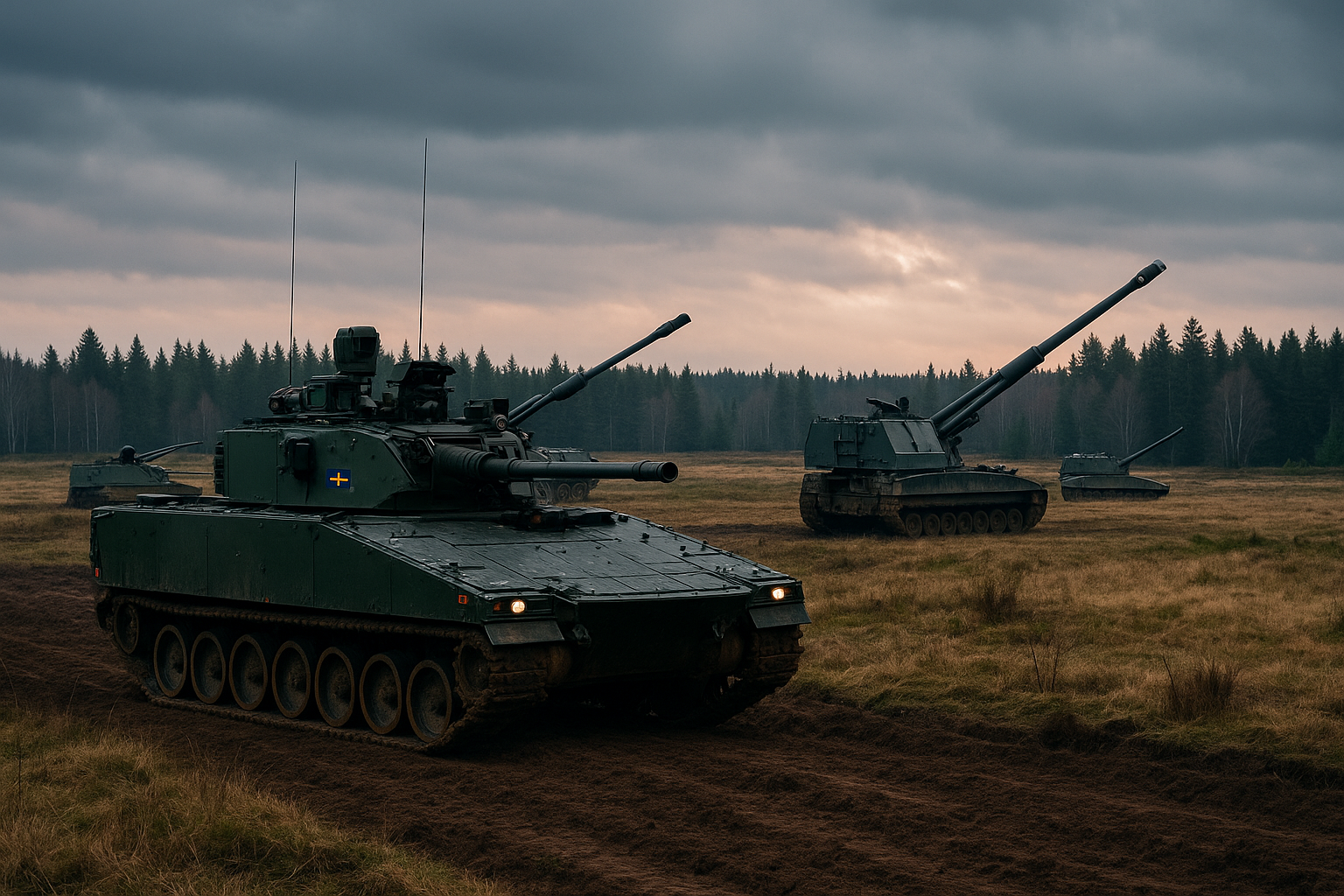
India is preparing a major expansion of its K9 Vajra-T self-propelled howitzer fleet, with the Indian Army moving toward a proposal for more than 300 additional tracked artillery systems.
The prospective order, valued at around ₹23,000 crore, would follow earlier Indian procurement of the K9 Vajra and could push the total fleet beyond 500 vehicles. Larsen & Toubro is expected to remain central to the programme, building on its existing industrial partnership with South Korea’s Hanwha Aerospace.
The K9 Vajra-T is India’s adaptation of the K9 Thunder, configured for local operating requirements and produced through L&T’s land-systems manufacturing base. The 155mm / 52-calibre tracked self-propelled gun combines long-range fire support with armoured mobility, rapid firing, and shoot-and-scoot operation, allowing crews to fire and move before enemy counter-battery systems can respond effectively.
A follow-on order of this size would carry weight beyond the number of vehicles involved. Artillery production is once again a central industrial question for modern armies, as high-intensity conflict consumes barrels, shells, propellant charges, tracks, spares, electronics, and repair capacity at rates that lean peacetime supply chains were never designed to support.
For India, the K9 Vajra line offers a route to expand firepower while deepening domestic heavy-platform manufacturing. The programme brings together armoured hull fabrication, turret integration, gun systems, recoil management, fire-control equipment, engines, transmissions, suspension, tracks, communications, and test infrastructure. Each subsystem must be qualified for a platform that operates under repeated firing stress and heavy mechanical load.
Tracked artillery is particularly demanding to build and sustain. Unlike towed guns, self-propelled systems combine the shock of artillery fire with the wear profile of armoured vehicles. Engines, transmissions, road wheels, track assemblies, turret drives, hydraulic systems, batteries, navigation equipment, and fire-control electronics all need regular support. Desert, high-altitude, and cold-weather operations add further strain, especially where dust, low temperatures, thin air, and difficult terrain reduce reliability margins.
The earlier K9 Vajra fleet has already broadened from its initial desert role toward high-altitude use, giving the Indian Army a more flexible artillery option along difficult frontiers. That shift also changes the sustainment burden. A gun that performs across multiple theatres needs a support model able to handle different climates, maintenance intervals, recovery requirements, and spare-parts consumption patterns.
Local production gives India more control over those variables. Large artillery fleets are only useful when repair capacity, spares, ammunition supply, training, and depot-level overhaul are available at scale. Importing finished vehicles can fill an urgent gap, but long-term readiness depends on the industrial base that can keep the fleet firing after the acceptance ceremony.
The proposed expansion also fits India’s wider defence-manufacturing policy, which has pushed for domestic production, technology absorption, and a larger role for private-sector engineering companies. L&T’s role in the K9 Vajra programme has become a prominent example of how a proven foreign-origin system can be adapted and assembled locally while supporting Indian suppliers.
Scaling production would still test the supply base. Heavy armoured manufacturing requires disciplined welding, machining, heat treatment, quality assurance, electronics installation, calibration, mobility testing, firing trials, and configuration control. A larger order can help suppliers invest in capacity, but only if production is predictable enough to avoid stop-start inefficiency.
Artillery demand is rising globally as armies re-evaluate the balance between missiles, drones, and conventional fires. Precision weapons attract attention, but tube artillery remains central because it can deliver sustained fire at lower cost per round, provided ammunition and barrels are available. Self-propelled artillery adds mobility and survivability, which are increasingly valuable as drones and counter-battery radars shorten the time between firing and being targeted.
For Hanwha Aerospace, a large Indian follow-on would further strengthen the global position of the K9 family, which has already secured customers across Europe and Asia. For L&T, it would deepen production continuity and support investment in people, tooling, test facilities, and long-term sustainment. For India’s supplier base, it could provide a larger workshare across mechanical, electronic, and support systems.
The proposal still needs to move through India’s procurement process before becoming a contract. Yet the direction is already visible: India is treating artillery as a scaled industrial capability, not as a narrow platform buy. The factory, repair base, ammunition chain, and trained technical workforce will determine how much real combat power a 300-plus vehicle expansion creates.