IN Brief:
- U.S. Navy support activity at HMAS Stirling moves Submarine Rotational Force-West closer to operation.
- Australia is investing up to A$8bn in HMAS Stirling expansion, supporting around 3,000 direct jobs.
- The programme will test whether AUKUS can turn submarine access into repeatable maintenance, logistics, and sovereign sustainment capacity.
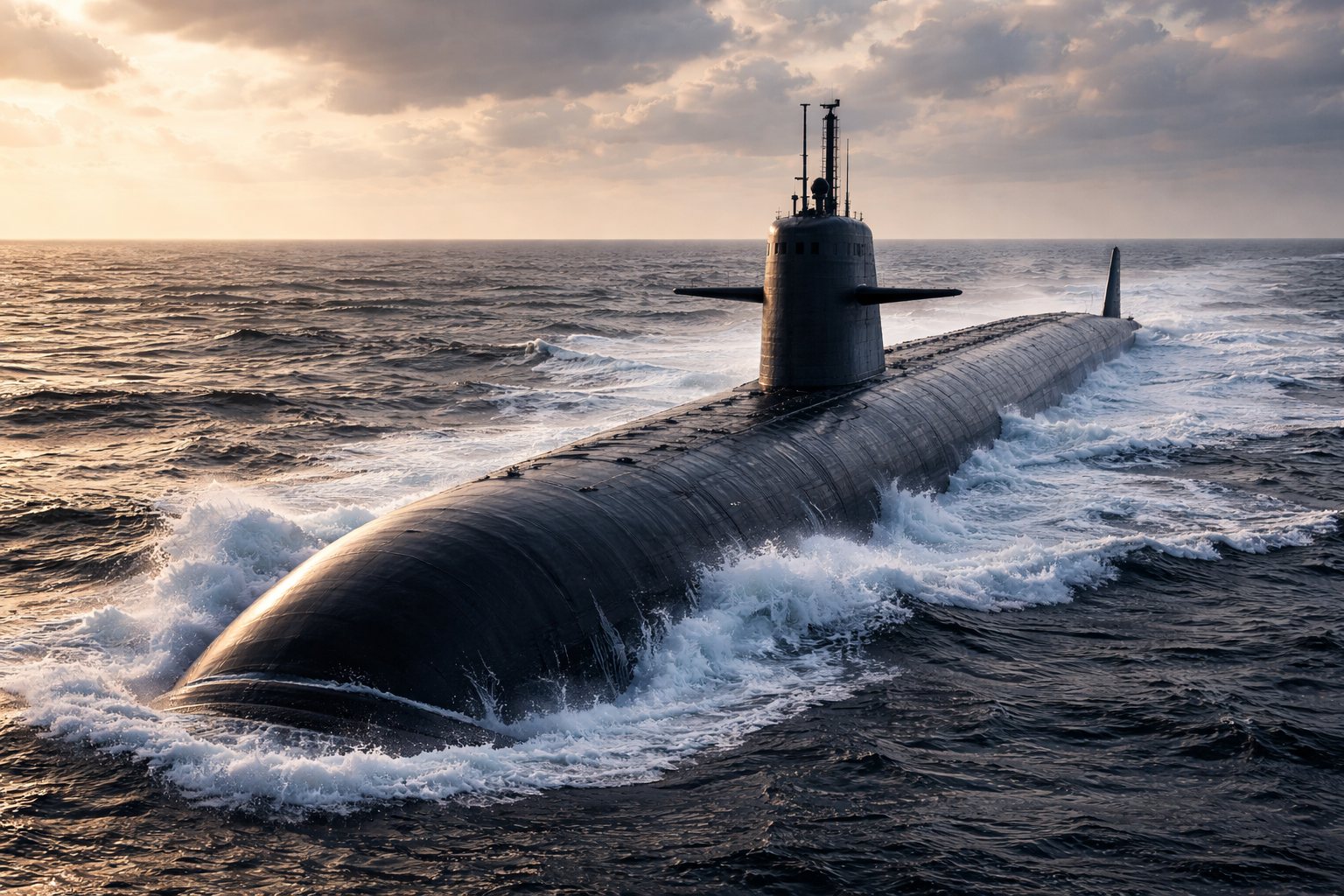
Australia’s AUKUS submarine programme has moved further into the industrial delivery phase, with new U.S. Navy support elements being put in place at HMAS Stirling in Western Australia ahead of Submarine Rotational Force-West.
The work includes the re-establishment of U.S. Submarine Squadron 3 to oversee U.S. nuclear-powered submarines rotating from HMAS Stirling, the creation of a Lead Maintenance Activity in Western Australia from mid-2026, and the establishment of Naval Support Activity Stirling to support U.S. personnel, contractors, and families connected with future rotations.
For Australia, the development moves beyond allied access and basing. AUKUS depends on the country building the workforce, industrial routines, safety culture, logistics systems, and maintenance depth needed to support conventionally armed, nuclear-powered submarines over several decades.
The Albanese Government is investing up to A$8bn to expand HMAS Stirling, with around 3,000 direct Australian jobs expected from the programme. U.S. personnel are due to begin rotating to the base later this year, while more than 200 Royal Australian Navy personnel are already in the United States for training and postings focused on safe operation and qualification on nuclear-powered submarines.
Within that workforce plan, more than 220 Australian industry personnel are working at Pearl Harbor Naval Shipyard to build practical experience in sustaining Virginia-class submarines. Since December 2025, more than ten of those workers have returned to Australia and begun applying their skills domestically.
That movement of people will shape the programme as much as the movement of submarines. Submarine sustainment needs welders, planners, nuclear-qualified engineers, logistics specialists, configuration-control teams, dockyard supervisors, safety regulators, test staff, and suppliers able to operate inside a disciplined naval nuclear environment. The first industrial test is whether Australia can absorb the working habits that make submarine availability possible.
HMAS Stirling will now become a practical training ground for that model. The site has to support visiting U.S. and UK submarines while building Australian capability for future sovereign operation. Maintenance processes, documentation, security, spares handling, personnel assurance, emergency procedures, berth services, contractor support, and local supplier access all have to mature together.
The same sustainment logic runs through QinetiQ’s additive manufacturing support for HMS Anson in Australia, where replacement parts were reverse engineered, securely transferred, produced locally, inspected, approved, and installed during a submarine maintenance period. That workflow offers a smaller-scale example of the industrial behaviours SRF-West will require repeatedly.
Western Australia’s geography adds pressure to every part of the system. HMAS Stirling sits at a strategic point for Indo-Pacific submarine operations, but its distance from traditional U.S. and UK nuclear-submarine industrial centres raises the cost of weak links. A missing component, an unqualified process, or a shortage of authorised staff can slow availability quickly. Local capacity matters because naval availability is measured in boats ready for tasking, not in infrastructure spend.
The broader AUKUS industrial model is becoming clearer. Pillar I is often described through future submarine acquisition, but its first practical output is sustainment competence. Australian workers in Pearl Harbor, U.S. commands at HMAS Stirling, UK submarine participation, and local infrastructure expansion all point to the same requirement: Australia must learn the business of keeping nuclear-powered submarines available before it owns and operates its own fleet.
Suppliers able to provide qualified components, advanced manufacturing, non-destructive inspection, cyber-secure technical data handling, naval infrastructure, training systems, simulation, radiation safety equipment, and maintenance planning tools will sit close to the programme’s centre of gravity. The platform may be nuclear-powered, but the industrial system around it will be built from many conventional, highly controlled supply chains.
Submarine Rotational Force-West is therefore a sustainment ramp-up, not a basing footnote. It is where AUKUS begins to test whether allied ambition can be converted into Australian maintenance capacity, qualified labour, local supplier confidence, and a support system credible enough for a future sovereign fleet.