IN Brief:
- HMS Stirling Castle has been commissioned into the Royal Navy fleet.
- The vessel acts as a mothership for remotely operated and autonomous minehunting systems.
- The ship’s role highlights the production shift from traditional minehunters to modular autonomy, payload support, and technical crews.
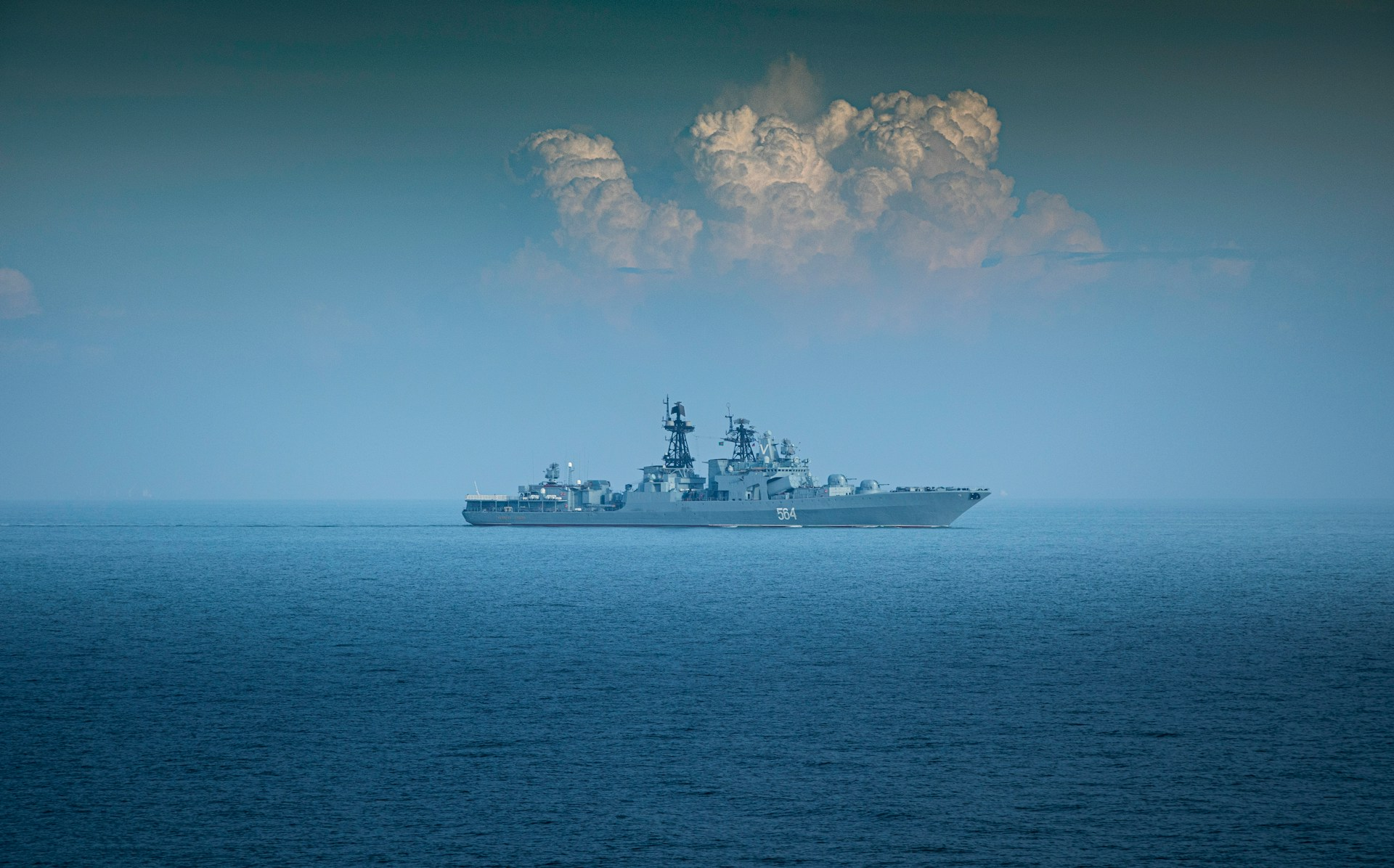
HMS Stirling Castle has been formally commissioned into the Royal Navy, giving the UK’s mine-countermeasures transition a visible mothership around which autonomous and remotely operated systems can be deployed.
The ship was commissioned on the banks of the Firth of Forth, close to her affiliated city of Stirling. She had already become a Royal Navy warship in July 2025 after earlier service as a Royal Fleet Auxiliary vessel, but the commissioning ceremony marks her full arrival in the fleet’s operational life.
Stirling Castle is based at HM Naval Base Portsmouth and carries a ship’s company of 45 sailors and officers. Her role is to extend the reach and effectiveness of Royal Navy minehunting operations by acting as a floating base for remotely operated and autonomous systems used to locate and neutralise mines.
Mine countermeasures are moving away from the traditional model of specialist crewed minehunters operating close to danger. The new model places more emphasis on host ships, modular systems, autonomous vessels, remote payloads, data processing, specialist operators, and through-life support of a distributed mission package.
The Royal Navy’s recent activity shows how quickly that model is maturing. Stirling Castle has already spent much of the last 11 months acting as a home to autonomous minehunting technology around the UK. A recent mission took her to Gibraltar to deliver vessels and equipment as preparations continued for work connected with the Strait of Hormuz.
Training is now being reshaped around that transition. The Royal Navy’s autonomous minehunting courses have moved operators beyond familiarisation and into mission planning, deployment, recovery, data exploitation, and routine maintenance. Stirling Castle gives that skills shift a larger operational platform.
The manufacturing change is substantial. A future mine-countermeasures force needs uncrewed surface vessels, remotely operated underwater vehicles, sensors, launch and recovery systems, mission containers, datalinks, command consoles, software, power systems, and maintenance tools. The mothership becomes a support environment for a complex payload ecosystem.
That creates different supply pressures from conventional shipbuilding. Hull conversion and ship support still matter, but much of the value sits in mission-system integration. Suppliers must design equipment that can be launched, recovered, maintained, updated, and swapped safely at sea. They also have to account for saltwater corrosion, shock, vibration, cyber protection, data storage, and crew workload.
Autonomous minehunting is attractive because it reduces exposure for sailors and increases operational flexibility. Mines are designed to make an area dangerous, slow, and uncertain. Remote systems allow the dangerous part of the work to be pushed away from the crew, while the ship provides command, support, communications, repair, and recovery.
Reliability will decide the force’s practical value. An autonomous or remotely operated system that cannot be kept available at sea quickly becomes an expensive payload. Mission success depends on spare parts, diagnostics, software support, sensor calibration, battery management, recovery equipment, and trained technical staff. Supportability has to sit inside the production model from the beginning.
The same design pressure appears across naval autonomy. The U.S. Navy’s MUSV downselect and Saronic’s Marauder autonomous vessel both point to a naval market trying to create useful maritime mass through uncrewed platforms. Mine countermeasures may prove one of the most practical early applications because the mission is dangerous, repetitive, and well suited to remote operation.
For the UK, Stirling Castle also bridges old and new procurement. She is not a purpose-built future support vessel, but a converted platform informing how future mine-countermeasures support ships should operate. The Royal Navy can learn about deck operations, launch and recovery, crew skills, maintenance routines, and data handling before committing fully to future designs.
The commissioning marks a shift in how mine warfare is being industrialised. The future force will depend less on traditional minehunter hulls and more on ships able to host, sustain, and integrate uncrewed systems at range. Stirling Castle is now the fleet’s practical testbed for that model.