IN Brief:
- France has entered exclusive talks with MBDA and Safran for the THUNDART long-range rocket system.
- The system is intended to replace France’s existing LRU rocket capability.
- Production scale will depend on guidance kits, propulsion, launchers, vehicles, and munition stockpiles.
France has entered exclusive negotiations with MBDA and Safran for a new long-range rocket system, moving the THUNDART solution toward the centre of the French Army’s future deep-fires architecture.
The system is intended to replace France’s Lance-Roquettes Unitaire capability and provide a sovereign route into 150km-class ground-to-ground fires. MBDA and Safran have built the proposal around French industrial workshare, with MBDA bringing missile and munition expertise, Safran contributing guidance technology, and Roxel supporting propulsion.
The decision strengthens France’s control over a capability that has become central to European rearmament. Long-range fires allow armies to strike command posts, air-defence sites, logistics nodes, artillery concentrations, and staging areas beyond the reach of tube artillery. After years of limited European stockpiles, the ability to produce rockets and missiles domestically has become as valuable as the launcher itself.
THUNDART’s industrial value sits in the supply chain behind the munition. Rocket motors, propellant, casings, guidance electronics, control surfaces, fuzes, warheads, launch containers, mission-planning software, and vehicle integration all have to be produced, qualified, and sustained. A launcher without deep munition stocks offers little endurance, while a munition line without assured components cannot support wartime demand.
France’s choice also fits a wider pattern across land fires. Digital fire-control integration is being sharpened through artillery connectivity work, while the munitions base is under pressure from rocket motor and massed-fires production demands. THUNDART gives France a domestic route into that same problem: how to generate range, precision, and volume without handing control of the industrial base to foreign suppliers.
A 150km-class rocket occupies a useful layer in the fires mix. It is not a strategic cruise missile, but it reaches beyond conventional artillery and gives commanders a way to strike operational-depth targets at lower cost than the highest-end weapons. That middle layer is becoming increasingly attractive because modern battlefields consume precision munitions quickly.
The use of guidance technology linked to Safran’s modular weapon experience may reduce development risk, but land-fired rockets impose their own demands. Launch shock, temperature ranges, storage life, battlefield handling, electronic-warfare exposure, and ground-force mission planning all require qualification. A guidance package proven in one context still has to survive the physical and operational environment of another.
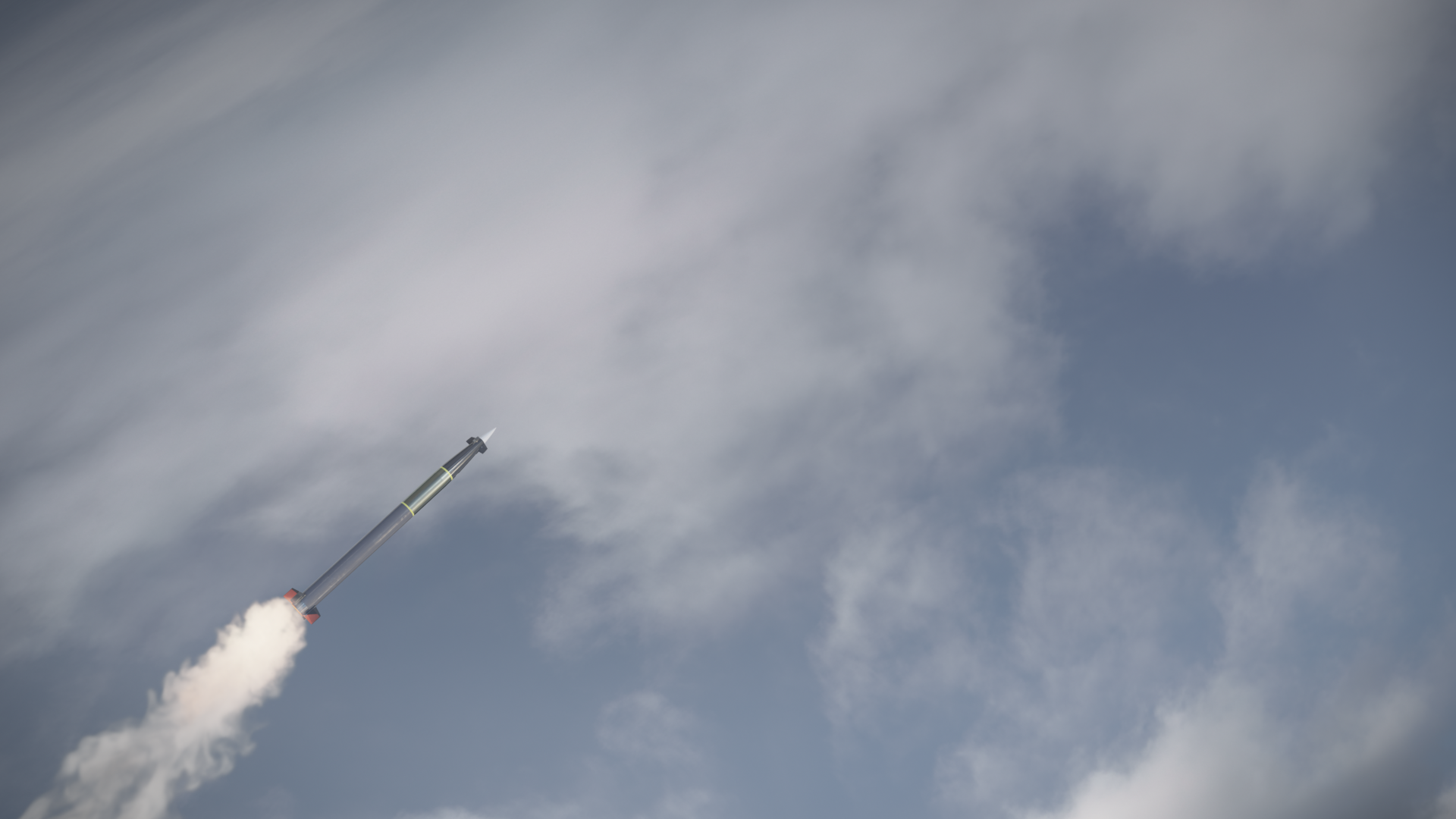
The first firing of THUNDART demonstrated rapid movement from concept to test, but production maturity will require a different discipline. Industrial teams must secure suppliers, stabilise component specifications, qualify batches, build test capacity, and ensure the munition can be stored, transported, loaded, and fired by army units under field conditions. Tooling and workforce planning will need to happen early if the first systems are to enter service before the end of the decade.
Export potential will shape the economics. A French-controlled system with a domestic supply chain could appeal to European and allied customers seeking long-range fires without dependence on US replenishment priorities or export approvals. Additional customers could support higher production volumes, but they would also increase pressure on MBDA and Safran to scale output while preserving French Army delivery schedules.
The launcher is an industrial programme in its own right. Vehicles, stabilisation, power, communications, fire-control equipment, reload systems, safety interlocks, and maintenance tools all define operational effectiveness. Modern deep-fires batteries need to deploy, fire, and move quickly, which places heavy demands on vehicle integration and command-system connectivity.
France’s THUNDART selection shows how European governments are balancing cooperation with sovereignty. Multinational programmes remain politically attractive, but urgent capability gaps are pushing countries toward systems they can control, modify, export, and replenish from domestic or tightly aligned supply chains. Long-range fires sit too close to deterrence for fragile sourcing to be acceptable.
The programme now has to move from selection to production engineering. The visible hardware will draw attention, but the hard work will sit in propellant lines, guidance electronics, launcher integration, warhead safety, test ranges, and stockpile planning. France has chosen a sovereign path; the next measure will be whether industry can produce enough rockets to make that sovereignty operationally meaningful.