IN Brief:
- The UK will fund 150,000 Ukrainian-produced drones, more than 350 air-defence missiles, and ground-based radars.
- The £752m package draws on a loan arrangement backed by immobilised Russian sovereign assets.
- The production burden sits in drone scale-up, missile availability, radar supply, and Ukraine’s domestic defence base.
The UK will fund 150,000 Ukrainian-produced drones, more than 350 air-defence missiles, and ground-based radars through a £752m package backed by immobilised Russian sovereign assets, turning another tranche of support into a direct defence production requirement.
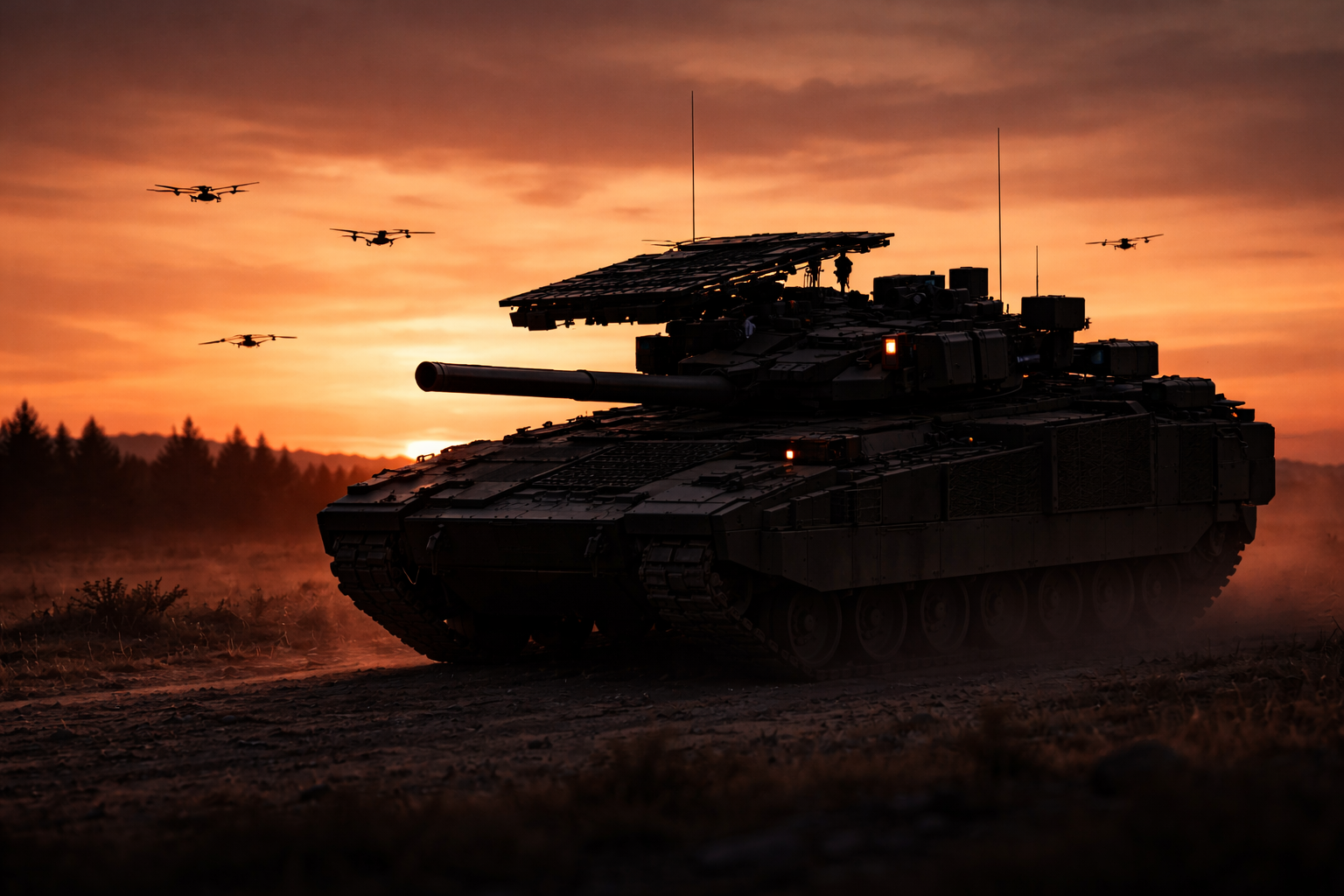
The package is designed to strengthen Ukraine’s ability to defend against Russian missile and drone attacks while supporting its domestic industrial base. The drone element is due by the end of 2026, while the air-defence component includes Lightweight Multirole Missiles and ground-based radar systems.
Scale is the defining feature. Individual drone announcements can blur into familiar wartime procurement language, but 150,000 systems create a different manufacturing problem. Output at that level requires component availability, battery supply, motors, optics, radios, flight-control electronics, payload integration, packaging, test routines, repair pathways, operator feedback loops, and rapid design updates.
Ukraine has already developed one of the world’s most active defence drone ecosystems, driven by urgent battlefield demand and short innovation cycles. UK funding adds volume and financial structure to that ecosystem. It also reinforces a procurement model that differs sharply from traditional defence programmes: faster batches, frequent design changes, tight operational feedback, and constant pressure to keep unit cost low.
That speed does not remove manufacturing discipline; it exposes the absence of it. A small drone can be built quickly, but mass output reveals weak soldering, inconsistent radio performance, unstable firmware, poor weather protection, battery defects, inadequate packaging, and unreliable payload mounts. When systems are produced in the tens or hundreds of thousands, even minor defects become operationally expensive.
The missile and radar elements bring a more traditional capacity constraint. Air-defence missiles depend on propulsion, seekers, warheads, fuzes, control surfaces, energetics, electronics, and test infrastructure. Radars require high-frequency electronics, antennas, power systems, signal processing, environmental hardening, and maintenance support. None of those areas can be expanded instantly, particularly when allied militaries are also rebuilding their own stockpiles.
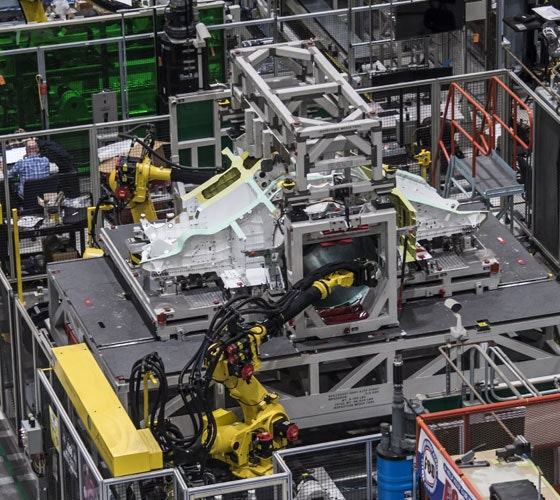
Western missile production is already being pushed towards new manufacturing methods and cross-sector capacity. Additive techniques are entering cruise-missile structures through Divergent’s Tomahawk work, while automotive-scale methods are being explored in Lockheed Martin and GM’s missile supply-chain activity: Divergent puts Tomahawk structures on an additive production path and GM and Lockheed test automotive scale for missile supply. The UK-Ukraine package belongs to the same production environment, where stockpiles are no longer treated as static reserves but as live industrial commitments.
The use of immobilised Russian assets gives the package a political and financial edge, although industry will focus more on contract clarity, predictable demand, and supply-chain visibility. Manufacturers expand capacity when they can see funded orders, secure materials, hire staff, invest in tooling, and plan production over more than one short procurement cycle.
The Ukrainian production emphasis is equally important. Supporting Ukraine’s own defence industry reduces dependence on overseas supply routes and gives local engineers direct access to operational feedback. Domestic producers can adapt designs in response to jamming, weather, Russian countermeasures, operator practice, and component availability far faster than a distant supplier working through slower formal loops.
Rapid drone production still carries risks. Too many variants can fragment logistics, training, battery supply, radio support, software updates, and repair procedures. Standardisation improves sustainment but can slow innovation. Ukraine’s industrial challenge is to maintain enough commonality for scale while retaining the design agility that has made its drone sector effective.
Air-defence economics add another strain. Expensive missiles are often used against low-cost drones because the alternative may be civilian casualties, infrastructure loss, or damage to military assets. That mismatch is pushing militaries towards layered defence, combining sensors, guns, electronic attack, interceptors, and missiles. Funding drones, missiles, and radars in one package reflects the new balance between offensive mass and defensive survivability.
For UK and allied industry, the package reinforces the direction of travel. Defence production is being pulled towards higher tempo, shorter lead times, mixed technology levels, and tighter connection between operational demand and industrial output. The strongest suppliers will be those able to build fast without losing configuration control, quality, cyber assurance, or maintainability.