IN Brief:
- Divergent Technologies will produce a key Tomahawk cruise-missile structure using additive manufacturing.
- Its new Long Beach facility is designed for high-volume missile airframe and warhead-casing production.
- The work moves additive manufacturing further from prototyping into qualified defence production infrastructure.
Divergent Technologies is preparing to 3D-print a key Tomahawk cruise-missile structure at a new Long Beach production facility, placing additive manufacturing deeper inside the US munitions supply chain.
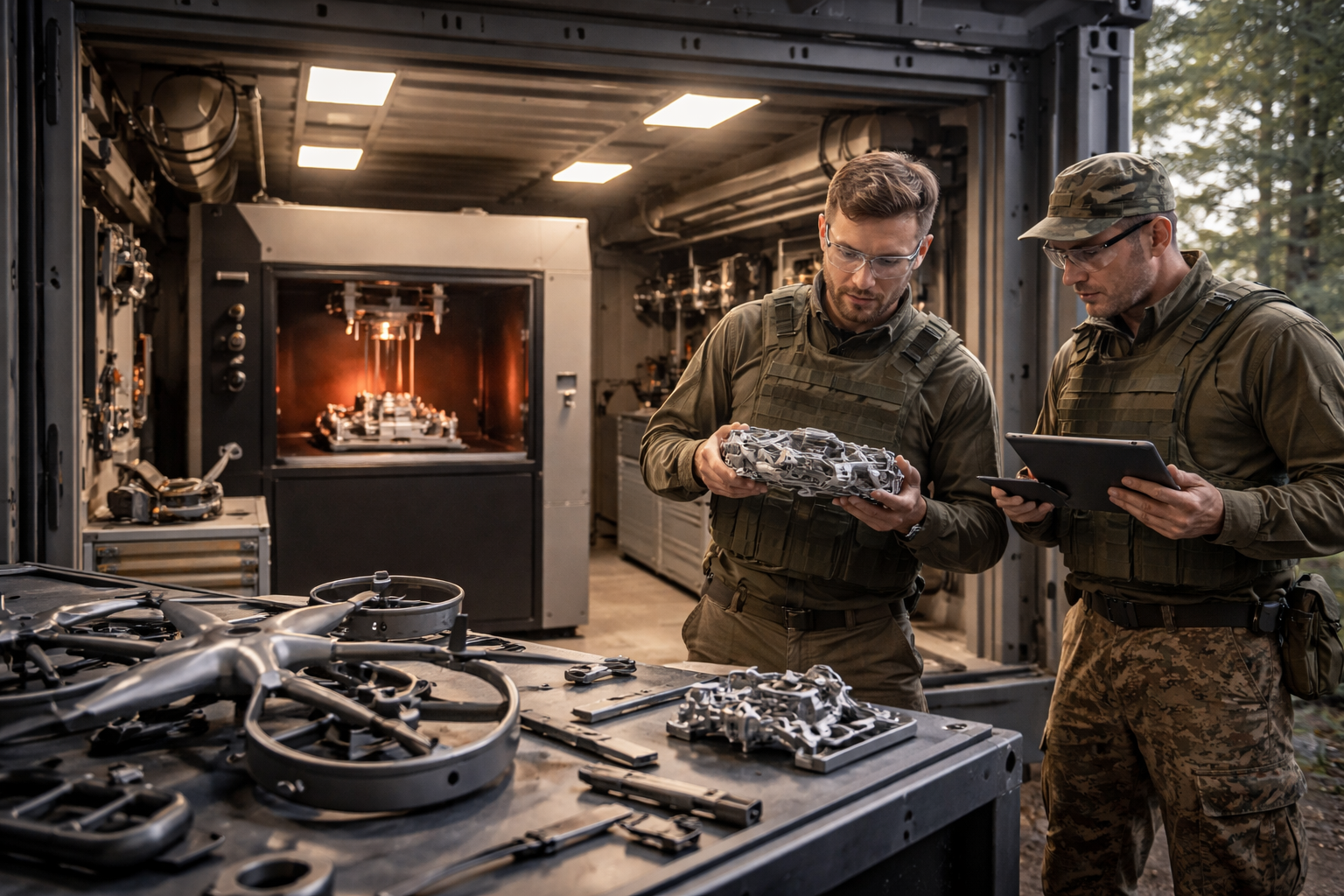
The company’s 430,000 sq ft Factory 2 is being equipped around its Monolith One printers and Digital Additive Production System. Once fully operational, the facility is expected to support output measured in tens of thousands of missile airframes or warhead casings annually, depending on demand. The Tomahawk work will support Raytheon as cruise-missile production faces pressure from rising US and allied stockpile requirements.
Additive manufacturing is not new to defence, but its movement into production infrastructure for high-demand weapons marks a different phase. Divergent’s model uses software, robotics, printing, and assembly as a flexible manufacturing platform, allowing the same factory architecture to be redirected across metal structures without dedicated tooling for every product.
That flexibility is attractive for munitions. Missile production is constrained by long-lead components, qualified suppliers, specialised tooling, energetics, guidance electronics, propulsion, structures, warheads, thermal management, and inspection regimes. A flexible structural-production route cannot remove every bottleneck, but it can ease pressure where machined, cast, or fabricated metal structures are slow or expensive to source.
Tomahawk gives the work strategic weight because cruise missiles behave like compact aircraft from a manufacturing perspective. They require airframe precision, propulsion integration, guidance, control surfaces, electronics, thermal performance, warhead compatibility, storage durability, and launch reliability. Any additively produced structure must meet demanding qualification evidence, not just dimensional accuracy.
The same process-led push is visible in automated casting for aerospace and defence bottlenecks and new investment in energetics and propulsion infrastructure. New defence manufacturers are attacking the production processes that slow missiles, aircraft, motors, and complex metal structures, not only the final platforms.
Additive manufacturing’s promise rests on speed and design flexibility, but industrialisation remains unforgiving. Defence customers need repeatability across batches, material traceability, non-destructive inspection, qualified powder or wire supply, machine calibration, post-processing discipline, heat treatment, documentation, and acceptance criteria. The printer is only one element of the factory. The quality system around it decides whether the output becomes accepted defence hardware.
The economics also depend on demand stability. A large additive facility can change designs faster than a conventional line, but it still needs capital, skilled operators, post-processing equipment, inspection capacity, and customer confidence. Defence programmes will need to decide where flexible additive structures provide the most value: surge capacity, low-volume complex parts, rapid design changes, or high-rate production of standardised structures.
For the US industrial base, Divergent’s model addresses a pressing problem. Munitions demand is rising faster than many legacy supply chains can comfortably support. Expanding traditional production takes time, and dedicated tooling can lock manufacturers into particular products just as battlefield requirements shift. A software-defined manufacturing platform offers another way to add capacity for structures that can be redesigned and qualified for additive processes.
The Tomahawk work will be watched closely because it tests additive manufacturing at the intersection of scale, quality, and urgency. If Divergent can deliver repeatable missile structures at meaningful volume, 3D printing will have moved further from industrial promise into defence production reality.