IN Brief:
- Fabri has raised $13.5m to scale automated investment casting.
- Investors include RTX Ventures and Lockheed Martin Ventures.
- The work targets casting constraints behind aerospace, missile, propulsion, and defence-component production.
Fabri has raised $13.5m to scale automated investment casting, targeting one of the less visible bottlenecks behind US aerospace and defence production.
The MIT spinout is already shipping castings and is preparing a second foundry intended to reach full production capacity in 2027. Investors include RTX Ventures and Lockheed Martin Ventures, giving the company financial support from organisations with direct exposure to aerospace, missile, propulsion, and complex metal-component supply chains.
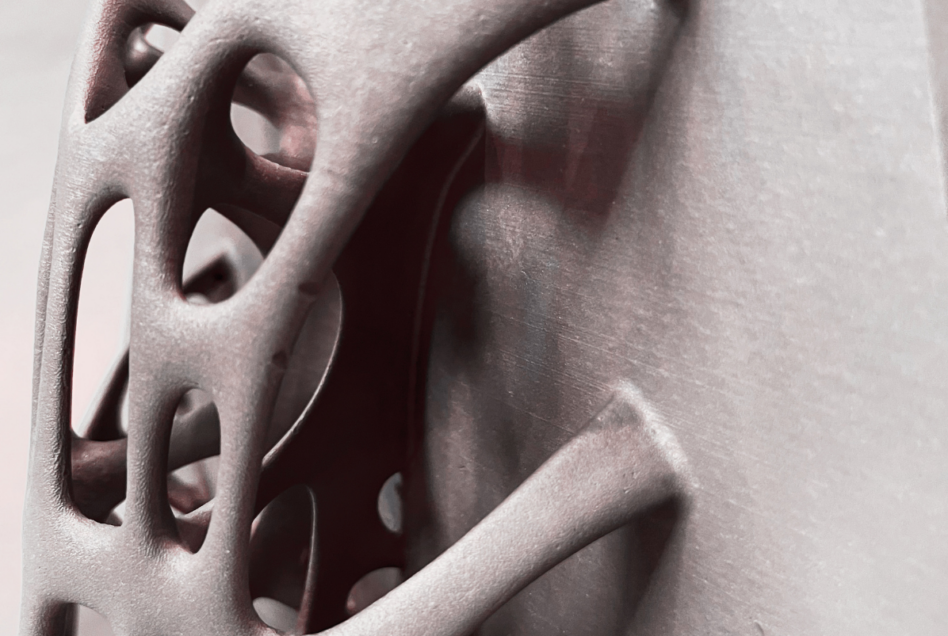
Investment casting is an old process, but it remains central to high-value defence manufacturing. Components such as turbine hardware, missile-engine parts, structural fittings, and complex metal geometries often rely on casting because machining from solid material can be slow, wasteful, or technically unsuitable. The process can produce shapes that would be difficult to make through conventional machining alone.
The constraint is throughput. Traditional investment casting can involve labour-intensive pattern production, manual process steps, rework, inspection, and long feedback loops when defects appear. Fabri is applying additive manufacturing, robotics, software, and production-data analysis to reduce labour, shorten iteration cycles, and improve repeatability.
Casting sits inside the same industrial layer as propulsion, energetics, and rocket motors: it is not always visible in final platform announcements, but shortages can stop production. Recent movement around energetics and propulsion depth and massed-fires rocket motor testing reflects the same underlying pressure. Defence output depends on lower-tier manufacturing capacity that cannot be expanded by procurement announcements alone.
Fabri’s approach is notable because it does not try to replace casting wholesale. Additive manufacturing has value, but it is not always the most economical route for qualified metal parts in volume. Fabri uses 3D-printed wax patterns and automated methods to modernise an established process, preserving the material and production advantages of casting while reducing some of the labour and tooling friction.
For aerospace and missile manufacturers, that hybrid model can be attractive. Complex components can be iterated faster through printed patterns, while the final part still comes through a casting route that customers understand. If software and inspection data can identify where faults emerge, process windows can tighten and rework can fall.
Qualification will decide how far the model can go. Aerospace and defence castings require evidence on material properties, porosity, fatigue behaviour, dimensional accuracy, heat treatment, non-destructive inspection, and process control. Customers will not accept speed unless the parts meet the required standard across batches and operating conditions.
The US foundry base has been under long-term pressure from workforce ageing, capital intensity, environmental requirements, low-margin commercial work, and overseas competition. Defence demand is now rising, but specialist casting capacity cannot be recreated quickly. New foundries need skilled operators, process engineers, quality systems, inspection equipment, heat-treatment capacity, alloy control, and customer approvals.
Automation can reduce some labour constraints, but it does not remove the need for metallurgical knowledge. Casting defects can emerge from temperature variation, pattern design, shell quality, gating, alloy chemistry, cooling rates, and finishing processes. A data-led foundry still needs experienced engineers who understand how physical process variation appears in finished parts.
The involvement of Lockheed Martin Ventures and RTX Ventures shows how closely primes are watching manufacturing bottlenecks below the final assembly level. A fighter, missile, or space system may be delayed by a missing casting even when the prime contractor’s own line appears ready. Strategic investment in suppliers can therefore become a form of production-risk management.
Fabri’s second foundry will be the strongest test of the model. Early shipments prove customer interest, but full production capacity requires equipment uptime, trained staff, audited quality systems, traceable materials, repeatable yield, and predictable delivery. Defence customers will also expect security, export-control compliance, and resilience in the supplier base.
Automated casting could also influence design engineering. If complex cast parts can be produced faster and with less rework, designers may be able to iterate propulsion, thermal-management, structural, and missile hardware more quickly. That would shorten development cycles for systems where metal components remain a rate-limiting factor.
The defence manufacturing debate often focuses on shipyards, aircraft lines, and munitions plants. Fabri’s funding shows how much of the rearmament problem sits further down the chain. The most advanced aerospace or missile programme can still stall on a qualified metal part. Automated investment casting is not glamorous, but it could become one of the production technologies that decides whether defence primes can convert demand into deliveries.