IN Brief:
- Nammo has shown a modular UAV strike system using a Croatian Orca UAV and 66mm N7 warhead.
- The system brings an established anti-armour warhead into a drone-launched attack configuration.
- The development reflects growing industrial demand for repeatable, supportable UAV munitions rather than ad hoc battlefield modification.
Nammo has moved further into UAV-launched strike with a modular system that pairs a Croatian Orca UAV with its 66mm N7 high-explosive anti-tank warhead.
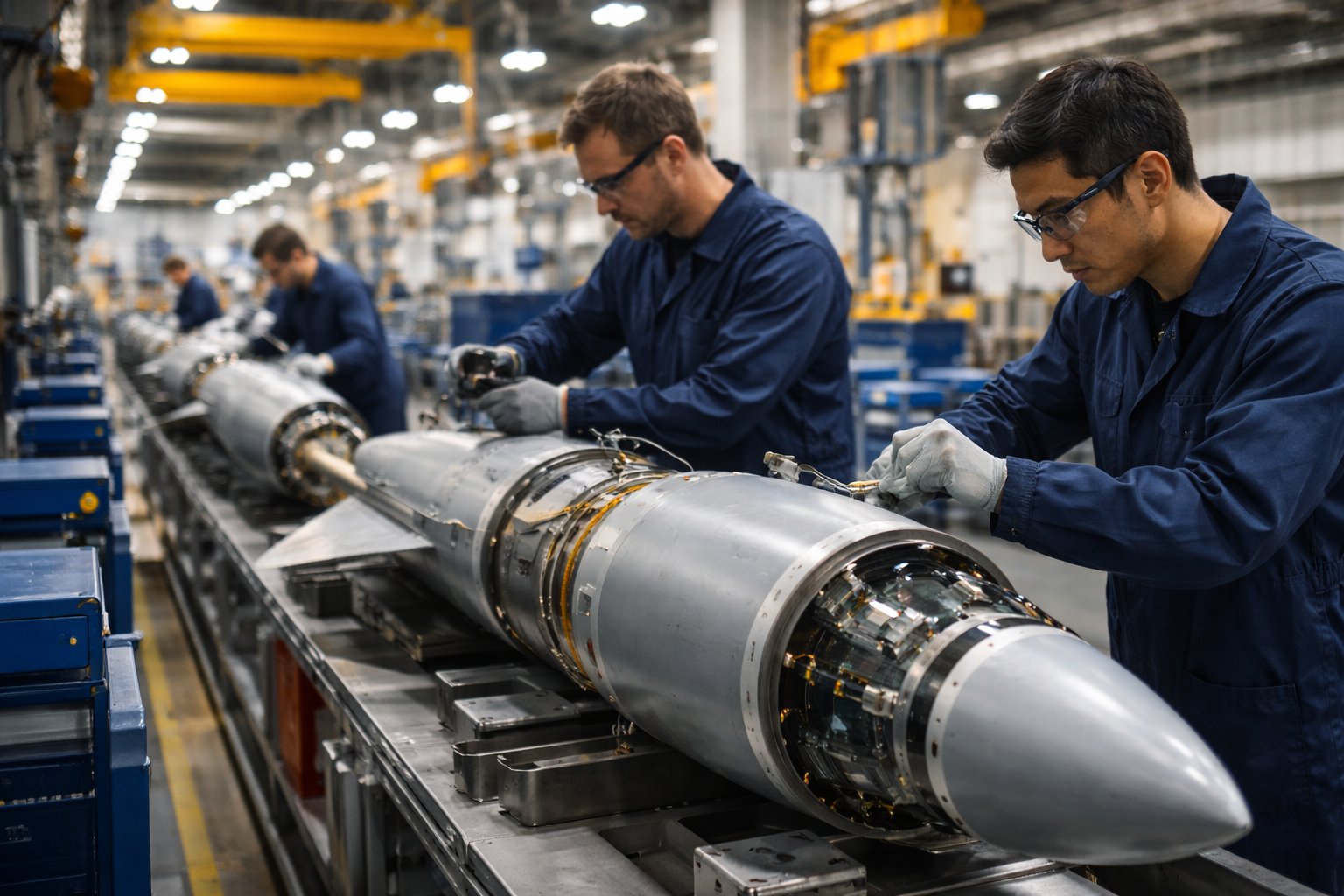
The system uses an MRM2-10 UAV fitted with a 1.5kg N7 warhead. The weapon is designed for anti-armour effect, bringing a more controlled munition lineage into a category that has often relied on field modification and improvised payload integration.
The industrial shift is clear. Drone warfare has expanded quickly through urgent adaptation, but sustained military procurement requires safe handling, repeatable production, defined payload effects, training packages, storage rules, and integration evidence. A known warhead fitted to a defined UAV platform moves the concept closer to a controlled production model.
Ukraine has accelerated demand for this type of capability. Small UAVs carrying anti-armour or dual-purpose payloads have become a regular part of battlefield fires, but operational value depends on consistency. Warheads need predictable effect, safe arming and fuzing, and compatibility with the air vehicle’s stability, release method, and attack profile.
Energetics production brings discipline that drone manufacturers cannot bypass. Explosive filling, batch control, fuzing, inspection, safe storage, transport, and environmental qualification all sit behind a reliable munition. When those requirements are combined with UAV airframes, flight control, batteries, datalinks, optics, and ground-control software, the supply chain becomes a hybrid of aerospace and munitions manufacturing.
Nammo’s system can be configured with different control arrangements, including fibre-optic options. Fibre-controlled drones have gained attention because they reduce exposure to radio-frequency jamming, although they bring their own handling, range, weight, and deployment constraints. Offering multiple control paths reflects an operational environment where jamming, spoofing, and spectrum congestion vary by mission.
The development sits beside a broader European effort to turn battlefield drone lessons into formal production programmes. Localised loitering-munition offers and European-Ukrainian strike cooperation both point in the same direction: customers want systems that can be built at volume, updated quickly, and supported through an accountable industrial base.
Cost discipline will decide how widely these weapons are adopted. The advantage of small strike UAVs lies in their ability to threaten valuable targets without consuming premium missiles. Formalising the product can improve safety, reliability, and procurement confidence, but it can also add cost through certification, secure communications, ruggedisation, and support requirements.
Manufacturers will need to resist building every low-cost UAV weapon into a boutique system. The most useful products will be those with controlled variants, modular payloads, simplified assembly, and component supply chains that can tolerate high consumption. Warhead availability, motor supply, battery quality, and electronics access could become more important than airframe design alone.
Training also enters the production equation. A drone-launched anti-armour munition is only useful if operators can prepare, launch, guide, and recover or dispose of systems safely. Simulation, inert training rounds, maintenance procedures, and clear fault-handling processes will all form part of the deliverable package.
Nammo’s work shows how established munitions houses are entering a field once dominated by start-ups and battlefield improvisation. Warhead design, safety engineering, and energetic-material production are becoming central to UAV strike, and the companies able to merge those disciplines with adaptable air vehicles will be well placed as armies move from urgent drone buying into structured procurement.