IN Brief:
- Thales plans to acquire the Gorgé family stake in Exail and pursue full ownership.
- Exail brings underwater robotics, navigation, mine countermeasures, and autonomous naval systems.
- The move reflects accelerating industrial consolidation in undersea warfare technology.
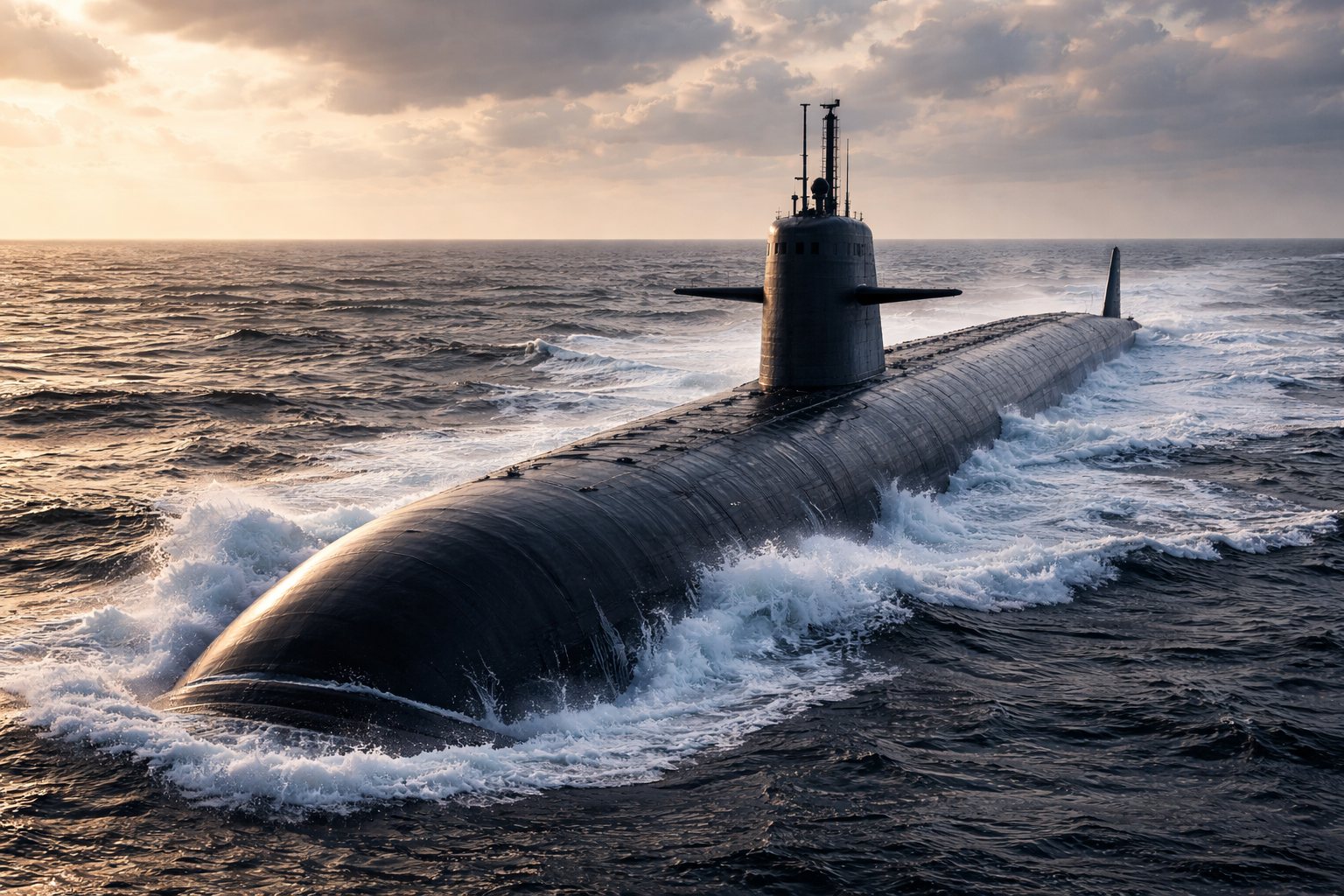
Thales’ move to acquire control of Exail Technologies would strengthen its position in underwater warfare, adding specialist capability in maritime robotics, inertial navigation, mine countermeasures, and autonomous subsea systems to a broader naval electronics portfolio.
The planned transaction would see Thales acquire the Gorgé family’s stake in Exail before launching a tender offer for the remaining shares. If completed, the combination would bring Exail’s autonomous systems, navigation products, and mine-warfare technologies together with Thales’ sonar, command systems, communications, and naval integration work.
Underwater warfare is expanding beyond the traditional pillars of submarines, torpedoes, and shipborne sonar. Navies are now investing in uncrewed underwater vehicles, remotely operated mine-disposal systems, deployable sensors, seabed surveillance, autonomous inspection tools, and mission software. Those systems need to operate as part of a wider naval architecture rather than as isolated specialist equipment.
Exail’s attraction lies in the breadth of that portfolio. The company’s technologies cover autonomous underwater vehicles, mine-countermeasure systems, surface and subsurface drones, acoustic positioning, inertial navigation, and mission-control software. These are core elements in the shift away from crewed minehunters operating close to danger and toward robotic systems able to detect, classify, identify, and neutralise threats at distance.
For Thales, the acquisition would deepen its ability to offer integrated underwater systems. Customers are no longer buying only a sonar or a vehicle; they are buying launch and recovery, mission planning, navigation, autonomy, payloads, secure communications, data processing, maintenance, and training. A company able to package that workflow has a stronger position than one selling a single subsystem.
The manufacturing demands are substantial. Underwater drones must survive pressure, corrosion, shock, vibration, poor visibility, and complex recovery conditions. Pressure housings, connectors, seals, batteries, propulsion units, acoustic sensors, inertial systems, and payload interfaces all have to meet demanding reliability standards. Increasing production rates means qualifying suppliers, expanding test capacity, improving maintainability, and reducing cost without weakening performance.
Mine countermeasures provide one of the clearest demand signals. Several NATO navies still rely on ageing minehunter fleets, while the risk to crewed vessels in contested waters is rising. Autonomous systems offer a safer model, but only when they can be integrated into fleet command structures and supported through repeatable maintenance cycles. A vehicle that finds mines but cannot pass secure, usable data into a naval command system delivers only part of the capability.
The transaction also fits a wider move toward manufacturable underwater autonomy. BAE Systems’ work on Herne, HII’s push around REMUS and ROMULUS, and growing interest in extra-large autonomous underwater vehicles all point to the same industrial shift: navies want more uncrewed undersea mass, but industry still has to prove it can build, support, and upgrade those systems in numbers.
Critical-infrastructure protection has broadened the market. Subsea cables, pipelines, offshore energy assets, port approaches, and seabed sensors are now treated as national-security vulnerabilities. Underwater drones and persistent sensing systems are therefore being pulled into both military and civil-defence planning. That broadens demand, but it also raises expectations around endurance, stealth, navigation, autonomy, and data security.
Navigation is one of Exail’s strongest assets in that environment. Underwater vehicles cannot rely on GPS while submerged, which makes inertial navigation, acoustic positioning, and sensor fusion central to mission success. The ability to keep an autonomous system accurately located during long missions can decide whether it produces usable data or becomes an expensive drifting payload.
European consolidation is also a factor. Defence ministries want stronger domestic or regional suppliers able to compete globally, particularly in areas where US and Chinese technology dominance creates strategic unease. Bringing Exail into Thales would create a larger European underwater-systems player, although customers may also watch the effect on competition among smaller robotics specialists.
The acquisition could give Exail more capital, programme access, and integration channels. It could also place its technologies inside larger naval bids where autonomy, sonar, command systems, and communications are procured together. The risk for any specialist company entering a prime-contractor structure is the loss of speed and product focus, particularly in a market still moving quickly.
The undersea domain is shifting from niche experimentation toward fleet adoption. Thales is trying to secure the robotics, navigation, and integration layer before procurement patterns harden. If the deal closes, the next test will be turning Exail’s technology base into production capacity that can meet growing naval demand without losing the engineering agility that made the company valuable.