IN Brief:
- Lockheed Martin Australia has started work on an AUD$85.9m Air Power Precinct.
- The Hunter region facility will support IAMD, F-35 sustainment, software, integration, and training.
- The project strengthens Australia’s sovereign air and missile defence industrial capacity.
Lockheed Martin Australia has started construction of an AUD$85.9m Air Power Precinct in the Hunter region, adding a dedicated industrial base for integrated air and missile defence, F-35 sustainment, systems integration, software support, and advanced training.
The development is tied to the Williamtown defence and aerospace ecosystem, where Australia’s combat-air operations, sustainment activity, training infrastructure, and airbase support already form one of the country’s most concentrated military aviation clusters. Once operational, the precinct is expected to support hardware assembly, installation, integration and validation, testing, software work, and F-35 canopy repair.
That combination places the facility firmly in the sustainment and integration layer of modern air power. Combat aircraft and missile-defence systems are often discussed through platform numbers, but their long-term value depends on repair capacity, software baselines, mission-data support, secure networks, component access, test equipment, and qualified technicians. The factory, laboratory, and training environment around the platform increasingly determine how much capability a defence force can actually use.
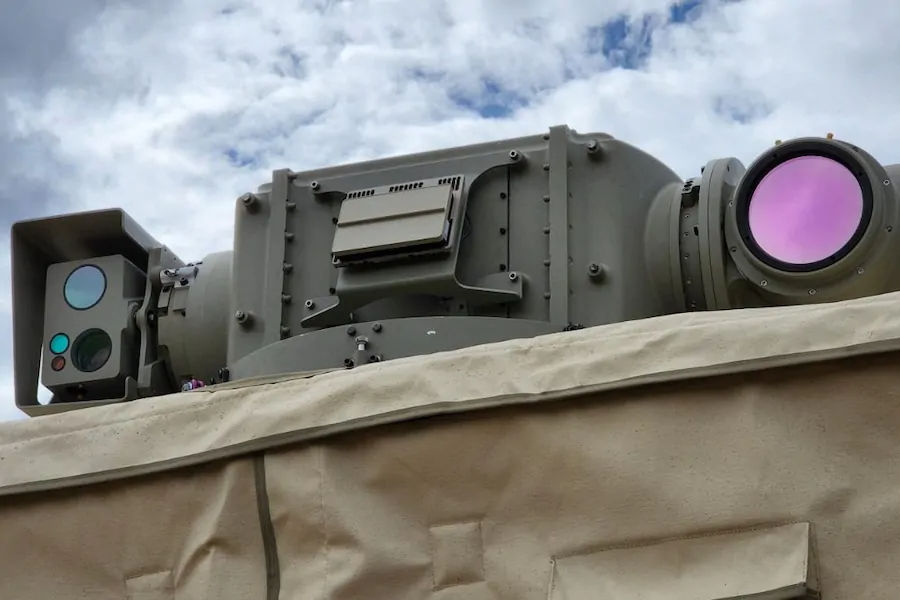
Integrated air and missile defence adds further complexity. It is not a single equipment category, but a chain of radars, launchers, effectors, command systems, fire-control software, communications gateways, power systems, and training tools. Each element has to be configured, tested, updated, and supported as threats evolve. A local facility that can handle integration, validation, and software sustainment gives Australia greater control over the pace at which changes can be absorbed.
The F-35 element will draw particular attention because every Lightning II operator faces a sustainment challenge beyond simple aircraft maintenance. The aircraft’s low-observable features, mission systems, data requirements, and global support model make local repair depth an operational asset. A domestic canopy-repair capability may sound narrow, yet it sits in the kind of specialist low-observable sustainment work that often determines aircraft availability.
Low-observable repair depends on approved processes, controlled materials, skilled technicians, validated inspection methods, and strict quality assurance. The same logic applies to coatings, transparencies, apertures, seals, and structural repairs. A fighter fleet cannot rely indefinitely on overseas queues for work that affects readiness, particularly in an Indo-Pacific environment where distance and disruption would place immediate pressure on supply chains.
Australia’s investment also reflects a broader shift in allied air-power infrastructure. The UK’s own Lightning II fleet development has shown how quickly aircraft decisions become sustainment decisions, especially when different variants, roles, carrier operations, and future weapons integration all sit inside the same force plan. Australia faces a different structure, but the underlying industrial problem is comparable: the aircraft acquisition is only the start of a long support obligation.
The Hunter precinct aligns with Canberra’s wider push for sovereign capacity in guided weapons, undersea systems, uncrewed platforms, cyber, and sustainment. By linking IAMD, F-35 work, software, and systems integration, the development avoids treating those areas as separate industrial markets. Future air combat will not make that distinction. Fighters, missile batteries, sensors, electronic warfare systems, cyber inputs, and distributed command networks will operate as one connected architecture.
For suppliers, the precinct could become a route into capability insertion as well as maintenance. Mature platforms increasingly receive upgrades through software, mission-system changes, and subsystem refreshes rather than complete replacement. A domestic integration and validation site can shorten the path between operational demand and fielded modification, provided export controls, configuration management, and funding remain aligned.
Workforce availability will decide how much value the facility creates. Australia needs software specialists, systems engineers, low-observable repair technicians, cyber personnel, integration staff, trainers, test engineers, and programme managers who understand defence accreditation as well as production discipline. The building creates capacity only if enough skilled people can be recruited and retained around it.
The 2028 operational target gives industry a planning point, but the deeper test will come after opening. Facilities of this kind must handle evolving requirements, new software loads, component obsolescence, urgent repairs, and upgrades driven by threat change. If the precinct can do that reliably, it will strengthen Australia’s position as more than an operating location for allied systems.
The Hunter region is being asked to carry a larger part of Australia’s air-power industrial burden. With F-35 sustainment, IAMD integration, and software support under one roof, the new precinct gives that ambition a more concrete production base.