IN Brief:
- Lithuania has signed an MoU to join Norway’s standardised vessel programme.
- The programme aims to replace multiple ship classes with a smaller number of modular, common vessel designs.
- The arrangement could strengthen Nordic-Baltic interoperability while giving shipbuilders a more repeatable production model.
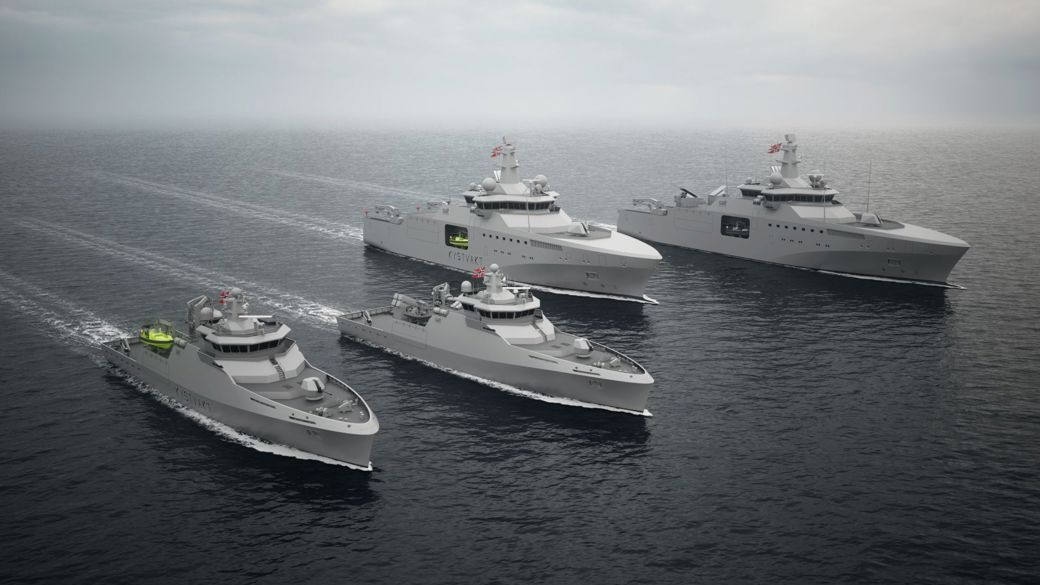
Lithuania has signed an MoU to join Norway’s standardised vessel programme, giving the Nordic effort its first formal international partner and opening the door to modular multi-role vessels for the Lithuanian Navy after 2030.
Norway’s programme is built around a clear industrial proposition: replace a fragmented mix of vessel classes with a more standardised fleet, using common hulls and modular mission capabilities where possible. The Norwegian requirement could involve up to 28 new vessels, while Lithuania is assessing a future need for four multipurpose modular ships and associated modular systems. The operating principle is that vessels should be as civilian as possible and as military as necessary.
That principle captures the manufacturing tension. Modern navies need specialised capability, but they also need ships that can be built, maintained, crewed, and upgraded without turning every hull into a bespoke national project. Standardisation promises lower lifecycle cost, easier training, shared spares, common maintenance, and faster upgrades. It also gives shipyards and subsystem suppliers a chance to build repeatable production processes rather than restarting with each class.
For Lithuania, the attraction is practical. A modular vessel family could support patrol, mine countermeasures, surveillance, logistics, support, and other Baltic Sea missions without requiring multiple separate classes. For Norway, Lithuania’s participation strengthens the case for standardised vessels as an allied product line rather than a domestic procurement solution. Shipbuilding economics improve when design and production volumes rise.
Kongsberg Defence & Aerospace and Salt Ship Design have already been selected for concept work, combining combat-system, integration, and ship-design expertise. The industrial model will depend on how precisely modularity is specified. Mission modules can become expensive and awkward if interfaces are poorly controlled. They can also become a powerful production tool if power, cooling, data, deck handling, command-system integration, and physical mounting standards are fixed early.
The Baltic and High North setting gives the programme additional urgency. Small and medium navies need vessels that can operate in contested waters, support surveillance, protect infrastructure, and integrate with allied forces. They also need enough hulls to generate presence. A small number of exquisite ships may not solve availability pressures, while a standardised family with modular payloads could provide greater flexibility without multiplying support burdens.
The same pressure is visible across naval autonomy and mission-systems markets. Thales and Exail’s undersea autonomy consolidation points towards fleets built around payloads, sensors, launch systems, and repeatable production rather than isolated specialist platforms. Norway’s standardised vessel effort could provide a surface-fleet version of that logic, with ships designed as carriers for sensors, mission packages, autonomous systems, and future upgrades.
Modularity has failed before when it drifted from engineering discipline into procurement language. Naval vessels are not container ships with weapons bolted on. Mission changes can affect stability, crewing, survivability, electromagnetic compatibility, data architecture, and maintenance routines. The more ambitious the modular concept, the more disciplined the interface control must be. Standardisation only saves money if national customisation does not slowly consume the common baseline.
Lithuania’s participation will test whether the Norwegian model can accommodate allied requirements without collapsing into bespoke variants. If the programme can hold a shared design foundation while allowing sensible mission differences, it could offer a useful alternative to traditional one-off patrol and support vessel procurement.
Shipyards would benefit from predictable production. Standardised designs can support investment in tooling, modular construction methods, digital twins, supplier qualification, and long-term workforce planning. Smaller navies rarely provide enough volume on their own to justify that investment. Allied participation changes the commercial calculation and gives suppliers a more stable basis for capacity planning.
European naval construction is already stretched across frigates, submarines, mine warfare, patrol vessels, support ships, and uncrewed systems. Common designs will not solve every capacity problem, but they may help navies buy useful hull numbers without exhausting the industrial base. If Norway and Lithuania can turn the MoU into a disciplined production model, the programme could become a practical case study in allied naval standardisation. The test will be whether modularity remains a set of engineering controls rather than a set of optimistic slideware.