IN Brief:
- MEDUSA is a submarine-launched unmanned system intended to support clandestine mine deployment.
- General Dynamics Mission Systems is leading design, fabrication, testing, and prototype work with a wider industrial team.
- The programme reflects growing demand for autonomous undersea payloads that can be launched from existing submarine infrastructure.
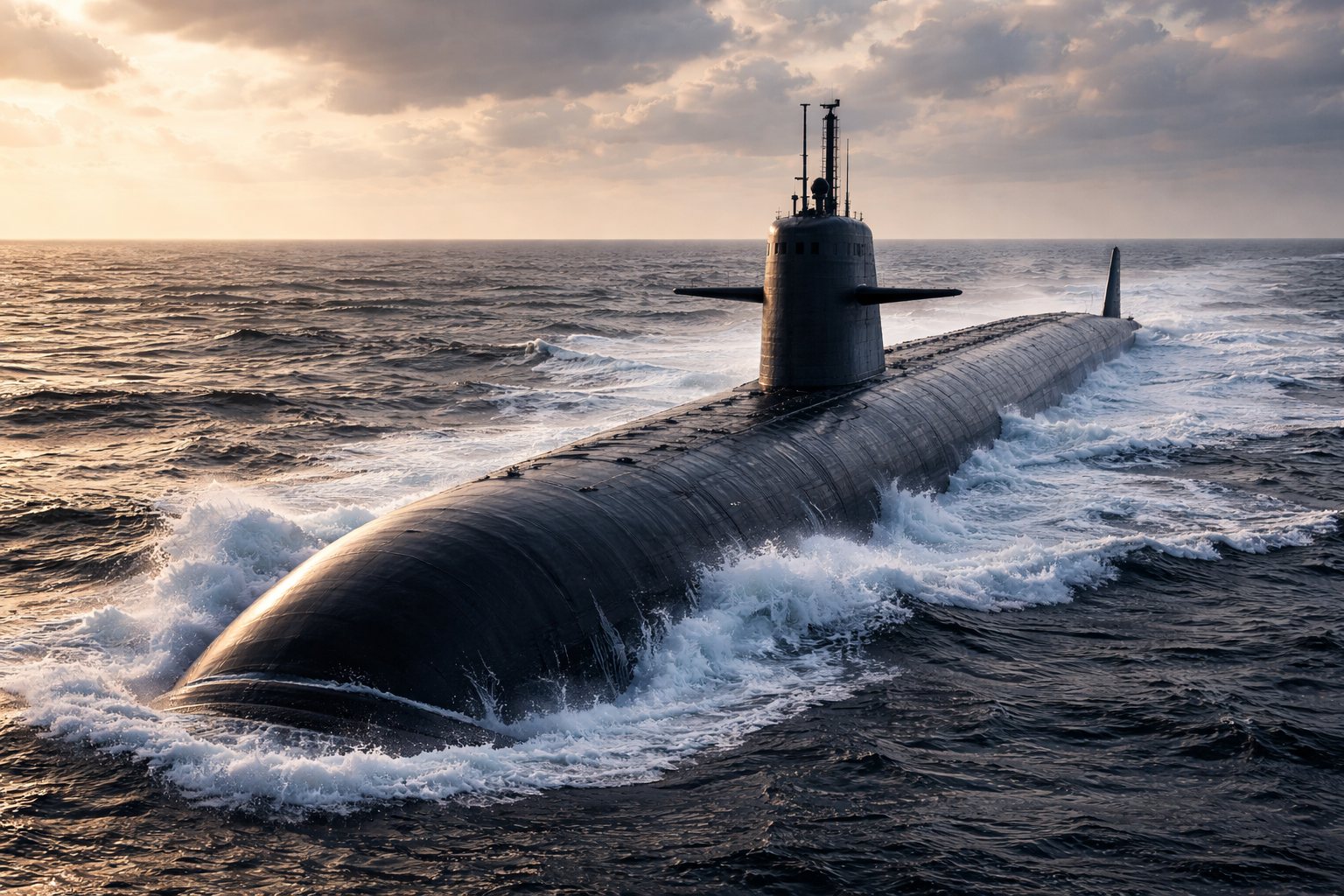
The US Navy’s MEDUSA work is keeping submarine-launched autonomous mining technology in development, with General Dynamics Mission Systems anchoring an industrial team focused on a covert undersea capability that can be deployed from a submarine torpedo tube.
MEDUSA stands for Mining Expendable Delivery Unmanned Submarine Asset. The concept centres on an expendable unmanned undersea vehicle designed to deliver mining effects after launch from a submarine. Earlier contract work has covered design, fabrication, testing, and risk reduction, with team members spanning submarine design, autonomy, energy systems, ordnance, and undersea engineering.
The capability points to a wider shift in undersea warfare. Submarines have traditionally delivered torpedoes, missiles, sensors, and special operations support. Autonomous payloads expand that menu. A submarine-launched UUV can move risk away from the crewed platform, extend reach into denied areas, and create new options for covert seabed or water-column effects. Mining is one of the more sensitive applications because it combines autonomy, persistence, and offensive sea-control potential.
For manufacturers, MEDUSA is a difficult product category. The system must fit inside existing launch infrastructure, survive tube launch, navigate underwater, manage energy, execute mission logic, and interact safely with ordnance. It must also be reliable enough for a mission profile where recovery may not be expected. Those requirements push engineering pressure into compact propulsion, battery safety, autonomy software, pressure vessels, environmental sealing, acoustic discretion, and command logic.
The industrial team structure reflects that complexity. Undersea autonomous systems are rarely single-company products. They require submarine interface knowledge, UUV design, autonomy algorithms, batteries, launch mechanics, payload integration, safety certification, and test-range access. Each layer has to be integrated into a vehicle small enough to launch from a torpedo tube yet capable enough to perform a meaningful mission.
MEDUSA also sits within the wider allied race to turn undersea autonomy into usable military inventory. Thales and Exail’s undersea autonomy work reflects the same production pressure on the European side of the market. Navies want autonomous systems for mine countermeasures, seabed warfare, surveillance, decoys, communications relay, and offensive payload delivery. The recurring difficulty is moving from prototypes to repeatable, supportable production.
Mining adds a policy and operational sensitivity beyond many other UUV roles. Mine warfare can shape movement, deny sea space, and impose clearance burdens far greater than the cost of the mine itself. Autonomous delivery changes how quickly and covertly those effects might be placed. Reliability, control, and safety mechanisms therefore sit at the centre of the engineering problem. An expendable UUV cannot be treated as a simple underwater drone when it is tied to explosive payloads and strategic signalling.
The production path will be demanding. Undersea systems require extensive testing in real water, not only in laboratories. Navigation performance, battery endurance, propulsion noise, launch behaviour, autonomy decisions, and payload deployment must be tested across different conditions. Every test cycle can be expensive and slow. The more specialised the payload, the harder it becomes to borrow from commercial undersea robotics.
Supply-chain constraints add another layer. Batteries, pressure-rated components, compact actuators, acoustic sensors, inertial navigation systems, and specialised materials are all in demand across undersea markets. Submarine-launched vehicles must meet tighter constraints than many surface-launched UUVs. If the US Navy wants MEDUSA-like systems in meaningful numbers, it will need a production base capable of delivering repeatable quality across components with limited commercial substitutes.
The strategic logic is straightforward. Autonomous undersea payloads allow submarines to shape contested maritime areas without remaining close to the effect. They can complicate adversary planning, strengthen sea denial, and create operational ambiguity. For manufacturers, that translates into a growing market for compact, launch-compatible, mission-specific UUVs.
MEDUSA remains in the development and prototype world rather than routine fleet inventory. The decisive work from this point is less visible than the concept: qualification, production engineering, test infrastructure, and the difficult task of making an autonomous offensive undersea system reliable enough for operational use.