IN Brief:
- Denmark plans to acquire two Boeing P-8A Poseidon maritime patrol aircraft.
- The aircraft will support Arctic surveillance, anti-submarine warfare, and NATO maritime awareness.
- The procurement adds another European customer to a mature production and sustainment network based on the 737 platform.
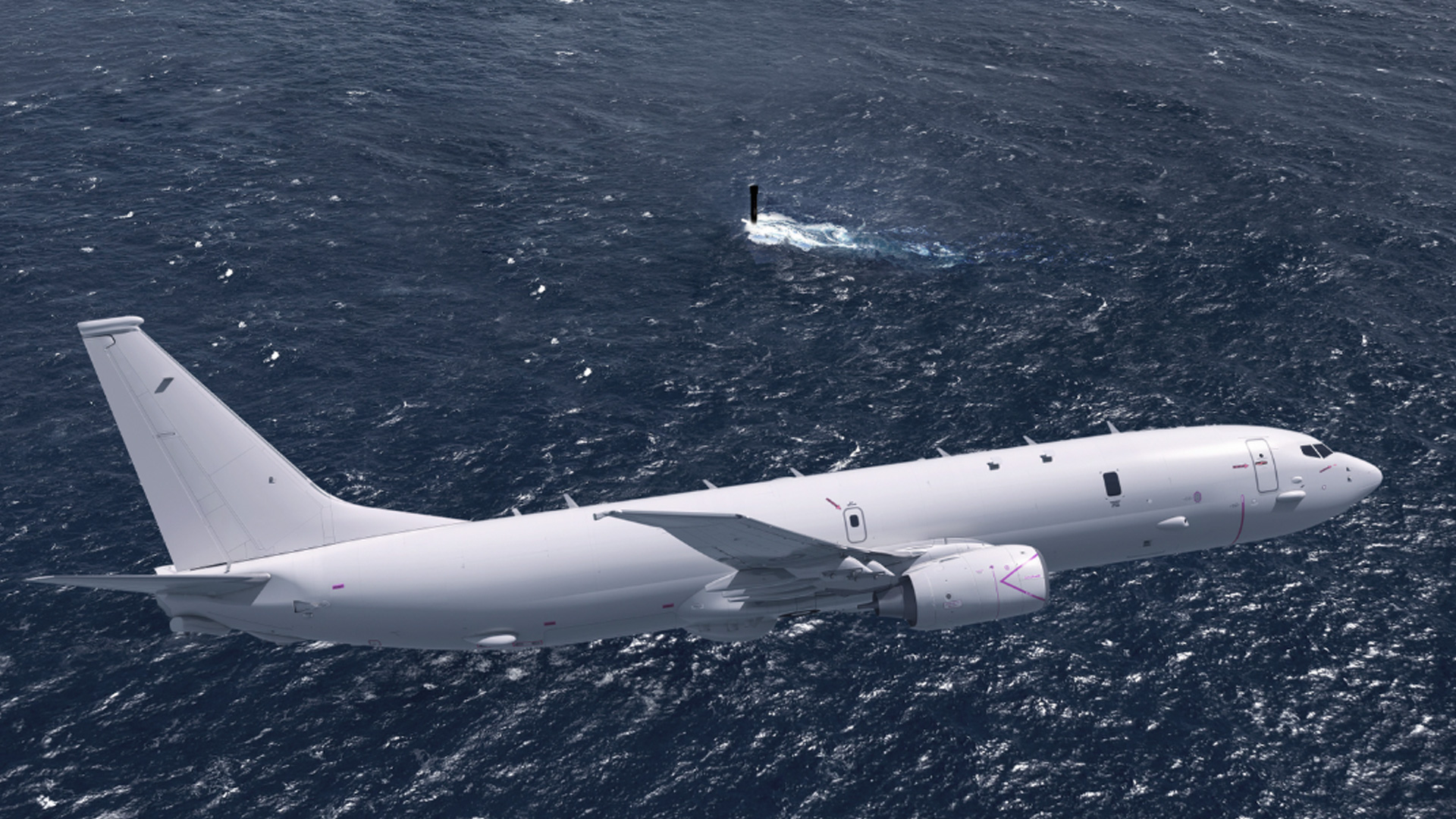
Denmark is moving to acquire Boeing P-8A Poseidon maritime patrol aircraft, adding a fixed-wing surveillance and anti-submarine warfare layer for the Arctic, North Atlantic, and NATO’s northern maritime approaches.
The initial plan centres on two aircraft. Denmark’s requirement sits at the intersection of Greenland, the Faroe Islands, Baltic security, NATO surveillance commitments, and renewed concern over submarine activity in the North Atlantic. For industry, the procurement adds another European customer to one of the most mature maritime patrol aircraft production and sustainment ecosystems now available.
The P-8A is based on the Boeing 737 Next Generation airframe, adapted for anti-submarine warfare, anti-surface warfare, intelligence, surveillance, reconnaissance, maritime domain awareness, and search-and-rescue missions. Its mission fit includes sonobuoy carriage, electronic support measures, radar, communications links, torpedoes, and anti-ship missile options. Commercial-airliner roots give the platform production commonality, logistics depth, and a global maintenance base that purpose-built military aircraft often struggle to match.
A maritime patrol aircraft acquisition is also a decades-long sustainment commitment. Airframe availability, mission-system upgrades, sonobuoy stocks, crew training, simulator access, engine support, software maintenance, and weapons integration all shape the real cost of the fleet. With only two aircraft planned initially, Denmark will almost certainly need close cooperation with allies to manage training, maintenance, and operational resilience.
The Arctic requirement adds further weight. Surveillance across Greenland and surrounding waters involves distance, weather, sparse infrastructure, and rising geopolitical pressure. A two-aircraft fleet cannot provide continuous coverage alone, but it can give Denmark a higher-end capability for patrol, classification, and coalition integration. It also allows Copenhagen to contribute more directly to NATO’s maritime picture at a time when subsea infrastructure, naval movements, and undersea surveillance are becoming more sensitive.
The choice reinforces the consolidation of maritime patrol around a smaller number of proven platforms. The UK, Norway, Germany, Canada, Australia, India, New Zealand, South Korea, and the United States have all moved into or around the P-8 ecosystem. That creates industrial momentum for suppliers of mission equipment, spares, training systems, sonobuoys, acoustic processing tools, and sustainment services.
Denmark’s planned purchase sits alongside a wider industrial focus on anti-submarine warfare supply chains. Lockheed Martin’s move for Ultra Maritime underlined how acoustic sensors, sonobuoys, processing, and naval integration are becoming more strategically important as allied ASW demand rises. The aircraft is only the visible layer of a production chain built around sensors, expendables, software, and support.
The manufacturing challenge for Boeing and its suppliers is not just building additional aircraft. It is maintaining a supportable configuration across multiple international customers, integrating national communications and mission requirements, and keeping the platform upgradeable as submarine threats change. High-end maritime patrol aircraft lose value quickly if acoustic processing, electronic intelligence, and data-link architectures are not refreshed through life.
Denmark also faces a balance between sovereignty and shared support. A small fleet can benefit from allied basing, maintenance, and training arrangements, but national control over availability remains politically important. The most efficient industrial answer may be a hybrid model, with domestic operational ownership supported by a wider P-8 sustainment and training network. That approach is becoming more common as European states rebuild capabilities thinned after the Cold War.
The P-8’s arrival in Danish planning also carries a signal for European defence procurement. Maritime patrol and ASW are again being treated as hard capability gaps rather than optional surveillance tasks. Submarine activity, seabed infrastructure vulnerability, Arctic access, and long-range missile threats all make the maritime air domain more important. Denmark’s move is not large in fleet size, but it adds another node to NATO’s northern surveillance architecture.
For manufacturers, the procurement confirms that older platform categories are generating renewed demand when tied to modern mission systems. Maritime patrol aircraft require airframe production discipline, acoustic integration, weapons compatibility, secure communications, and decades of sustainment. Europe’s northern surveillance rebuild will favour companies able to deliver the aircraft and the industrial network behind it.