IN Brief:
- The US has awarded JLWS agreements to Lockheed Martin Aculight and nLIGHT Defense.
- The agreements have an initial value of $86 million and a total programme ceiling of $847 million.
- The programme will develop containerised laser systems for UAS swarms and cruise missile defence.
Lockheed Martin Aculight and nLIGHT Defense have received Joint Laser Weapon System agreements to advance containerised high-energy lasers for cruise missile and uncrewed aerial system defence.
The awards have an initial value of $86 million and a total programme ceiling of $847 million. The work is being executed under the Scaled Directed Energy Critical Technology Area and is intended to move directed-energy systems from demonstration prototypes toward field-ready, production-oriented platforms.
The JLWS programme will begin with prototype systems rated at around 150 kW before scaling toward the 300–500 kW threshold needed for more robust cruise missile defence. A 500 kW integrated system will be developed in parallel using a laser source matured under the High Energy Laser Scaling Initiative.
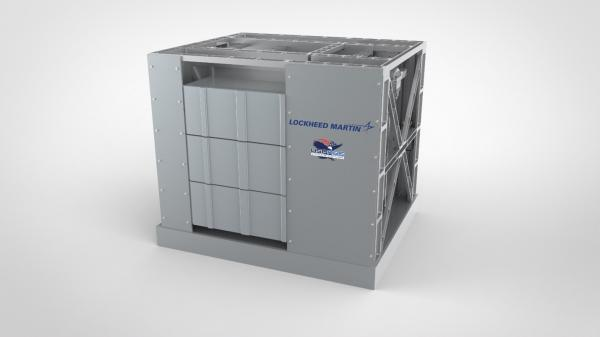
The containerised architecture is central to the programme’s industrial logic. Instead of building a laser weapon around a single fixed platform, the US is pursuing systems that can be integrated across ground and naval applications with less structural redesign. That does not remove the difficulty of fielding high-energy lasers, but it changes the manufacturing and deployment model.
A 500 kW laser is not simply a larger counter-drone system. Higher output drives harder demands in thermal management, beam control, power conditioning, optics, atmospheric compensation, safety systems, and structural integration. Maintaining beam quality at this power level is as important as generating raw energy. If the beam cannot stay focused on a moving target long enough to produce a useful effect, power becomes an engineering figure rather than a weapon capability.
Lockheed has already worked on 300 kW and 500 kW-class laser technologies through HELSI, using spectral beam combining to support scalable directed-energy output. JLWS pushes that work toward a more operational form, with cruise missile defence and large UAS volumes at the centre of the requirement.
The manufacturing question is now difficult to avoid. Directed-energy weapons have spent years moving through laboratory demonstrations, naval trials, and short-range counter-drone applications. The US requirement is shifting toward systems that can be produced, integrated, tested, transported, maintained, and upgraded as part of an air-defence architecture. Suppliers need to build more than a laser source; they need the entire weapon system around it.
Britain’s work around Skyhammer and DragonFire sits in the same industrial context. Lasers attract attention because they offer speed-of-light engagement, deep magazines, and lower marginal cost per shot compared with missiles. The production reality is less tidy. High-energy laser systems require reliable power, cooling, optics, sensors, software, and maintainers, and they must operate through real weather, dust, turbulence, and battlefield disruption.
The JLWS programme also connects directly to the layered counter-drone market. Recent integration work around Airbus and Alta Ares has shown how detection, tracking, identification, electronic attack, kinetic defeat, and directed energy are being pulled into combined architectures. A high-power laser will not replace every interceptor, but it could reduce pressure on missile stockpiles if it can defeat enough targets at a lower cost per engagement.
Cruise missile defence is a harder requirement than small drone defeat. Cruise missiles are faster, more robust, and tactically more demanding targets. Engaging them with a laser means finding, tracking, and holding energy on the right point of the target under severe time constraints. That places equal weight on sensors, fire-control software, beam directors, and command integration.
The containerised model points to a need for theatre flexibility. A system that can be moved between bases, ships, or deployed sites has obvious appeal, especially where fixed infrastructure is vulnerable or where combatant commands need to build temporary layered defence. Containerisation also imposes limits. Power, cooling, maintenance access, and structural rigidity must fit inside a modular footprint.
For suppliers, the award marks a transition from experimental prestige to industrial accountability. Customers will expect reliability, maintainability, safety certification, spare parts, upgrade roadmaps, and training. A high-energy laser that works under controlled conditions is no longer enough.
JLWS is an air-defence programme, a directed-energy programme, and a manufacturing test. It asks whether the US industrial base can turn very high-power lasers into deployable systems rather than bespoke prototypes. If it succeeds, missile defence architectures gain another layer. If it stalls, directed energy will remain an impressive technology waiting for the factory discipline that makes weapons useful.