IN Brief:
- Hanwha is promoting a “Built with Europe, for Europe” approach across NATO markets.
- The model centres on local production, technology transfer, joint ventures, and resilient supply chains.
- Poland, Romania, the Nordics, and Estonia are emerging as key anchors for Hanwha’s European land-systems footprint.
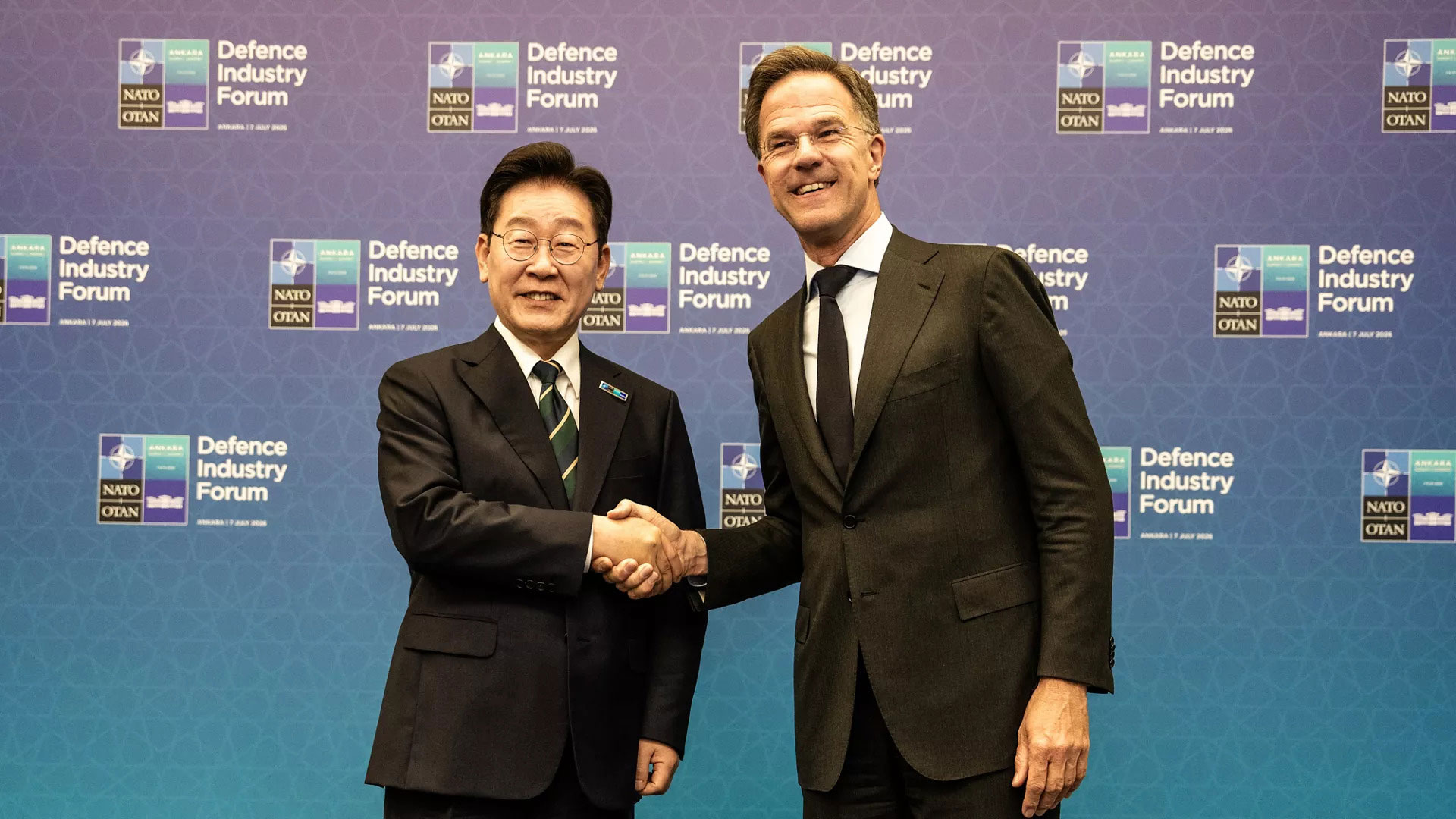
Hanwha Aerospace is pushing deeper into Europe’s defence industrial base, using NATO’s Ankara summit to frame South Korean manufacturing capacity as a long-term answer to the continent’s rearmament bottlenecks.
The company’s European strategy is built around a “Built with Europe, for Europe” model, moving beyond direct export delivery toward local manufacturing, technology transfer, national industrial participation, and regional sustainment. Poland remains the most visible anchor, where cooperation that began with K9 chassis deliveries in 2014 helped support domestic production of the Krab self-propelled howitzer and has since widened through K9PL, HOMAR-K, and potential future work around K9A2-based systems.
Romania is developing a similar pathway, while Hanwha is widening industrial relationships in the Nordics and Estonia. The pattern is consistent: European customers want fast delivery, but they increasingly want that delivery tied to domestic production depth, local maintenance, and some control over long-term upgrade paths.
South Korea’s attraction rests on a feature many European defence ministries are now trying to rebuild: live production capacity. Artillery, rockets, armoured vehicles, air-defence systems, and precision munitions have become capacity problems as much as capability problems. Higher defence spending can authorise purchases, but it cannot instantly create skilled welders, energetics plants, engine capacity, qualified final assembly lines, or test infrastructure.
Hanwha arrives with mature systems, active production lines, and a political backdrop in which South Korea is seeking a more formal defence industry partnership with NATO. Seoul’s proposed Korea–NATO Defence Industry Partnership 2.0 would take cooperation beyond equipment exchange and into joint research, development, production, and long-term industrial collaboration.
That direction matches the European market’s current procurement mood. Since 2022, defence acquisition has become less tolerant of a clean separation between buying a platform and building the support chain behind it. Governments want evidence that equipment can be maintained, rearmed, repaired, and upgraded locally. A howitzer without ammunition depth, a launcher without missile replenishment, or an armoured vehicle without parts capacity is no longer a complete capability.
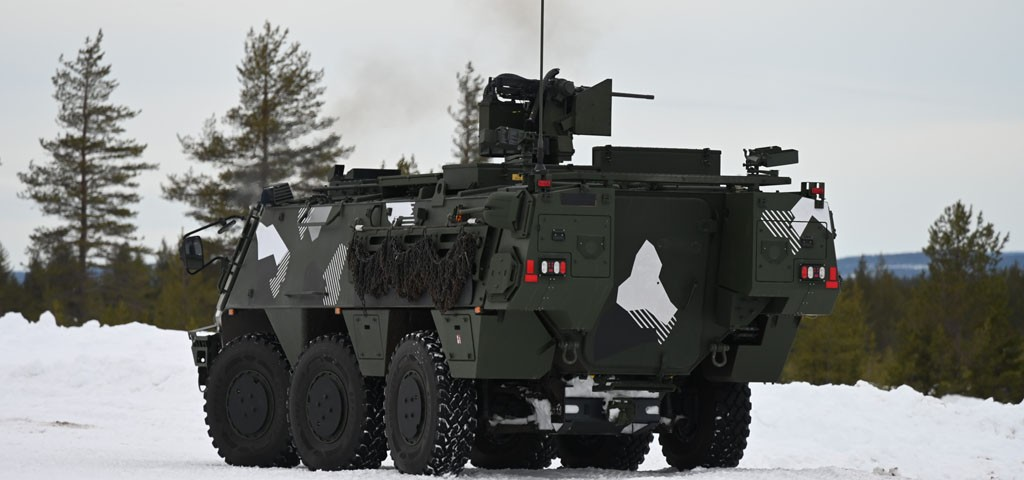
Hanwha’s European land-systems portfolio sits directly inside those constraints. The K9 self-propelled howitzer, K10 ammunition resupply vehicle, and K239 Chunmoo launcher all touch the same industrial pressure points shaping NATO planning: gun barrel life, tracked-vehicle assemblies, launcher modules, command integration, rocket motors, warheads, propellants, and guided munition electronics.
Estonia’s recent decision to add three Chunmoo rocket launchers shows how even modest launcher numbers can carry a larger production and sustainment requirement. Ammunition depth, resupply structures, training, maintenance, and integration into European support networks define the real size of the commitment long after the vehicle count has been announced.
The same logic applies to Hanwha’s wider NATO pitch. Localisation is not a decorative procurement term once production starts. It means transferring drawings, qualifying suppliers, certifying welds, proving locally assembled vehicles, training inspectors, securing components, and keeping configuration control tight across multiple national industrial sites. Every workshare decision adds political value, but it also adds manufacturing complexity.
There is a strong market logic behind Hanwha’s timing. European procurement agencies are under pressure to deliver faster than domestic programmes can often support. South Korean systems offer one route to near-term capability, while localisation allows governments to frame imports as part of domestic industrial rebuilding. The risk is that Europe adds another layer of fragmented national variants unless common sustainment, standards, and upgrade discipline are built into the model from the start.
Hanwha’s K9A2 points to where the next phase may go. Its automatic loading system reduces crew requirements from five to three, bringing automation into artillery at a time when European armies face manpower pressure as well as production constraints. The platform is therefore part of a labour, training, and force-design discussion, not just an equipment competition.
For Europe, the attraction is speed now and industry later. The second half will decide whether the strategy holds. Local assembly that stops at political optics will not solve NATO’s ammunition, repair, and regeneration problem. Local production that reaches components, munitions, software support, and upgrade authority could.
Hanwha is positioning itself for that deeper role. Whether European governments let it become a permanent part of the rearmament base will be decided by factory throughput, supply-chain resilience, and the durability of local partnerships once the first urgent orders are fulfilled.