IN Brief:
- The initial roadmap includes 16 Rafales, with a longer-term route towards a larger Ukrainian fleet.
- Air-defence plans cover SAMP/T NG batteries, radars, Aster 30 interceptors, and associated command systems.
- Licensed production of AASM, SCALP, and Aster weapons would require secure facilities and qualified industrial processes.
France and Ukraine have agreed a roadmap covering Rafale combat aircraft, SAMP/T NG air-defence systems, radar equipment, weapons deliveries, and licensed production, moving their relationship towards a longer-term industrial structure.
An initial package of 16 Rafales would establish Ukraine’s first operational and training capacity on the type, while a broader pathway could support a substantially larger fleet. Four aircraft are expected to form an early training and conversion element.
Associated weapons include AASM Hammer guided bombs, MICA and Meteor air-to-air missiles, and SCALP-EG cruise missiles. The air-defence component envisages four SAMP/T NG batteries supported by long-range and fire-control radars, together with accelerated Aster 30 interceptor deliveries.
Introducing both Rafale and SAMP/T NG creates a programme extending far beyond the transfer of complete platforms. Pilots, ground crews, simulators, maintenance tools, secure mission-planning systems, weapons storage, runway equipment, spare parts, and engineering authority all have to be established.
The aircraft and ground-based system also draw on overlapping French suppliers. Dassault Aviation, Safran, Thales, MBDA, and their lower-tier partners must balance Ukrainian requirements with French orders and existing export commitments.
Rafale output has already been increasing against a sizeable international backlog, yet final assembly represents only the visible part of the production chain. Engines, radar modules, electronic-warfare equipment, landing gear, structures, actuators, displays, wiring, and weapons must all rise at compatible rates.
Capacity cannot be increased uniformly. A final assembly line may add shifts within months, while forgings, castings, semiconductor devices, missile seekers, or specialist test facilities require longer investment and qualification cycles.
Ukraine’s aircraft configuration will have to remain close enough to established standards for support while accommodating national communications, identification, weapons, mission data, and secure networks. Excessive customisation would create a small fleet with unique spares, software, and training requirements.
Training aircraft delivered early may also carry a different configuration from later production examples. Configuration management must ensure that initial airframes receive required upgrades and that maintenance teams understand differences during the transition.
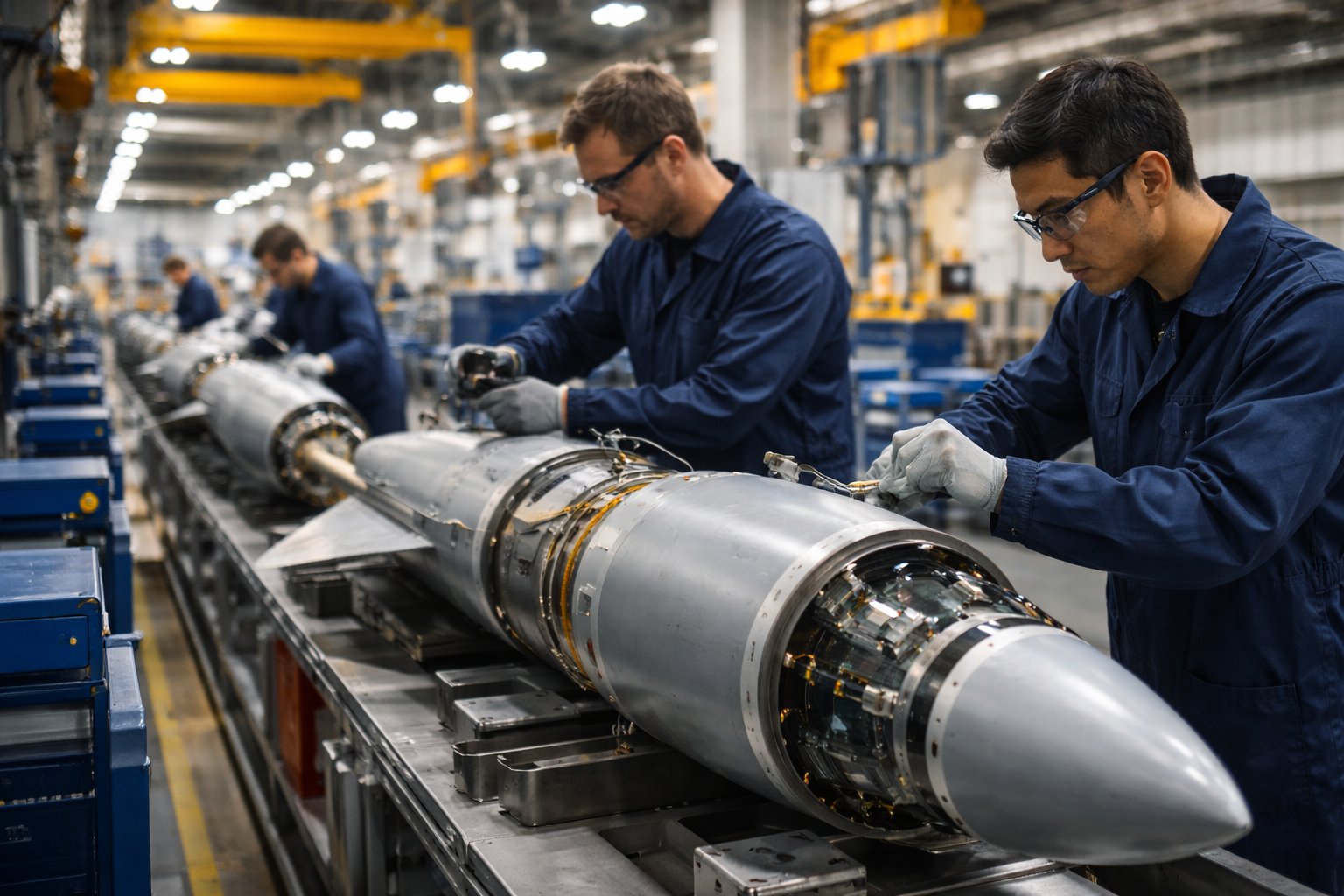
The proposed licensed production of AASM, SCALP, and Aster weapons introduces a larger industrial undertaking. Guided missiles and powered bombs combine propulsion, energetic materials, warheads, seekers, inertial systems, processors, actuators, fuzes, and safety devices within tightly controlled manufacturing processes.
Drawings and machine tools alone cannot establish such production. Facilities require explosive-safety arrangements, secure storage, environmental control, protected data systems, qualified personnel, approved suppliers, and acceptance equipment able to identify faults that may remain hidden until launch.
Energetic materials carry long qualification cycles because changes in chemistry, production method, or supplier can affect storage life and performance. Guidance electronics must withstand vibration, acceleration, temperature, and electromagnetic interference while remaining available over the weapon’s service life.
Technology transfer will consequently proceed in stages. Ukrainian companies possess substantial aerospace, missile, and energetic-material experience, but French design authorities will retain responsibility for controlled configurations, safety evidence, intellectual property, and approval of manufacturing changes.
Protected facilities will be essential because fixed missile-production sites are attractive targets. Dispersed processes, hardened infrastructure, redundant utilities, secure transport, and rapid repair may influence the factory design as strongly as conventional efficiency.
Europe’s missile sector is already expanding to replace stocks transferred to Ukraine and rebuild national inventories. Each immediate delivery reduces the number available elsewhere until production rises, creating continuous pressure on motors, seekers, electronics, warheads, and test capacity.
Layered air defence partly addresses the resulting economics by matching interceptors to threats. Belgium’s recent investment in missile and cannon-based defensive layers reflects the same need to reserve expensive weapons for targets that justify them.
SAMP/T NG sits towards the upper end of that structure. Its interceptors must address demanding aerodynamic and ballistic threats, making production slower and more expensive than simpler short-range missiles.
Rafale support presents a parallel capacity problem. Aircraft operating at high tempo consume tyres, brakes, filters, engine modules, electronic assemblies, and structural life, while combat damage or dispersed operations can increase repair demand.
A fleet without adequate spares and local maintenance would quickly become dependent on a narrow external pipeline. Establishing Ukrainian repair capability could improve resilience, although deeper work may still require French facilities and controlled equipment.
Operational experience will feed back into the design and support system. Intensive electronic warfare, missile attack, dispersal, and frequent software change can expose weaknesses that do not emerge under peacetime flying rates.
Capturing those lessons requires a disciplined route between Ukrainian operators, industrial partners, and French design authorities. Rapid modifications must not leave individual aircraft or batteries with undocumented configurations that later complicate repair or interoperability.
Funding and contracting will govern the speed of every element. Aircraft production slots, missile orders, infrastructure, training, and licensed manufacturing require long-term financial commitments rather than isolated annual decisions.
The roadmap nevertheless establishes a direction in which imported systems and domestic industrial capacity develop together. Ukraine would gain access to French combat-air and air-defence equipment while building a larger share of the weapons and support structure required to keep them operational.
Rafale will remain the most visible component, but fleet effectiveness will depend on the factories, depots, secure networks, trained personnel, and missile inventories behind it. Licensed production can strengthen that base when technology transfer is matched by qualified processes and sustained orders.