IN Brief:
- KIZILELMA S2 completed a live-fire engagement using Roketsan’s JET-230 supersonic air-to-surface missile.
- The firing exercised aircraft software, targeting, structural interfaces, weapon separation, propulsion, and guidance.
- Serial production will require repeatable airframes, missiles, software loads, and automated acceptance testing.
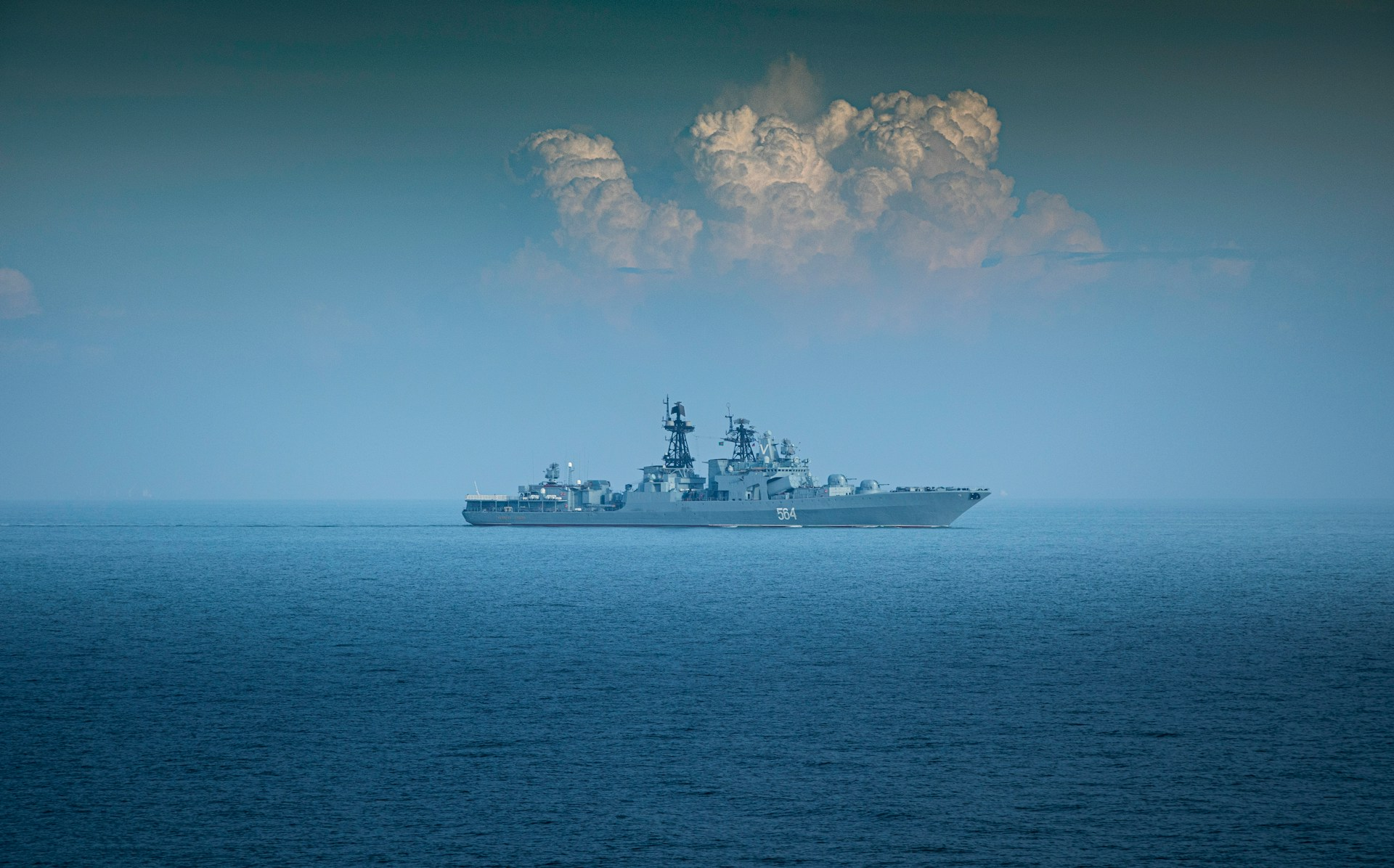
Baykar’s KIZILELMA uncrewed combat aircraft has completed a live-fire engagement with Roketsan’s JET-230 supersonic air-to-surface missile, striking a maritime target from a reported distance exceeding 120 kilometres.
Conducted with a serial-production-standard KIZILELMA S2, the trial moves the aircraft beyond basic flight development and further into the more difficult process of integrating sensors, weapons, mission software, and targeting information into a repeatable combat system.
KIZILELMA has been developed as a jet-powered, low-observable uncrewed aircraft capable of carrying internal and external payloads. The current configuration has an 8.5-tonne maximum take-off weight, a payload capacity of approximately 1.5 tonnes, and a maximum speed approaching Mach 0.9.
JET-230 provides the aircraft with a stand-off weapon derived from Roketsan’s wider family of air-launched ballistic missiles. Its propulsion, guidance, control, warhead, and communications systems must function as part of a complete engagement chain rather than as an isolated missile.
Before release, the aircraft has to recognise the weapon, supply power, exchange targeting information, monitor its status, and prevent launch outside approved conditions. Once released, the missile must separate cleanly from the airframe, transition into powered flight, stabilise, and follow its guidance solution towards the target.
Each stage places demands on a different part of the manufacturing and engineering base. Structural teams must verify carriage loads, vibration, mounting points, and fatigue effects, while aerodynamic work determines how the weapon behaves within the aircraft’s airflow during separation.
Electrical and software engineers manage power, data buses, launch consent, fault reporting, and cockpit or ground-control indications. Missile specialists must ensure that the weapon accepts data correctly, remains safe during carriage, and begins its flight sequence within the narrow conditions established during qualification.
A successful live firing therefore represents the visible conclusion of extensive ground testing, captive-carry activity, modelling, software verification, and instrumented flights. Test aircraft may receive close inspection and considerable engineering attention before each event, whereas series production requires those results to be reproduced without bespoke adjustment.
Repeatability will determine how quickly KIZILELMA can move from a development platform into useful service. Mounting points, wiring looms, flight computers, antennas, software baselines, and structural tolerances must remain consistent from one aircraft to the next, allowing weapons to be installed and released without extensive rework.
Baykar has already demonstrated an ability to manufacture propeller-driven uncrewed aircraft at significant volume, but KIZILELMA carries a different industrial burden. Jet propulsion, higher speeds, radar and electronic-warfare systems, more demanding structures, thermal management, and low-observable features bring its production requirements closer to conventional combat aviation.
External weapon carriage simplifies access and allows a broader payload, although it increases aerodynamic drag and affects radar signature. Internal carriage can protect signature performance but adds weapon-bay doors, actuators, environmental controls, separation testing, and stricter dimensional tolerances.
As later KIZILELMA variants move towards higher speed and more powerful engines, those integration tasks will have to be repeated or reassessed. Changes in airflow, vibration, heat, electrical generation, and flight-control behaviour can alter weapon-separation conditions even when the missile remains unchanged.
Türkiye’s domestic defence-industrial structure gives the programme control over many of these interfaces. Baykar, Roketsan, radar and avionics suppliers, engine developers, test organisations, and government customers can coordinate configuration decisions within a national ecosystem, reducing some of the delays associated with multinational approvals.
Domestic control does not remove pressure from specialist supply chains. Processors, radio-frequency components, optical sensors, energetic materials, batteries, actuators, and machine tools may still rely on constrained suppliers, while export customers can introduce national equipment that complicates the baseline design.
Turkish manufacturers have already extended air-launched ballistic weapons into smaller uncrewed platforms through IHA-230 integration work. KIZILELMA expands the approach into a faster aircraft with greater payload, different survivability requirements, and a more demanding qualification route.
Export interest adds a further incentive to stabilise production. Indonesia’s proposed involvement has linked aircraft procurement with local industrial participation and manufacturing strategy, increasing the need for a controlled core configuration that can accept customer-specific communications, weapons, and identification systems without fragmenting the programme.
Operational software will need to evolve rapidly as electronic countermeasures and targeting methods change. Production teams must accommodate those updates while preserving records of every aircraft and missile configuration, ensuring that maintenance, training, and mission planning remain aligned.
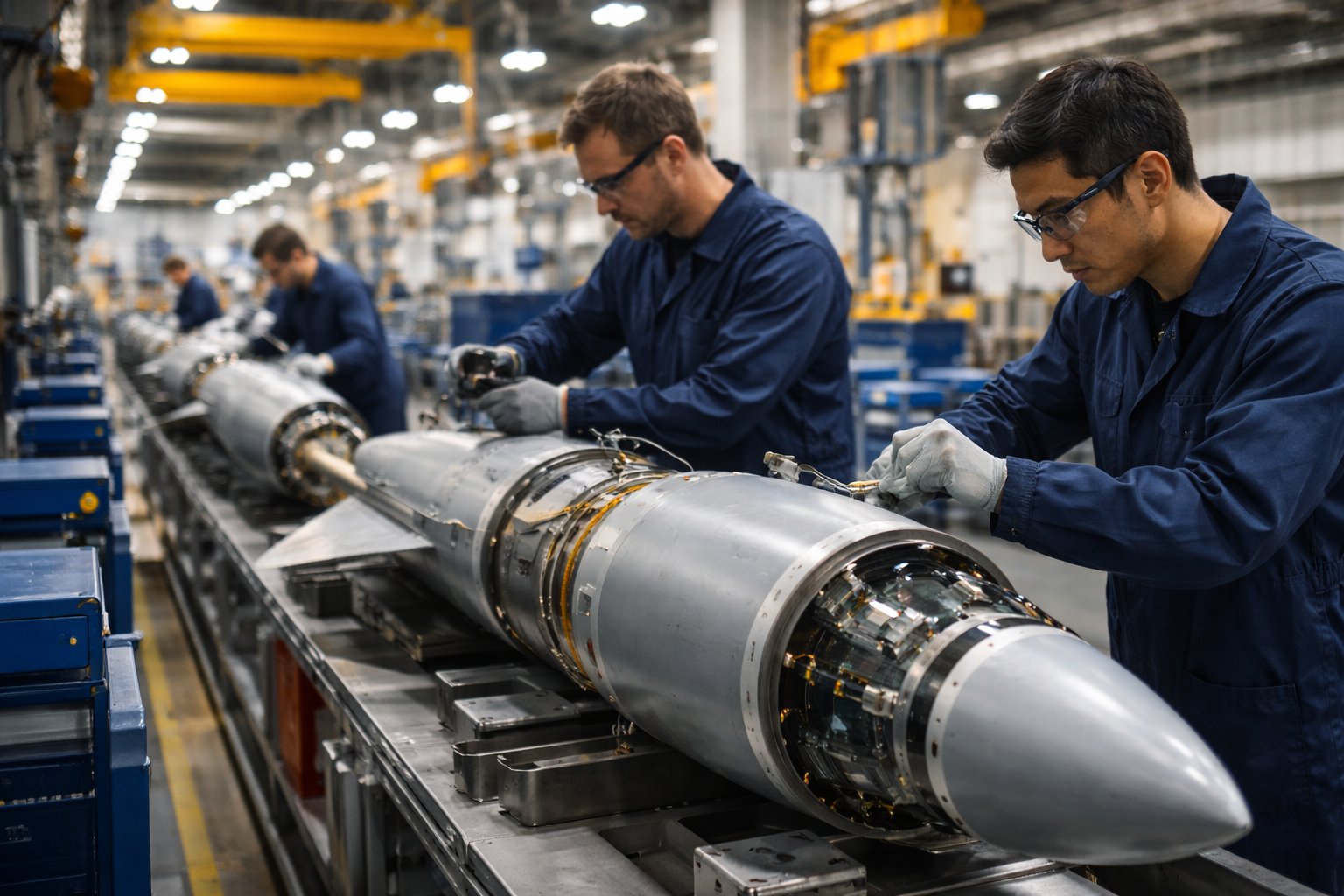
High-rate missile output may ultimately prove as important as aircraft production. A reusable uncrewed combat aircraft can conduct repeated missions, but its stand-off weapons are consumed with every engagement. Stocks must cover training, testing, operational expenditure, and replacement of rounds that exceed storage or maintenance limits.
Roketsan’s ability to manufacture motors, guidance electronics, warheads, actuators, and launch interfaces at sustained volume will therefore shape the practical striking capacity of the fleet. Aircraft deliveries can outpace usable capability when weapon production remains constrained.
The maritime firing establishes another technical marker for KIZILELMA, although wider qualification will require further separation, environmental, reliability, and operational testing across different conditions. Networked targeting will also have to prove that information from aircraft, ships, ground sensors, or other uncrewed systems can reach the weapon accurately and securely.
KIZILELMA’s progress is increasingly defined by the industrial system surrounding the airframe. Reproducible aircraft, available missiles, controlled software, trained support teams, and stable suppliers will decide whether the programme becomes a fielded strike architecture rather than a sequence of successful demonstrations.