IN Brief:
- Proposed FY2027 funding would support Marine Corps integration and demonstration of the Bullseye missile.
- The weapon can be launched from ground, air, or maritime platforms and derives from Rafael technology.
- Production viability will depend on seeker supply, propulsion, US content, qualification, launcher integration, and controlled cost.
General Atomics’ Bullseye cruise missile has entered the US Marine Corps’ future-strike debate, with proposed fiscal 2027 funding intended to support integration, demonstration, and prototype work.
The Senate Armed Services Committee’s defence-authorisation proposals include $40 million for a Marine Corps technology effort involving the weapon. Legislative and appropriations processes must still be completed before the funding becomes available.
Bullseye is a high-subsonic, long-range precision-guided missile designed for launch from air, sea, and ground platforms. Derived from Rafael’s Ice Breaker technology, it is being adapted by General Atomics Electromagnetic Systems for US military standards and domestic manufacture.
The weapon is listed at approximately 13ft in length, below 890lb in weight, and with a range exceeding 300km. Warhead options include 250lb and 500lb classes, while an imaging-infrared seeker supports scene matching, automatic target recognition, and operation without continuous dependence on GPS or other satellite navigation.
For the Marine Corps, a containerised ground launcher would align with distributed operations from islands, temporary coastal positions, and austere sites. Concealment among ordinary logistics equipment may complicate detection, although the complete firing unit still needs secure communications, environmental control, mission planning, power, and safe handling procedures.
Potential integration with HIMARS would provide another launch route using an established platform and support network. Physical compatibility is only one part of that work, because canister interfaces, fire-control software, electrical connections, exhaust behaviour, transport loads, safety cases, and reload procedures all require qualification.
Air launch introduces a separate set of structural, aerodynamic, electrical, and software tests. Carriage by fixed-wing aircraft or larger UAVs would require release-envelope analysis and platform-specific certification even where the missile body remains unchanged.
Cross-platform compatibility can expand production volume and spread development cost, but it can also generate several configurations. Preserving a common missile and using platform-specific launch equipment would limit the support burden more effectively than modifying the weapon for every customer.
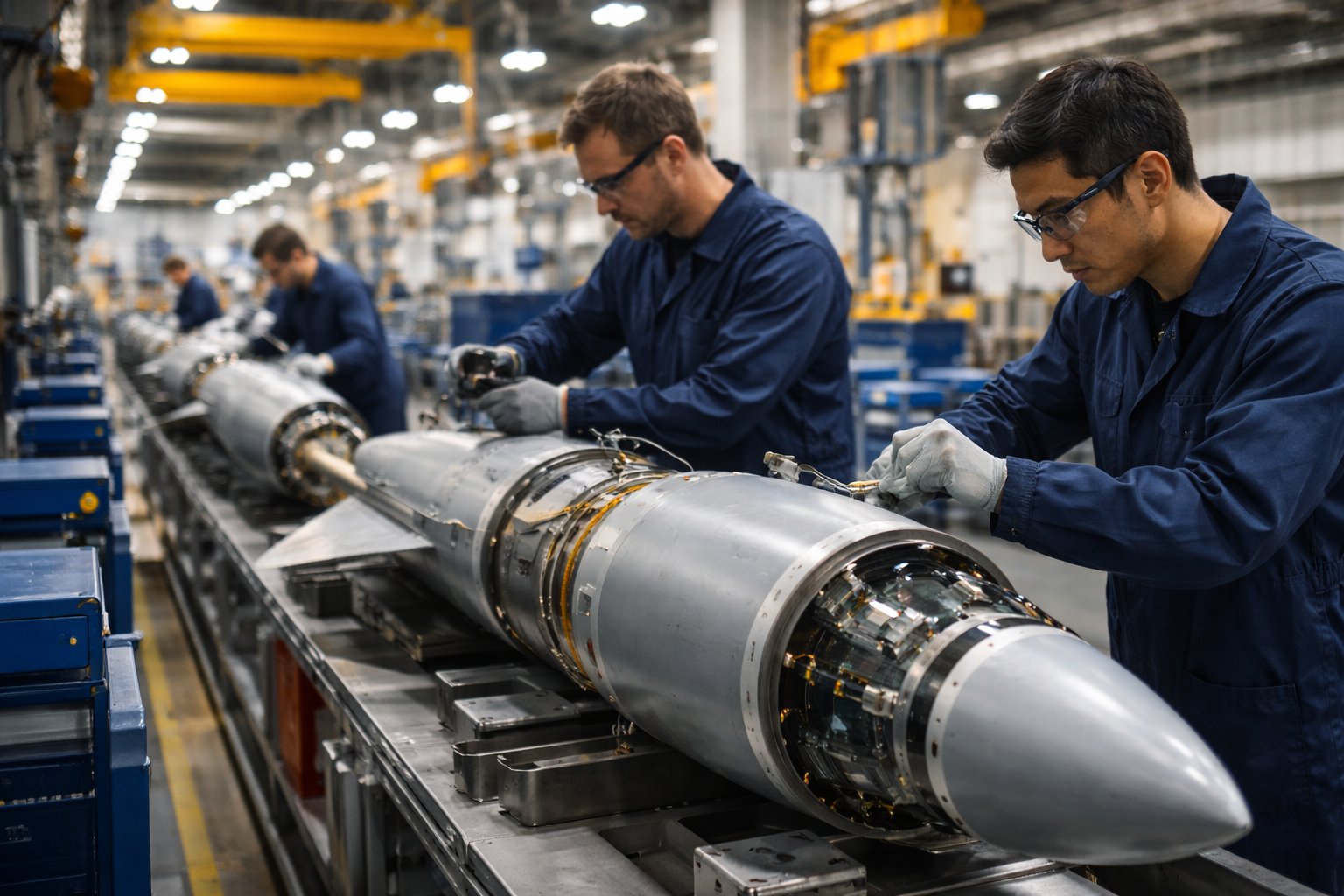
General Atomics plans to manufacture and integrate Bullseye at its facility in Tupelo, Mississippi. The company’s wider Mississippi footprint includes substantial production space and access to transport infrastructure, providing capacity for assembly, test, and potential rate growth.
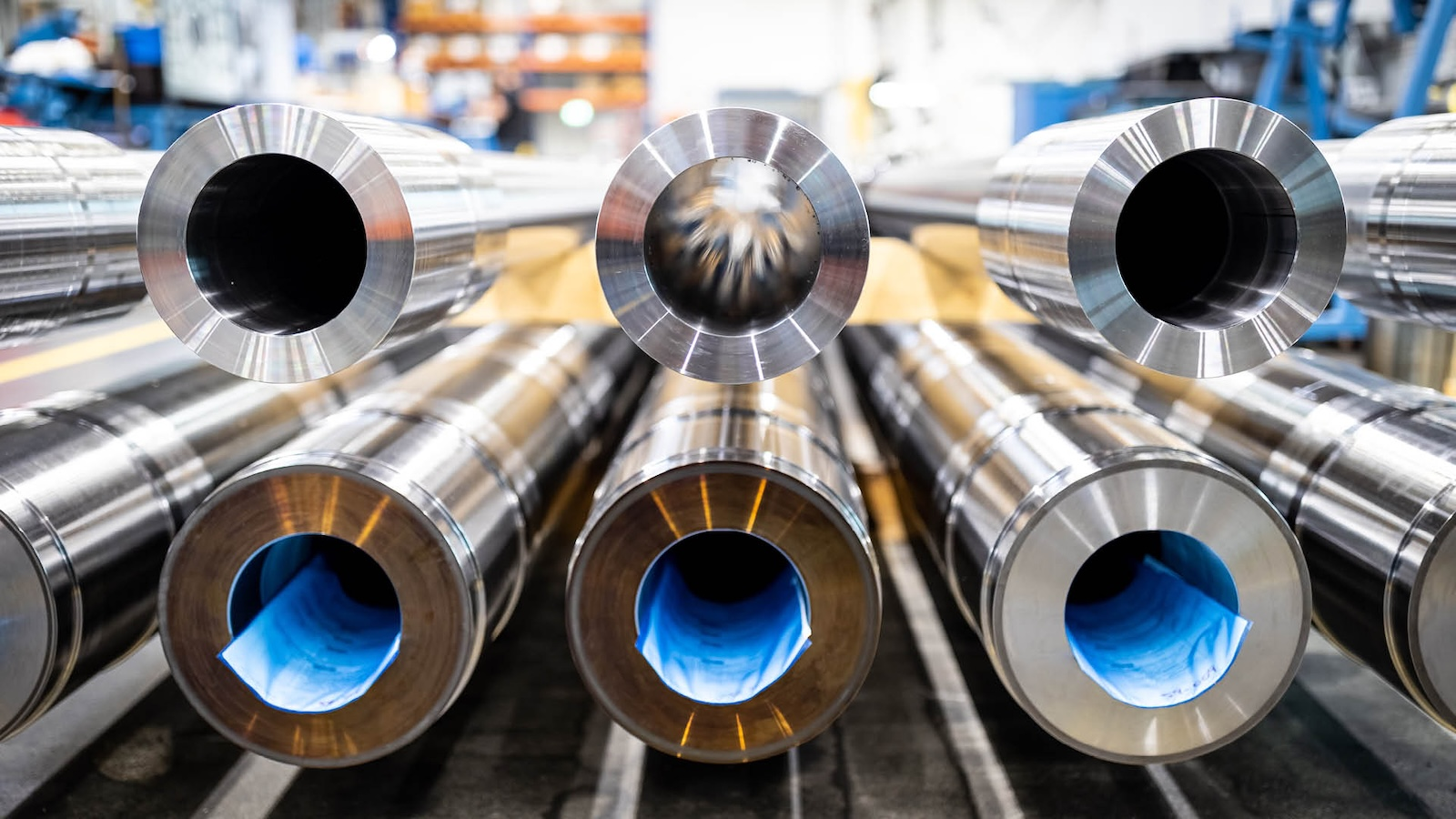
Final assembly, however, represents only one part of missile output. Rocket motors, fuel systems, warheads, seekers, processors, navigation equipment, actuators, antennas, airframes, wings, and canisters all require qualified suppliers with enough capacity to support the intended rate.
The imaging-infrared seeker may become one of the tighter constraints. Infrared detectors, specialist optics, cooling components, processors, and precision assemblies are needed across missiles, aircraft, vehicles, surveillance systems, and counter-UAS equipment.
Increasing seeker output involves specialist facilities, controlled processes, long-lead materials, and highly trained staff. Airframes and canisters can often be expanded more rapidly than the electro-optical components that give the missile its terminal performance.
Guidance resilience also creates a large test burden. A missile intended to fly through GPS-denied conditions, follow terrain or the sea surface, and recognise targets has to be evaluated across weather, lighting, backgrounds, countermeasures, and changing target appearances.
Software configuration will remain tied to that evidence. Updates to recognition algorithms or navigation behaviour may improve performance, but each release must be controlled, tested, and matched to the correct hardware and mission-planning system.
Bullseye enters a US market increasingly focused on weapon quantity as well as individual performance. Framework agreements examined in the coverage of containerised missile production and affordable strike mass envisage more than 10,000 lower-cost cruise missiles beginning from 2027.
That demand is changing design priorities. Services still require range, accuracy, and survivability, yet they also need weapons that can be produced quickly enough to build deep magazines and replace expenditure during a sustained conflict.
Modular warheads and propulsion systems can support several missions while retaining common components. The benefit will depend on whether those variants remain within a stable bill of materials rather than creating separate qualification and production lines.
Affordability also includes storage and support. Missiles may remain sealed in containers for years before use, with batteries, seals, electronics, propellant, and environmental controls expected to retain their performance.
Deployed Marine units would need transport, handling, mission-planning, communications, reload, and maintenance arrangements compatible with distributed operations. A launcher that requires a large specialist footprint would reduce the mobility and concealment sought from the system.
Bullseye’s Rafael heritage reduces some technical uncertainty because the underlying design has passed substantial aerodynamic, propulsion, seeker, and integration work. US manufacture still requires domestic qualification, supplier assurance, cybersecurity review, military-standard compliance, and platform integration.
A Marine Corps demonstration could establish launcher options, command architecture, target processing, operating footprint, and reload procedures while providing evidence on whether the missile can be handled by dispersed units.
The proposed funding is not a production award, but it would place Bullseye within a service-led evaluation at a point when American missile demand is outstripping several established supply chains.
General Atomics will be judged on whether the design’s claimed modularity produces a stable, scalable manufacturing system. The affordable-missile market contains many proposed weapons; the stronger programmes will be those that convert mature guidance and propulsion into qualified inventory at a rate that changes the available magazine.