IN Brief:
- Storm Fighter will develop autonomous combat aircraft for operations alongside Typhoon, F-35, and the future Tempest.
- The programme begins with £300 million and sits within a wider £5 billion commitment to advanced uncrewed systems.
- Production success will depend on stable requirements, affordable propulsion, modular payloads, software assurance, and repeat orders.
The UK has named its Collaborative Combat Aircraft programme Storm Fighter, giving a defined identity to the autonomous aircraft intended to operate alongside Typhoon, F-35, and the future Tempest.
An initial £300 million has been allocated to begin development, while the programme sits within £5 billion of planned spending on drones and other advanced uncrewed systems. The Royal Air Force expects the aircraft to contribute electronic warfare, strike, sensing, communications, and protection for higher-value crewed platforms.
Storm Fighter follows the introduction of StormShroud, an autonomous electronic-warfare system using Leonardo’s BriteStorm payload, and work under Project Vanquish on a jet-powered aircraft designed to operate with the F-35B force.
Mission concepts identified around the emerging family include Storm Chrome, focused on electronic warfare, and Storm Fire, a long-range one-way attack aircraft. Requirements are likely to evolve as industry demonstrates achievable combinations of range, payload, survivability, and cost.
Autonomous combat aircraft occupy a difficult position between reusable military aircraft and expendable weapons. They must cost substantially less than a crewed fighter while carrying many of the same expensive technologies, including secure communications, flight controls, navigation, sensors, mission computers, and electronic-warfare equipment.
Requirements discipline will determine whether the programme delivers affordable mass or creates another high-specification aircraft bought in limited numbers. Each increase in range, signature reduction, payload, redundancy, or environmental qualification adds weight, engineering work, and production cost.
Production needs a different combat-air model
Britain’s established aerospace companies bring many of the necessary capabilities. BAE Systems has combat-air design and manufacturing experience, Leonardo UK develops sensors and electronic-warfare equipment, Rolls-Royce provides propulsion and electrical engineering, and MBDA supplies weapons and effects.
Smaller businesses will be needed for autonomy software, communications, navigation, rapid tooling, low-cost structures, and specialist payloads. Their work must enter the aircraft without reproducing the long and expensive integration chains associated with traditional fighter programmes.
Open systems and standardised interfaces can allow payloads, sensors, and software to change without redesigning the airframe. Security and airworthiness requirements will still place limits on how freely suppliers can access the architecture.
Propulsion could become one of the earliest industrial constraints. Compact military turbofans are increasingly required for cruise missiles, target aircraft, loitering weapons, and collaborative combat platforms, while their hot-section materials, precision components, control electronics, and test capacity remain specialised.
An affordable aircraft cannot enter high-rate production when its engine is available only as a low-volume item. Storm Fighter will therefore need a propulsion strategy aligned with intended quantities rather than a bespoke engine optimised solely for maximum performance.
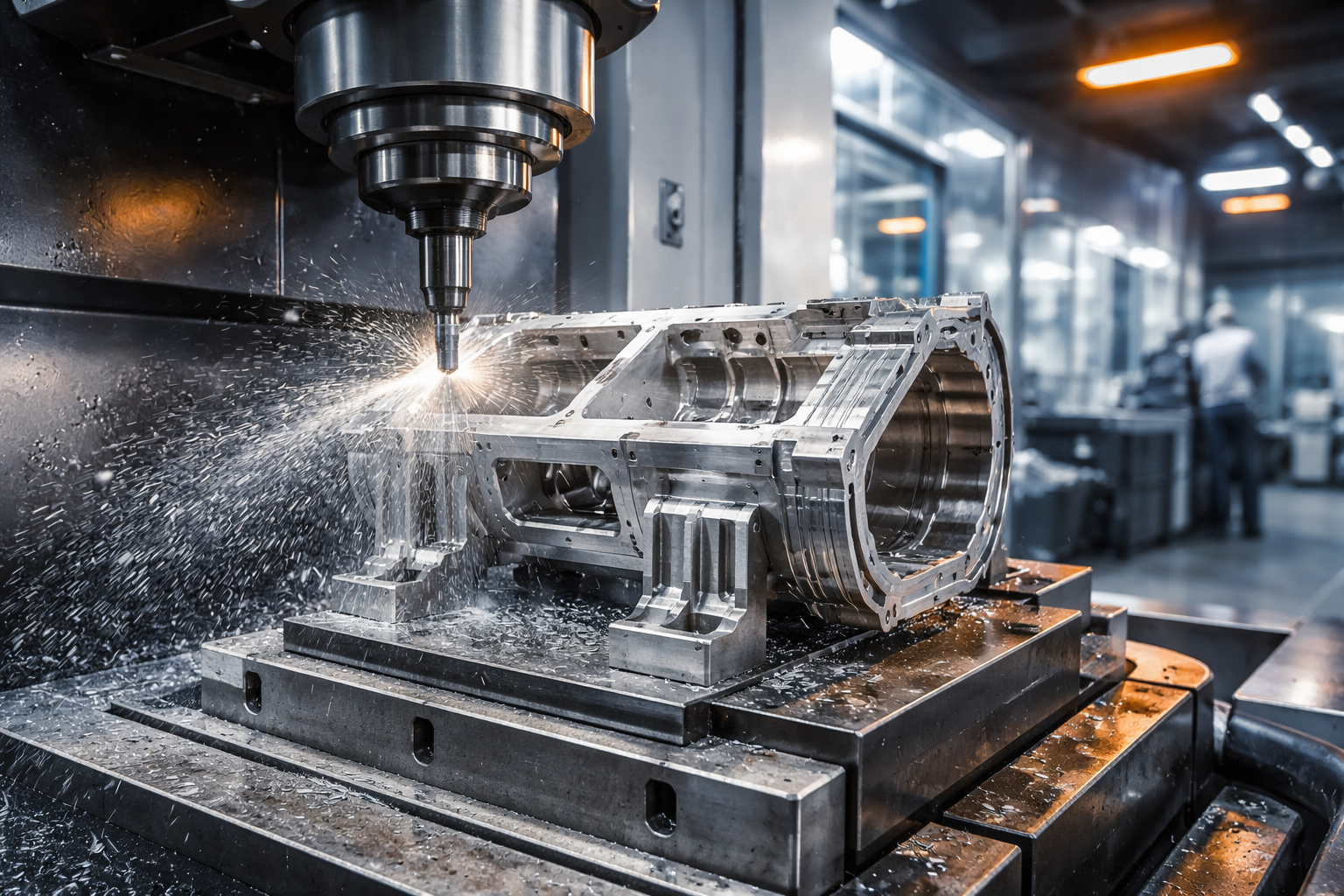
Structures present a similar trade-off. Composite materials and low-observable shaping can improve survivability, but signature-sensitive surfaces require controlled tooling, inspection, and assembly. Automated lay-up, resin-transfer moulding, additive tooling, and modular construction may reduce labour without removing those requirements.
Electronic-warfare variants face particularly demanding power and cooling loads. Broader frequency coverage, directional antennas, high-output transmitters, and onboard processing all compete for space and electrical capacity, while the aircraft still needs adequate fuel and payload.
Software moves onto the production line
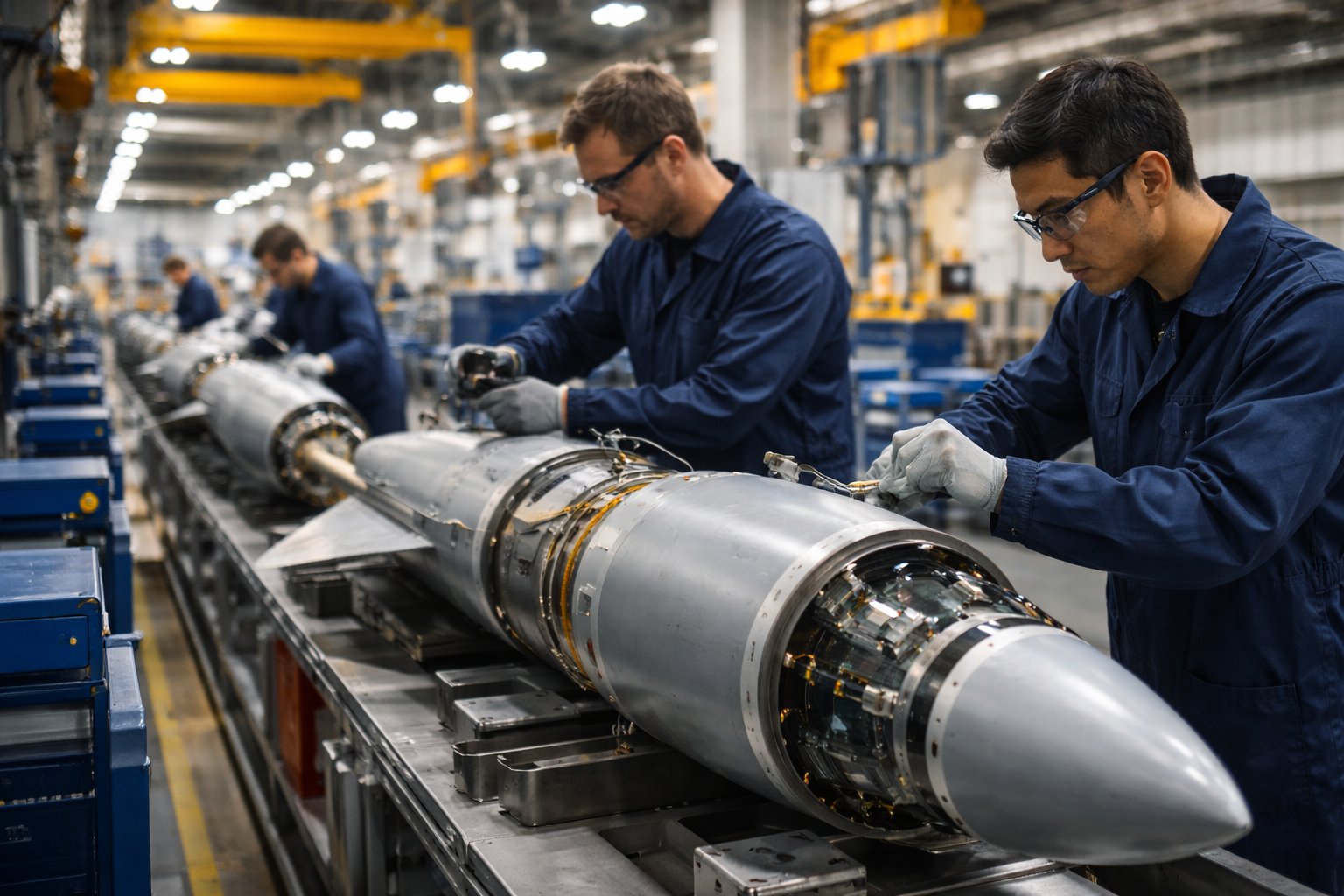
Autonomy will influence manufacturing as strongly as the physical airframe. Every aircraft leaving the factory needs a controlled software baseline, and updates must be managed without creating incompatible fleet configurations.
Operations in contested airspace also require the aircraft to continue functioning when communications are degraded. A crewed platform may set objectives and constraints, but constant remote piloting would be vulnerable to jamming and limited bandwidth.
Engineers must verify how the aircraft navigates, interprets sensors, responds to faults, and behaves when links disappear. Testing those functions will require synthetic environments, flight trials, representative electronic attack, and large quantities of controlled mission data.
Britain’s wider defence investment plan places similar pressure on procurement authorities to convert funding into manufacturing output. Efforts to improve investment speed, SME access, and acquisition discipline will be tested directly by a programme expected to move faster than conventional combat-air development.
Storm Fighter also enters a European sector carrying several crewed-aircraft programmes and uncertain industrial partnerships. The continuing division surrounding FCAS underlines the value of retaining sovereign design skills, while also showing how quickly national requirements and workshare disputes can disrupt collaborative development.
Export partnerships could provide the volume needed to support a durable production line, although autonomy software, electronic-warfare libraries, and weapons interfaces will contain technology that cannot always be transferred in the RAF configuration.
Designing exportable versions later would be expensive, so separable software, modular mission equipment, and clearly defined security boundaries need to form part of the initial architecture.
Prototype flights will establish technical credibility, but industry requires a path towards repeat orders, repair capacity, spares, and regular upgrades. Suppliers cannot invest confidently in tooling, workforce, and second sources when quantities remain undefined.
Storm Fighter gives the UK an opportunity to organise combat-air production around shorter cycles, modular payloads, and software-led capability. Delivering that model will require the Ministry of Defence to resist specification growth and commit to enough aircraft for manufacturing improvement to take effect.
Without that production horizon, the programme could generate a succession of technically impressive demonstrators. With stable requirements and credible quantities, it could create a new strand of British combat-air manufacturing alongside Typhoon, F-35, and Tempest.