IN Brief:
- Four naval vessels will link additive-manufacturing equipment through a common production-management system.
- The demonstration covers digital requests, metal powder, fabrication, inspection, and autonomous delivery.
- Operational use depends on material certification, machine calibration, secure files, and authority to install printed parts.
The US Naval Postgraduate School will use RIMPAC 2026 to connect metal additive-manufacturing equipment aboard several naval vessels into a distributed production network.
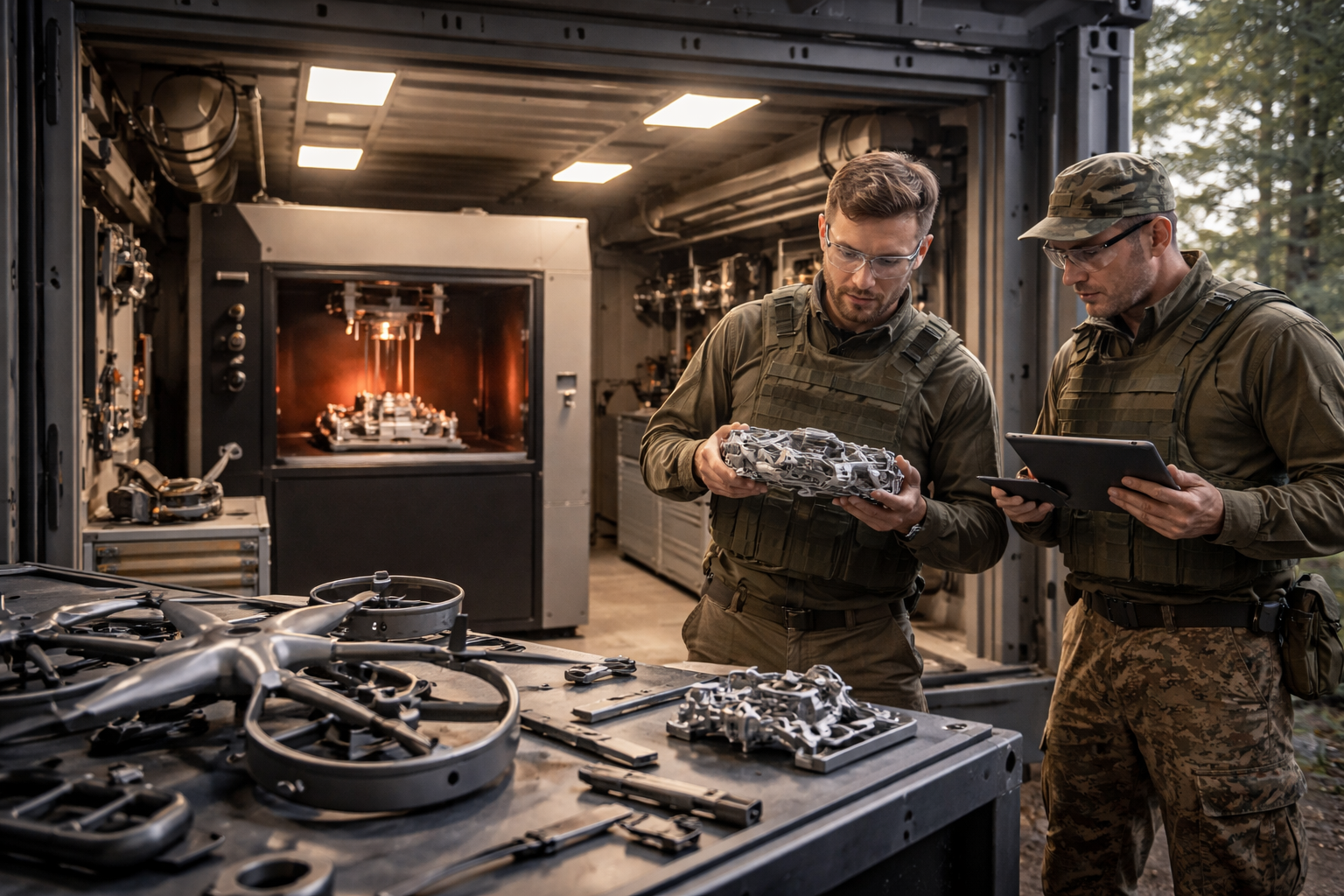
Printers on four ships will be linked through the Joint Advanced Manufacturing System, allowing requests to be evaluated, allocated to suitable equipment, followed through fabrication, and tracked into delivery. Uncrewed surface vessels will also move selected parts between production sites and users.
The demonstration forms part of the Consortium for Advanced Manufacturing Research and Education, combining additive manufacturing, artificial intelligence, digital workflows, and autonomous logistics across a multinational exercise involving approximately 40 surface ships, five submarines, more than 140 aircraft, and around 25,000 personnel.
Individual printers have already produced tools and replacement items at sea. RIMPAC moves beyond isolated machines by attempting to coordinate several printers, materials, operators, customers, and delivery routes as a single manufacturing network.
A ship submitting a request must first identify the unavailable component, establish whether an approved digital design exists, and determine whether the part is suitable for additive production. The network then needs to match material, machine capability, location, workload, post-processing, inspection, and delivery time against the requirement.
Digital inventory still needs physical assurance
Additive manufacturing cannot reproduce every naval component safely. Parts exposed to high loads, pressure, heat, vibration, or safety-critical functions require controlled materials and extensive evidence, while apparently simple items still need to fit correctly and survive the intended environment.
Metal powder brings storage, handling, contamination, fire, and health requirements. One element of the RIMPAC programme will explore powder production and use aboard a Canadian vessel, extending the distributed manufacturing chain further upstream.
Producing powder closer to the point of need could improve resilience, although it also demands material characterisation and traceability. Chemical composition, particle size, flow behaviour, contamination, and storage conditions influence the properties of the final component.
Machine condition is equally significant. Two printers using the same file and nominal alloy may produce different results if laser performance, atmosphere, powder quality, temperature control, or post-processing varies.
A useful network must therefore know which machine and process are qualified for each class of component. Allocation cannot be based solely on which printer is available.
Previous deployments have exposed less obvious bottlenecks, including the availability of shielding gas used to maintain a controlled build atmosphere. A printer without the correct consumables remains idle regardless of how many approved files are available.
Cybersecurity underpins the entire concept. Technical data must reach ships without unauthorised alteration, loss of configuration control, or disclosure. Encryption, digital signatures, version management, access rights, and a record of which file was printed will be essential.
Inspection and installation authority may prove more restrictive than printer performance. A ship can produce a dimensionally accurate item but remain unable to fit it because no approved engineering route exists.
Tiered rules will be required for tools, non-critical components, temporary repairs, controlled replacements, and safety-critical parts. Each category carries different material, inspection, documentation, and approval requirements.
The Navy’s work fits a broader effort to move selected production closer to operational demand. Tobyhanna Army Depot’s decision to bring drone-motor manufacture into the organic industrial base similarly seeks greater control over constrained or rapidly consumed components.
At-sea printing will not replace depots, conventional factories, or stocked spares. Large structures, complex electronics, certified pressure equipment, and high-volume consumables remain better suited to established production facilities.
The practical opportunity lies in low-volume items whose absence disables a more valuable system. A small bracket, cover, tool, adapter, or replacement fitting may have little individual value while determining whether equipment can return to service.
Autonomous delivery adds another industrial step. The completed item has to be packaged, assigned to a destination, transferred safely, tracked, and received before installation. The uncrewed vessel therefore becomes part of the manufacturing workflow rather than a separate experiment.
RIMPAC’s scale should expose weaknesses that controlled trials miss. Network congestion, incompatible data, unavailable materials, unqualified operators, unsuitable part requests, poor machine calibration, or delayed engineering approval may each restrict output.
The most useful evidence will record what was requested, how an approved design was identified, where the part was produced, what inspection it received, and whether it restored equipment sooner than the conventional supply chain.
Distributed manufacturing becomes operationally credible when those results can be repeated across machines, materials, ships, and crews. Completing a successful print at sea is only one stage within that larger production system.