IN Brief:
- MV250 is an autonomous hybrid-electric VTOL aircraft for logistics, casualty evacuation, ISR, electronic warfare, and launched effects.
- The aircraft targets a 2,000lb payload over a 250-nautical-mile mission radius and a 1,300-nautical-mile repositioning range.
- Major systems are shared with BETA’s civil ALIA family, connecting defence production with existing tooling and suppliers.
BETA Technologies has unveiled the MV250, an autonomous hybrid-electric vertical take-off and landing aircraft designed to combine heavy logistics, long-range operation, and substantial electrical power for military missions.
The aircraft is intended to carry up to 2,000lb across a 250-nautical-mile mission radius, while its planned repositioning range is approximately 1,300 nautical miles. Cruise speed is expected to exceed 170 knots.
Cargo transport, casualty evacuation, intelligence and surveillance, electronic warfare, counter-UAS work, command and control, and the deployment of air-launched effects sit within the proposed mission set. MV250 can also supply electrical power to equipment carried aboard or operating on the ground.
A 1.3MW turbogenerator developed with GE Aerospace combines established CT7 and T700 turbine technology with generators, power electronics, batteries, and electric propulsion. The aircraft is designed to provide more than 1MW for airborne payloads and up to 500kW for ground equipment.
Compatibility with JP-8, JP-5, and NATO F-34 and F-44 fuels allows the aircraft to fit within existing military fuel logistics. Batteries can provide high power during take-off, landing, and transient demand, while the turbogenerator supports endurance and replenishes electrical energy in flight.
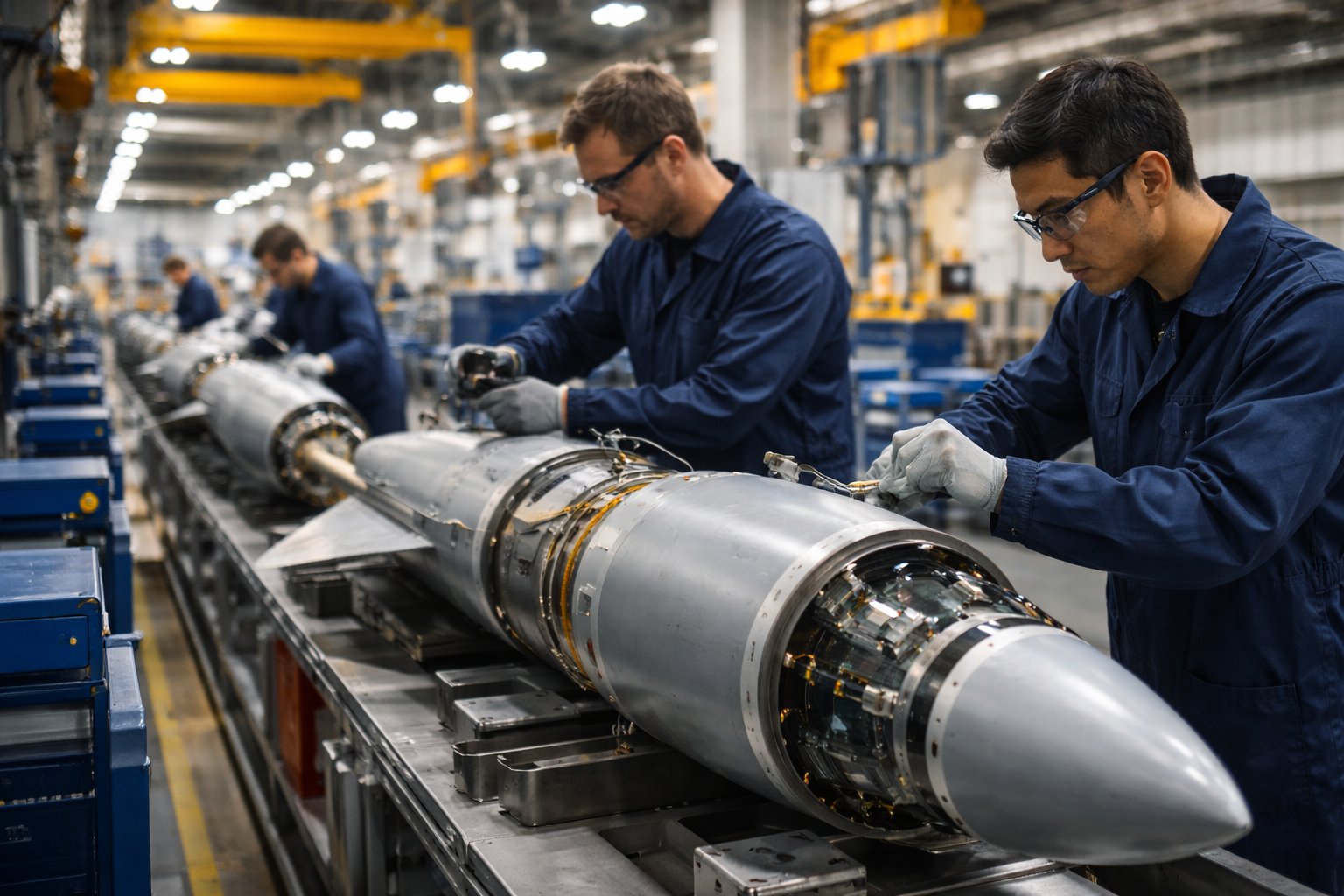
MV250 draws heavily on BETA’s civil ALIA family. Structures, motors, batteries, inverters, flight controls, tooling, suppliers, and production processes can be shared, reducing the amount of dedicated defence infrastructure required during early manufacture.
Civil–military commonality can improve purchasing leverage and give the defence aircraft access to components already moving through a certification and industrialisation programme. It also exposes the shared line to military requirements that may diverge sharply from commercial operation.
Defence customers will require secure communications, payload interfaces, military fuels, electromagnetic protection, autonomy, specialised cargo handling, and operation from damaged or unprepared sites. Each addition affects weight, power, cooling, structure, software, test, and certification.
Keeping the military variant common
Shared production works only while the military aircraft remains recognisably part of the wider ALIA family. Customer-specific sensors, communications, survivability equipment, and payloads could create a succession of small variants that no longer benefit from common tooling or supplier volume.
Standard electrical, mechanical, data, and cooling interfaces would allow mission equipment to be carried in removable kits rather than incorporated through repeated aircraft redesign. The core platform still needs enough power and structural margin to accommodate those kits without extensive reinforcement.
Configuration control will be demanding because commercial and military aircraft may evolve at different rates. A civil component introduced for cost or certification reasons cannot automatically enter a military baseline containing secure software, mission equipment, or different environmental requirements.
BETA will need to trace which parts, processes, and software releases are common, which have been modified, and which require separate qualification. Suppliers must also understand when a commercial change affects a defence-controlled component.
Autonomy creates another continuing production workload. Sikorsky’s MATRIX technology is being integrated with MV250, while BETA contributes aircraft-level flight controls and experience from ALIA.
The resulting system must perceive landing areas, plan routes, manage failures, interact with controlled airspace, and operate around personnel, vehicles, and obstacles. Algorithms may evolve quickly, but each release needs evidence that new behaviour has not compromised previously approved functions.
Simulators, test rigs, and synthetic environments will therefore remain active throughout the programme. Autonomy cannot be validated solely through flight hours, particularly when rare failures and hazardous scenarios must be examined without risking an aircraft.
The electrical-power role could reshape how the aircraft is used. Radar, communications, electronic warfare, command posts, and directed-energy equipment all require increasing output at dispersed locations.
Using an aircraft to transport fuel and convert it into regulated electrical power may reduce the need for separate generators in some missions. Sustained generation on the ground, however, creates heat and prolonged loads across the turbine, generator, inverters, batteries, and cooling system.
Maintenance planning will need to distinguish between flight hours, generation hours, battery cycles, and mission-system loads. An aircraft used mainly as a power source may age differently from one flying frequent logistics sorties.
Autonomous logistics aircraft already cover a broad range of payloads. Australia’s Transwing P4 acquisition addresses smaller urgent deliveries to ships and dispersed units, while MV250 is aimed at cargo loads closer to crewed utility aviation.
The larger aircraft also brings a more complex supply chain. Batteries require high-quality cells, thermal protection, structural containment, and health monitoring; electric motors and inverters depend on magnets, semiconductor devices, precision manufacture, and cooling.
These components serve strong civil markets, leaving defence production exposed to supplier priorities outside government procurement. Turbine availability, specialist electronics, and lightweight composite structures may become further rate constraints.
Operational output will depend on loading time, dispatch reliability, diagnostic clarity, and field maintenance rather than payload figures alone. Ground crews need access to modules, software, high-voltage safety equipment, and replacement components at dispersed locations.
MV250’s production strategy avoids building an isolated military line from the outset. Its prospects will depend on whether BETA can preserve common structures and systems while absorbing the secure communications, autonomy, power, and mission equipment demanded by military users.