IN Brief:
- Poland has ordered three Saab A26 submarines under a contract valued at approximately SEK47 billion.
- Deliveries will continue through 2038, supported by weapons, training, logistics, and an interim submarine.
- Polish maintenance and repair capability must mature before all three new boats enter service.
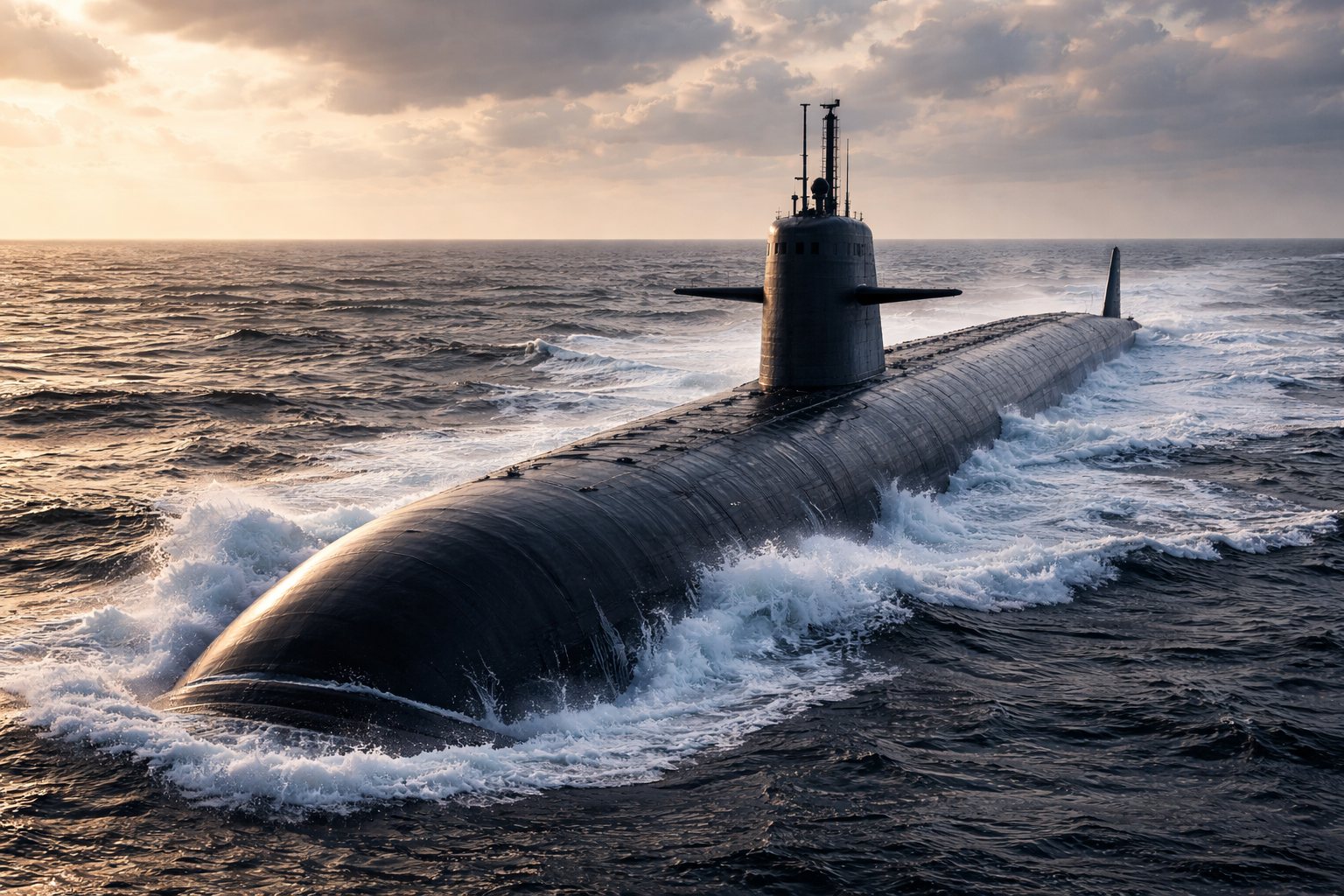
Saab has received an order from Poland for three A26 submarines under a contract valued at approximately SEK47 billion, moving the Orka programme into an extended construction and industrial-support cycle.
The agreement with the Polish Armaments Agency includes the submarines, weapons, training, and support. Deliveries will take place progressively, with the final contracted output scheduled for 2038.
Sweden will also provide HMS Södermanland as an interim capability under a separate arrangement, allowing Poland to rebuild submarine operating experience while the A26 boats are designed, constructed, tested, and delivered.
Saab gains a substantial long-term workload, while Poland must establish maintenance, repair, training, infrastructure, and technical-support capacity. Polish industry is expected to participate in through-life activity, although the precise division of construction, subsystem, and support work will develop as implementation proceeds.
Submarines compress some of naval engineering’s most demanding disciplines into a relatively small hull. Pressure-hull construction, welding, piping, electrical distribution, propulsion, batteries, sensors, weapons, combat systems, acoustic treatment, and life-support equipment all have to function quietly and safely at depth.
A schedule measured in industrial generations
A final delivery in 2038 reflects submarine-production realities rather than a rapid fleet purchase. Long-lead materials and equipment must be ordered years before installation, while pressure-hull sections require controlled forming and welding followed by inspection capable of exposing defects after substantial work has already been completed.
Saab must manage the Polish order alongside Sweden’s domestic submarine activity and the wider workload at Karlskrona. Specialist welders, naval architects, systems engineers, cable teams, test personnel, and commissioning crews cannot be expanded immediately, leaving experienced labour as significant a constraint as buildings and machinery.
Weapons integration will add its own schedule. The package includes armament, and Saab will undertake integration work for a missile whose identity has not been disclosed publicly. Submerged launch affects tube interfaces, fire-control software, safety, storage, targeting, and platform trials, while even an established weapon requires evidence that it can be carried and released safely from a particular submarine configuration.
Poland’s most durable industrial role is likely to sit in maintenance and support. Submarine availability depends upon planned upkeep, battery work, hull inspection, valves, pumps, sensors, software, weapons handling, and periodic deep maintenance. Domestic capability would reduce dependence on Swedish yards and limit the time boats spend away from Polish waters.
The interim Södermanland arrangement begins that process well before the first A26 arrives. Poland’s submarine bridge using the Swedish boat should help rebuild crews, maintainers, basing arrangements, safety systems, and rescue procedures.
Running the interim boat also creates the risk of supporting two different technical models. Södermanland and the future A26 fleet will not share every component or maintenance process, so Poland needs to extract training and operational value without constructing an expensive permanent supply chain for a short-lived capability.
Polish shipbuilding already carries a substantial naval workload, with all three Miecznik frigates now in construction. Submarine participation can use some common skills in project management, electrical integration, combat systems, and naval support, but pressure-hull production and undersea safety require additional specialist expertise.
Infrastructure decisions must be taken early. Submarine berths need secure power, charging, ventilation, weapons handling, communications, and controlled maintenance access. Training establishments require simulators and representative equipment, while rescue arrangements must be compatible with the selected boats.
Data rights will shape Polish sovereignty more decisively than a headline workshare percentage. A domestic workshop cannot repair equipment efficiently without fault information, approved procedures, diagnostic software, test specifications, and authority to manufacture or source parts.
Obsolescence will proceed alongside construction because electronic components chosen during design may become unavailable before the third submarine enters service. Saab and Poland need planned technology insertions that preserve a common fleet baseline rather than leaving each boat with materially different systems.
Demand will extend across batteries, cables, valves, pumps, ventilation, coatings, navigation, communications, simulators, dockside equipment, and specialist logistics. Suppliers require stable forecasts because submarine-grade components are produced in small volumes with unusually extensive documentation.
The first boat will test design maturity and integration; later vessels will test whether production can retain quality and schedule over more than a decade. Once delivered, fleet availability will depend upon whether Poland has built enough technical authority and support depth to keep the submarines at sea without routine reliance on overseas intervention.