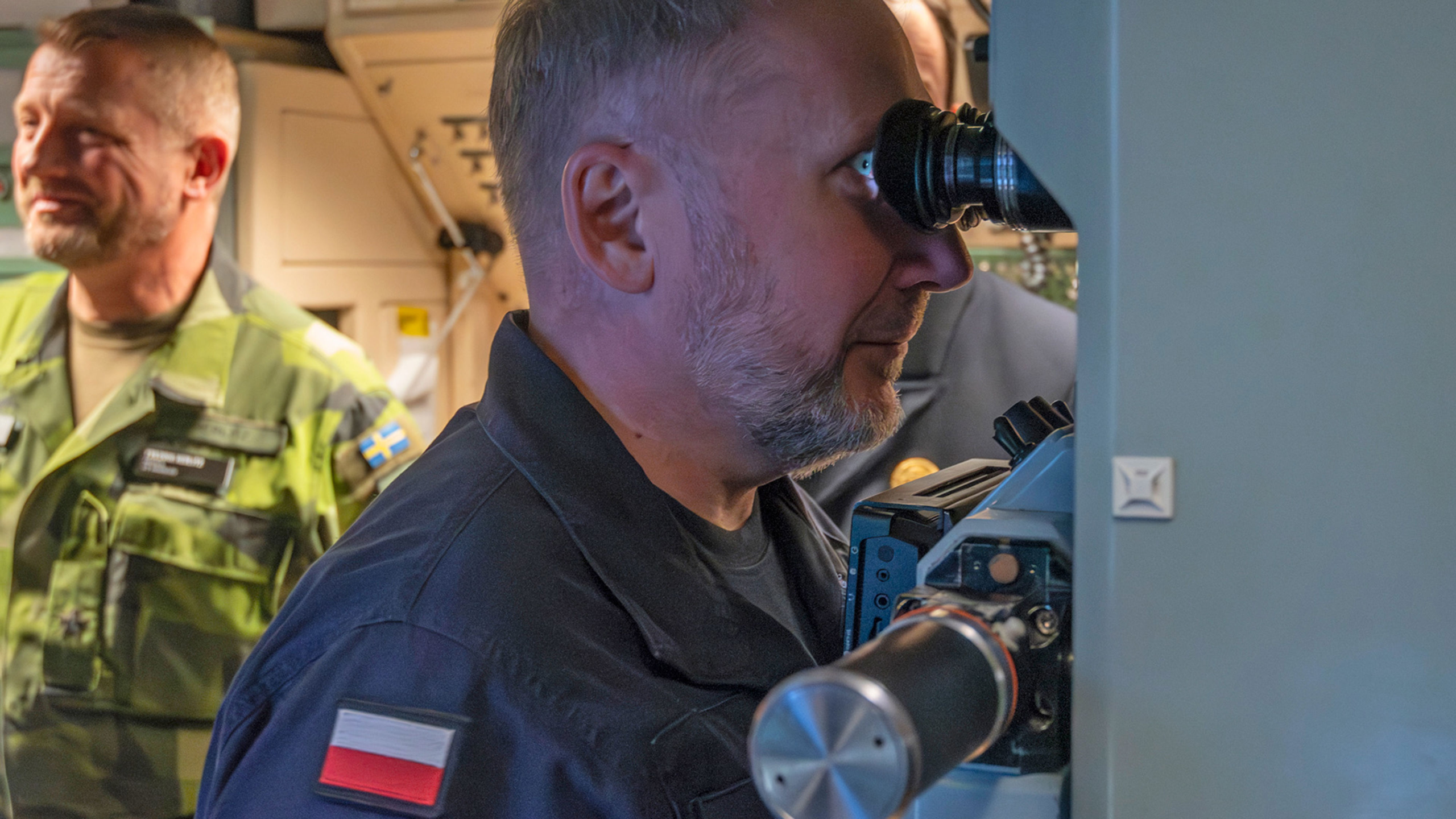
IN Brief:
- Poland is preparing to lease Sweden’s HMS Södermanland as an interim submarine capability.
- The arrangement supports training before the arrival of planned Saab A26 submarines.
- The deal highlights the industrial difficulty of sustaining undersea capability during new-build timelines.
Poland is preparing to lease the Swedish submarine HMS Södermanland as an interim capability while it works toward the future introduction of Saab A26 submarines.
The arrangement will allow Polish submariners to maintain and develop undersea skills before the new-build fleet arrives. Training activity in Sweden is expected to begin after the summer, with HMS Södermanland being prepared for transfer through work involving Sweden’s defence materiel organisation and Saab.
For Poland, the lease addresses a persistent naval problem. Submarine procurement takes years, while operational knowledge can decay quickly if crews, maintainers, instructors, weapons handlers, safety specialists, and rescue planners lack access to live systems. Once that ecosystem weakens, a navy cannot simply restore it when a new boat is delivered.
HMS Södermanland gives Poland a practical way to preserve that ecosystem. The submarine is suited to Baltic operations and includes air-independent propulsion, supporting extended submerged endurance. It is not a replacement for a new-generation A26 fleet, but it provides a platform for training, doctrine development, maintenance practice, safety routines, and undersea force continuity.
The lease also carries a substantial industrial dimension. Submarine capability rests on one of the most specialised production and sustainment chains in defence, covering pressure hull integrity, propulsion systems, batteries, sensors, combat systems, weapons handling, escape systems, acoustic treatment, and safety certification. Even an interim platform requires depot work, spares, technical documentation, training aids, and support arrangements.
Poland’s selection of A26 submarines places Sweden and Saab at the centre of its future undersea capability. The bridge lease strengthens that pathway by exposing Polish crews and technical personnel to Swedish submarine procedures before the new-build fleet arrives. It may also reduce transition risk by allowing training, maintenance culture, and operational doctrine to develop ahead of delivery.
European defence procurement increasingly relies on such bridge arrangements. Long production timelines are colliding with immediate security pressure, particularly around the Baltic. Nations cannot wait until the end of a decade to rebuild every skill set. Leasing, second-hand transfers, upgrade packages, and shared training arrangements are becoming ways to preserve capability while new industrial output gathers pace.
The undersea sector is moving on two tracks. AUKUS UUV project moves undersea autonomy into production phase showed how uncrewed systems are entering the production conversation, while Poland’s submarine bridge reinforces the continuing value of manned underwater platforms. Navies are investing in autonomy, but crewed submarines remain central to deterrence, intelligence gathering, and sea denial.
For Sweden, the arrangement reinforces its position as a Baltic undersea supplier. Saab’s submarine business is one of Europe’s few remaining sovereign submarine design and build capabilities outside the largest naval powers. A Polish programme gives that industrial base export depth and a stronger regional role, while also placing pressure on production scheduling, supplier capacity, and engineering workforce availability.
Poland must now balance an older leased platform with preparation for a new class. HMS Södermanland will need enough investment to remain useful and safe, but not so much that it consumes resources intended for the A26 transition. A well-managed bridge capability can preserve crews, strengthen safety culture, and shorten the path to operational readiness. A poorly managed one can become an expensive diversion.
Baltic security conditions give the plan added weight. Undersea infrastructure, seabed awareness, submarine deterrence, and port protection have become more prominent across northern Europe. Pipelines, cables, naval approaches, and coastal infrastructure all require better monitoring and protection. Submarines form one part of that picture, supported by the shipyards, maintainers, sonar specialists, weapons technicians, and training organisations behind them.
Poland’s planned HMS Södermanland lease is therefore a bridge in more than fleet terms. It keeps an undersea workforce active while the slower machinery of new submarine production moves toward delivery.