IN Brief:
- Babcock and LIG D&A will combine naval platforms, launchers, guided weapons, support, and autonomous systems.
- The agreement creates a route for Korean mission equipment to enter future Arrowhead 140 frigate proposals.
- Export success will depend on disciplined systems integration, configuration control, local production, and long-term support capacity.
Babcock and South Korea’s LIG Defence & Aerospace have expanded their naval relationship into a wider industrial partnership covering frigate systems, weapons, maintenance, robotics, autonomy, and uncrewed technology.
The strategic cooperation agreement establishes five areas of work, beginning with the integration of LIG D&A into Babcock’s international supply chain. It also covers an Arrowhead 140 frigate configuration equipped with Korean systems, cooperation on launchers and precision-guided weapons, maintenance and through-life upgrades, and the development of robotic and autonomous platforms.
Their relationship already has a physical industrial base in South Korea. Babcock operates an assembly and maintenance facility in Busan that supports the weapon-handling and launch system used aboard the KSS-III submarine class, giving both companies established engineering, security, and support arrangements from which to widen their activity.
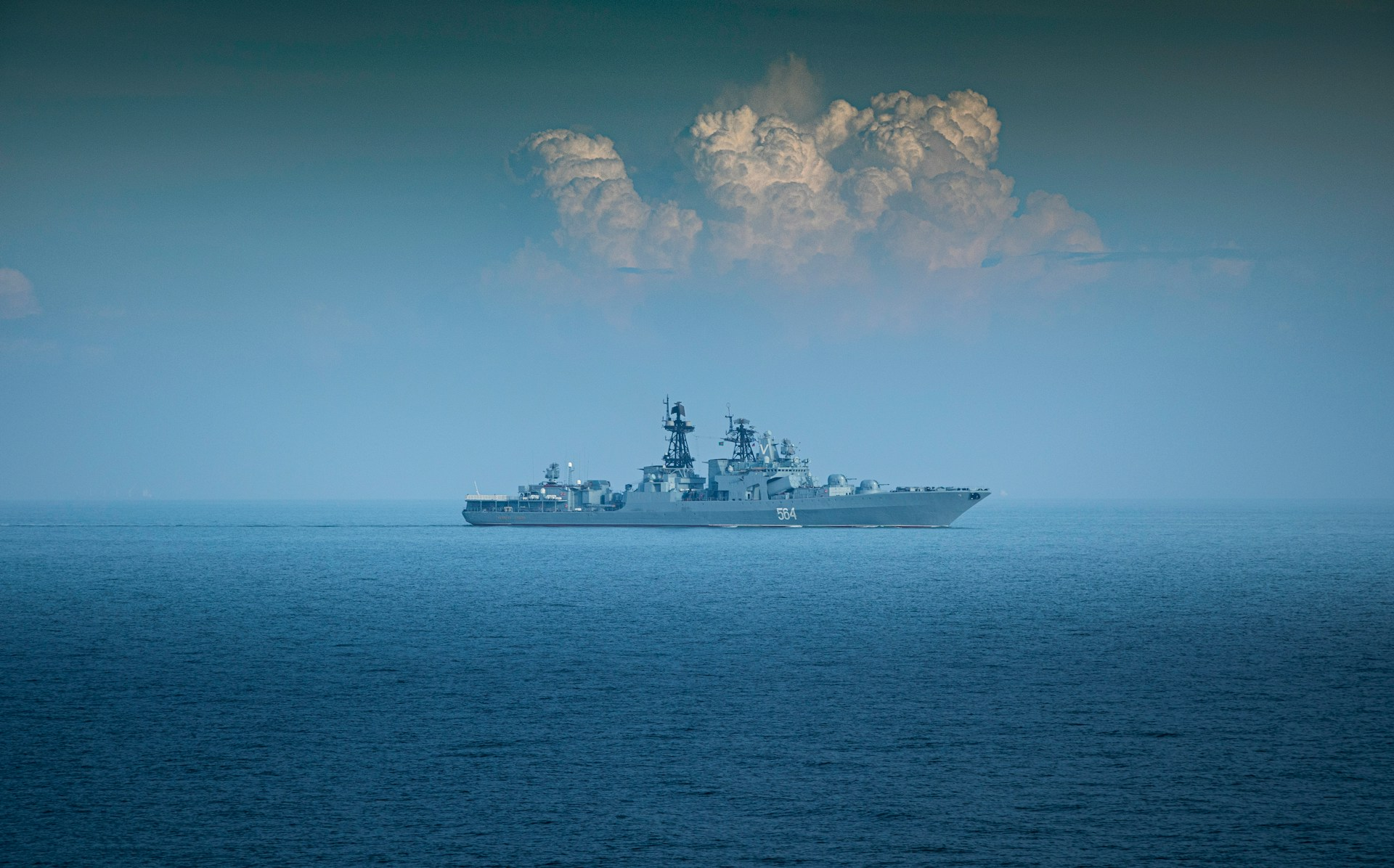
Arrowhead 140 is derived from Denmark’s Iver Huitfeldt-class frigate and forms the basis of the Royal Navy’s Type 31 programme. Its export proposition rests on a large hull, available internal volume, and an architecture intended to accommodate different combat systems, sensors, weapons, communications equipment, and national production arrangements.
A configurable frigate requires controlled interfaces
Adding a Korean mission-system package could strengthen the design’s appeal among customers seeking alternatives to complete US or European combat-system suites. LIG D&A’s portfolio spans missile launchers, guided weapons, radar, electronic warfare, command systems, and underwater equipment, although each prospective combination will require detailed integration rather than straightforward installation.
Missile launchers must be reconciled with deck structure, magazines, blast management, exhaust paths, shock standards, power distribution, cooling, and the ship’s combat-management system. Radar and electronic warfare equipment add their own requirements for mast position, electromagnetic compatibility, processing capacity, and access to ship-wide data. Even apparently self-contained systems alter weight distribution, stability, signatures, maintenance routes, and crew workload.
Software boundaries are equally demanding. Sensors, command systems, and weapons must exchange data with consistent timing, identification standards, security controls, and engagement logic. The integration authority must also establish how software updates are tested, certified, and introduced without destabilising other parts of the combat system.
Modularity can reduce the amount of hull redesign required for each customer, but it moves much of the risk into interface-control documents, software laboratories, shore integration facilities, and configuration governance. Babcock and LIG will need to allocate technical authority clearly, particularly when a change to a Korean subsystem affects the ship design or when an Arrowhead modification alters the operating conditions of installed equipment.
The pressures already visible across the Royal Navy’s Type 31 production programme show how design maturity, workforce availability, supplier performance, and shipyard throughput can converge. Poland’s Miecznik frigate programme is establishing another Arrowhead-derived production system, with its own combat-system selection, domestic suppliers, and national workshare.
A Korean-equipped configuration would add another branch to the platform family. Common hull design can support shared engineering knowledge and purchasing economies, although extensive national variation gradually reduces the quantity of equipment, software, and documentation that remains genuinely common.
Production must continue after launch
Through-life support forms a substantial part of the new agreement, reflecting the growing importance of maintenance authority, software access, and domestic repair capacity in naval competitions. Customers increasingly expect local access to diagnostic equipment, spares, technical publications, training, and controlled design data rather than prolonged dependence on overseas teams for routine upgrades.
Expanding the Busan operation could involve secure software environments, specialist tooling, test equipment, training facilities, and stocks of long-lead components. Korean suppliers may also gain access to wider Babcock programmes, although qualification standards, export controls, cybersecurity requirements, and intellectual-property restrictions will determine how quickly that supply-chain movement develops.
The cooperation on robotics and autonomy extends the proposition beyond the frigate itself. Surface combatants are increasingly expected to control offboard sensors, uncrewed surface craft, airborne systems, and underwater vehicles, placing additional demands on communications bandwidth, data processing, mission planning, deck handling, charging, payload storage, and maintenance.
An Arrowhead 140 variant intended to operate several uncrewed systems would need those requirements embedded early in the design. Retrofitting launch and recovery equipment, secure networks, or additional electrical capacity after construction is usually expensive, while reserving space and power from the outset carries an immediate cost and weight penalty.
LIG D&A gains a route towards customers outside South Korea’s established defence-export relationships, supported by a frigate design that is already moving through several national programmes. Babcock, meanwhile, gains access to Korean weapons and mission systems at a point when naval buyers are demanding faster production, local participation, and greater freedom to select equipment from multiple national suppliers.
The agreement must now move into funded engineering, defined product configurations, and customer-specific programme work. A repeatable Korean systems package — priced, integrated, tested, and supported without reopening the entire design for every bid — would turn Arrowhead 140’s adaptability into a more credible production advantage.