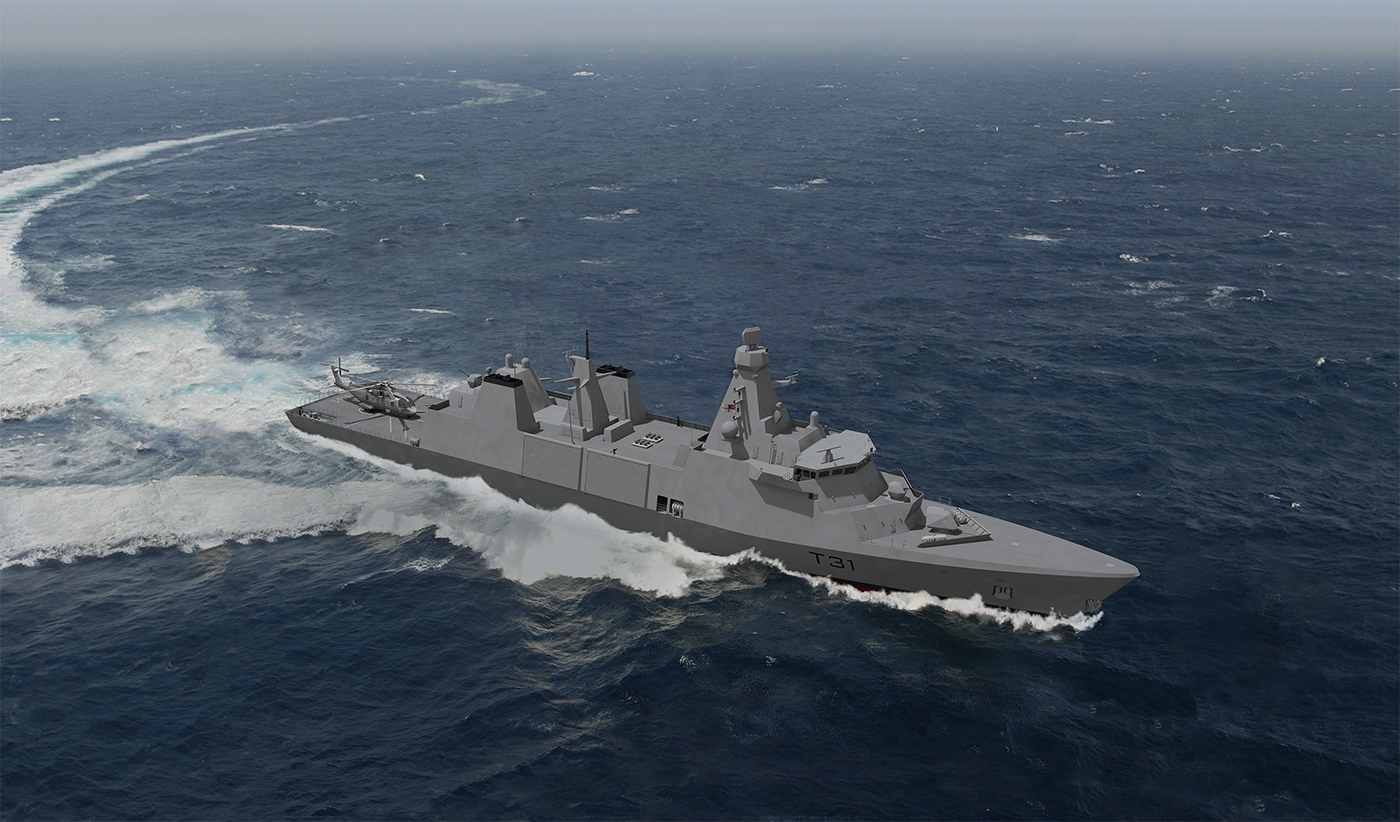
IN Brief:
- Babcock has taken an additional £140m charge on the Royal Navy Type 31 frigate programme.
- The charge relates to higher-than-expected rework, inflation, and design-linked cost pressure.
- The programme remains a key test of whether the UK can produce exportable general-purpose frigates at controlled cost.
Babcock has taken a further £140m charge on the Royal Navy’s Type 31 frigate programme, adding to the cost pressure around one of the UK’s most closely watched naval manufacturing projects.
The company signed a fixed-price contract in 2019 to deliver five Type 31 frigates for the Royal Navy. The latest charge reflects higher-than-expected rework costs, with inflation and design-related issues adding pressure to a programme originally positioned as a route to more affordable general-purpose warship production. Cumulative losses on the contract now exceed £300m.
The Type 31 is more than a domestic fleet renewal project. Based on Babcock’s Arrowhead 140 design, it also forms a central part of the company’s export proposition. A ship designed to show affordability, modularity, and international appeal is now confronting a familiar naval production problem: the distance between early cost assumptions and the reality of building a complex surface combatant.
Warship construction is particularly exposed to design maturity. When detailed design changes arrive late, they can disrupt block construction, outfitting, cabling, compartment access, combat-system integration, and testing. Rework performed once a ship is structurally advanced is far more expensive than change absorbed at the design stage, and first-of-class ships often carry the steepest part of that learning curve.
Fixed-price contracting intensifies that pressure. Governments value budget certainty, while industry accepts risk where design, supply, and production assumptions appear manageable. When inflation accelerates, requirements change, or design detail remains unsettled, the margin can disappear quickly. The contract may protect the customer’s headline budget, but the industrial cost still lands somewhere in the system.
For UK shipbuilding, the charge lands as naval demand is rising. The Royal Navy needs new frigates to add mass to the surface fleet and relieve pressure on more specialised escorts. Export customers are also looking for capable but affordable ships that can be built or adapted without the cost of high-end air-defence or anti-submarine platforms. Type 31 was created for that market space, which makes production discipline central to its credibility.
The design is also being watched overseas. New Zealand’s future frigate contest has already placed the Type 31 in direct comparison with Japan’s upgraded Mogami-class design through New Zealand narrows future frigate field. Prospective customers will study lead-ship performance, cost growth, yard learning, delivery confidence, and parent-navy support before committing to a design that could shape fleet structure for decades.
The manufacturing pressures are not unique to Babcock. Surface combatants have become dense assemblies of sensors, computing, launch systems, aviation facilities, power distribution, survivability equipment, weapons, and hotel services. Even ships described as general-purpose frigates carry complex combat systems and extensive integration demands. Cable runs, electromagnetic compatibility, shock requirements, damage control, and platform-management systems all push engineering work deep into the build process.
Supply-chain depth adds another constraint. A frigate programme depends on steel, propulsion equipment, combat-system components, electrical systems, pumps, valves, sensors, communications, accommodation systems, software, and specialist services. Late changes can affect multiple suppliers and create sequencing issues that spread through the yard. Skilled labour is also a limiting factor, particularly when UK naval and submarine programmes are competing for experienced trades.
There is still room for the programme to stabilise. First-of-class pain can translate into improved processes for later hulls if design changes are locked down and the yard moves down the learning curve. The third and fourth ships are at earlier stages, giving Babcock more space to apply lessons before late-stage rework becomes embedded. Export credibility will depend heavily on whether later ships demonstrate better predictability.
The Type 31 charge also contributes to a broader debate about how the UK sustains naval production. Britain wants sovereign shipbuilding skills, exportable designs, fleet mass, and competitive pricing. Those goals depend on a production system that can hold requirements stable, manage inflation risk, train enough workers, and avoid paying twice for work that should have been right earlier in the build.
Affordable warships are not created by lower headline prices alone. They require disciplined design control, mature supply chains, realistic risk allocation, and shipyards able to convert modular ambition into repeatable output. Babcock’s latest charge does not end the Type 31 export argument, but it places the industrial test in sharper focus.