IN Brief:
- President Volodymyr Zelenskyy says Ukraine has an agreement with the US for monthly Patriot interceptor deliveries.
- Public details do not yet identify the monthly quantity, interceptor variant, or duration of the arrangement.
- Separate talks over Ukrainian participation in Patriot manufacture underline the longer-term pressure on Western interceptor production capacity.
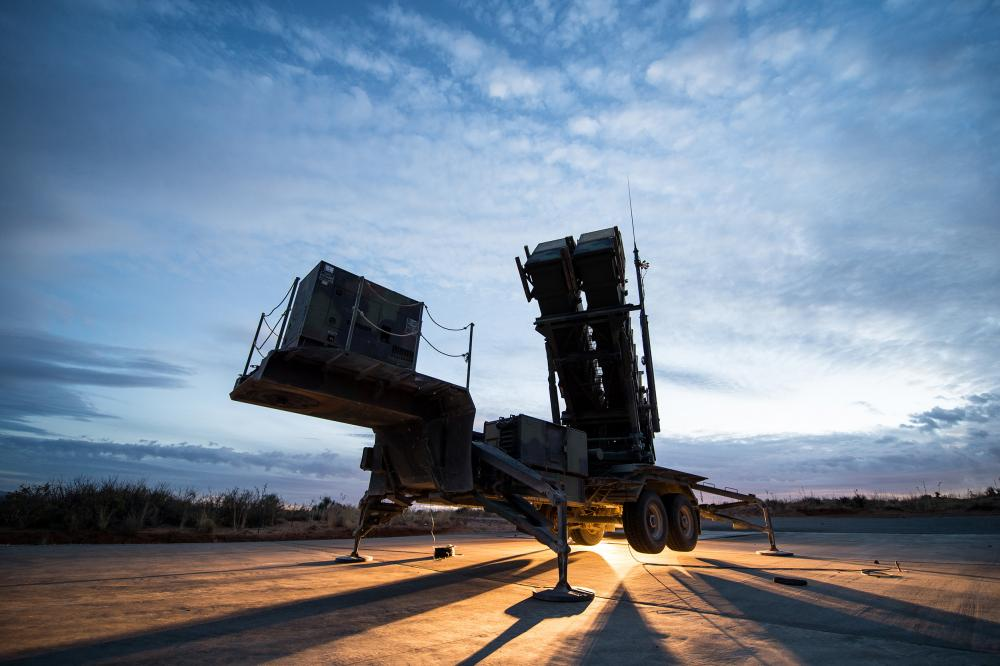
Ukraine says it has reached an agreement with the United States for Patriot interceptor missiles to be delivered every month, giving Kyiv a more regular replenishment schedule while leaving the quantity, missile variant, and duration of the arrangement undisclosed.
President Volodymyr Zelenskyy announced the agreement during his visit to Serbia on 8 August. He also said the volume of interceptor deliveries received during 2026 has fallen substantially compared with 2025, increasing pressure on Ukraine’s air-defence stocks.
Public details accompanying the Ukrainian announcement do not identify how many missiles will arrive in each monthly allocation. They also do not specify which Patriot interceptor family will be supplied, an important distinction because different missile configurations draw on different manufacturers, production lines, components, and support arrangements.
Patriot replenishment has become an industrial-capacity issue as well as a procurement question. Increasing delivery rates requires propulsion, seekers, guidance electronics, control hardware, energetic materials, structures, specialist test equipment, and final assembly to expand together rather than relying on a single factory to work faster.
Missile production is particularly sensitive to bottlenecks among lower-tier suppliers. A prime contractor can add assembly capacity, tooling, and labour, but completed interceptors still cannot leave the line faster than qualified rocket motors, electronic assemblies, precision components, and acceptance-testing capacity become available.
That constraint becomes more visible when several national customers are drawing on the same production base. US requirements, existing international orders, replenishment of allied inventories, and deliveries to Ukraine all compete for output generated by supply chains that were not originally designed around sustained demand at current levels.
A predictable monthly allocation can improve operational planning without necessarily increasing total production. If the arrangement redistributes already planned deliveries into a regular cadence, it addresses timing rather than factory capacity. If it is backed by additional procurement and output, the effect on suppliers and production schedules would be considerably larger.
The absence of public quantities makes that distinction impossible to assess at present. Annual production rates, customer priorities, stock transfers, and new-build missiles can all feed the same delivery stream, while governments rarely disclose detailed interceptor inventories.
Ukraine is pursuing a parallel industrial route through discussions over participation in Patriot production. Separate negotiations have examined the possibility of manufacturing parts associated with PAC-3 interceptors, although the structure, licensing arrangements, technical scope, and implementation timetable remain under discussion.
That production challenge is considerably larger than installing a final assembly line. Missile manufacture requires controlled technical data, export approvals, security arrangements, calibrated tooling, qualified processes, protected supply chains, acceptance testing, and configuration control capable of demonstrating that output from a new facility meets the same standard as established production.
Propulsion and energetic components would present particularly difficult transfer questions, while seekers, guidance electronics, and software carry their own security and intellectual-property restrictions. A more limited first phase based on structures, selected components, maintenance, repair, support equipment, or subassembly work could therefore emerge before complete interceptor manufacture.
Sustainment offers another route to deeper local capability. Diagnostic equipment, launcher maintenance, repair processes, spares management, field support, and technical training can reduce dependence on overseas support without requiring immediate transfer of the most sensitive missile technologies.
Any industrial activity inside Ukraine would also have to account for the physical security of production. Missile factories require stable power, controlled environments, protected tooling, secure data systems, and predictable logistics, all of which become more difficult to guarantee where facilities themselves may face attack.
Dispersed manufacturing could improve resilience but complicate quality control and material movement. Hardened facilities increase capital cost, while duplicated tooling and test equipment can make a relatively small production volume expensive compared with concentrating manufacture at an established site.
Those constraints help explain why additional Patriot output cannot be created simply through a licensing decision. Supplier qualification, plant construction, workforce training, production engineering, and acceptance evidence all operate on timescales longer than an immediate shortage of interceptor missiles.
The monthly delivery agreement addresses the near-term flow of weapons rather than that underlying capacity problem. Its industrial importance will become clearer when Washington and Kyiv disclose whether the arrangement is supported by additional production, transfers from existing stocks, third-country reallocations, or a combination of those routes.
Until then, the agreement provides Ukraine with a stated delivery rhythm while the harder questions remain unresolved: how many missiles Western industry can produce, which customers receive them first, and how quickly additional manufacturing capacity can be qualified without weakening the standards applied to a complex interceptor.