IN Brief:
- USS North Dakota completed its Extended Drydocking Selected Restricted Availability at Portsmouth Naval Shipyard on 29 August.
- The project was Portsmouth’s first Chief of Naval Operations availability on a Block III Virginia-class attack submarine.
- Work included structural inspections, mechanical and electrical system replacement, first-time technical alterations, modernisation, and an unusually rapid critical-testing phase.
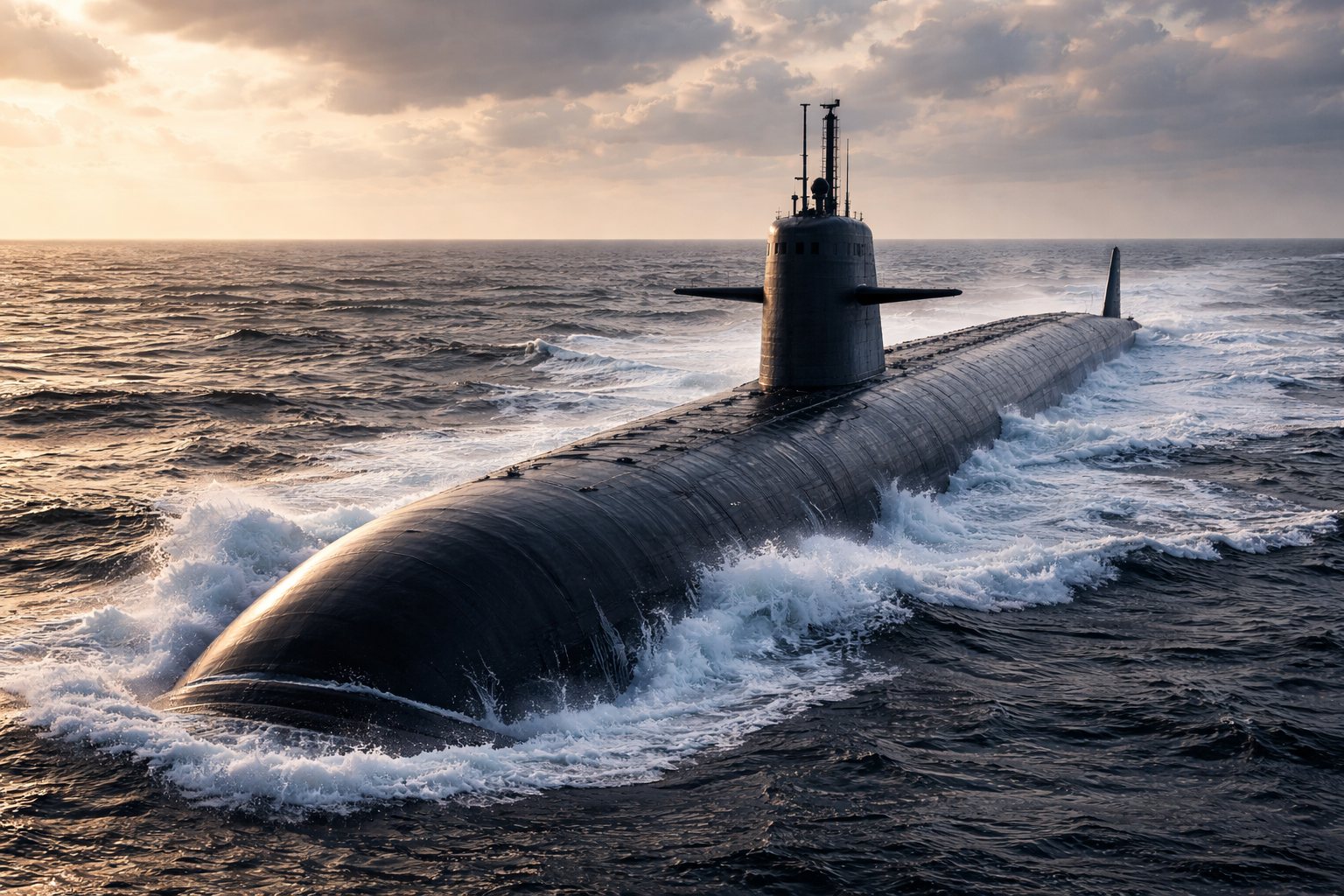
Portsmouth Naval Shipyard has completed its first Chief of Naval Operations availability on a Block III Virginia-class attack submarine, returning USS North Dakota to the fleet after an Extended Drydocking Selected Restricted Availability that combined repair, structural inspection, system replacement, technical alterations, modernisation, and final testing.
The US Navy says North Dakota completed the availability on 29 August and returned to the fleet ahead of its rebaselined schedule. That wording is important: the service has not published enough information to conclude that the entire project beat its original schedule, only the baseline against which the concluding phase was being managed.
Portsmouth has confirmed that the work included repairs, structural inspections, and replacement of mechanical and electrical systems. The project team also carried out several first-time technical alterations and completed the critical testing phase at what the yard described as a historically rapid pace.
The Navy has not provided a detailed equipment list for the modernisation. Sensors, weapons, propulsion equipment, and classified combat-system modifications should therefore not be inferred from the general reference to technological upgrades.
Block III creates a different maintenance baseline
USS North Dakota, SSN 784, was the first submarine delivered under the third production block of the Virginia class. The Navy redesigned approximately 20% of the Block III configuration, with most of the changes concentrated around the bow and intended partly to reduce acquisition and life-cycle cost.
The traditional air-backed sonar sphere was replaced by the water-backed Large Aperture Bow array. The redesign also replaced 12 individual vertical-launch-system tubes with two large-diameter 87-inch Virginia Payload Tubes, each able to accommodate six Tomahawk cruise missiles using multiple-round canisters.
Those changes matter to a naval shipyard because a major maintenance period is planned around the physical and technical configuration of the boat. Different equipment brings different access requirements, inspection tasks, tooling, removal sequences, engineering procedures, spare parts, and testing arrangements.
Portsmouth’s experience on earlier Virginia-class submarines therefore provided a foundation without eliminating the learning associated with Block III. The yard still had to execute an availability against a production configuration it had not previously taken through a Chief of Naval Operations overhaul of this type.
The Navy says several first-time technical alterations were incorporated during the North Dakota project. Installing a modification inside a nuclear-powered submarine involves more than replacing one piece of equipment with another. Power, cooling, structural interfaces, cabling, software, documentation, configuration data, safety certification, and subsequent test requirements can all change around the installation.
That integration burden is one reason first-of-type maintenance activity can produce schedule risk. Work packages are planned in detail before the vessel arrives, but physical condition and access constraints encountered during overhaul can differ from assumptions based on drawings or previous boats.
Final testing determines whether work becomes readiness
Completion of physical maintenance does not itself make a submarine operational. Systems that have been opened, repaired, removed, replaced, or modified have to be restored and tested before the vessel can safely return to service.
Portsmouth says North Dakota’s project team executed its critical testing phase at a historically rapid pace. The Navy has not published the detailed duration or individual results, so the claim should be understood as the shipyard’s assessment of its final testing performance rather than a quantified comparison with every previous availability.
Testing is especially important after first-time alterations because the yard must demonstrate that the modification works within the submarine’s existing systems and has not introduced unintended effects elsewhere. Mechanical operation, electrical supply, software interfaces, alarms, control functions, and associated safety requirements may all form part of the restoration and acceptance sequence.
The completed availability gives Portsmouth a new set of planning data for subsequent Block III submarines. Labour hours, access problems, sequence conflicts, material demand, technical instructions, alteration complexity, and test performance can all be fed into future work packages rather than estimated solely from earlier production blocks.
That learning has value because maintenance capacity is one of the constraints on US submarine availability. New boats are produced by General Dynamics Electric Boat and HII’s Newport News Shipbuilding, while the public naval shipyards carry a substantial share of the through-life maintenance and modernisation burden. A submarine sitting in an extended depot period contributes no operational availability regardless of how many new hulls are under construction elsewhere.
The Block III redesign itself was partly intended to improve cost and supportability over the life of the class. The Large Aperture Bow array reduces some acquisition and life-cycle costs compared with the earlier sonar sphere, while the Virginia Payload Tubes simplify elements of construction and provide greater internal payload flexibility.
Major maintenance periods are where some of those assumptions encounter long-term service reality. Equipment that was simpler to manufacture may not necessarily be simpler to inspect or replace after years at sea, and first deep availabilities provide the Navy with evidence that cannot be obtained during new construction.
North Dakota is approximately 377 feet long and displaces around 7,800 tons submerged, according to the Navy’s current Virginia-class data. The attack submarines are designed for missions including anti-submarine and anti-surface warfare, Tomahawk strike, intelligence and surveillance, special-operations support, and mine warfare.
Maintaining those capabilities depends on more than the submarine’s reactor endurance. Hull condition, mechanical equipment, electrical systems, combat systems, sensors, weapons interfaces, software, and crew support all pass through recurring inspection, repair, and modernisation cycles.
The Navy’s public record contains one date that requires care. Its 31 August article states explicitly that the Extended Drydocking Selected Restricted Availability was completed on 29 August. Photographs accompanying the story describe North Dakota as having been delivered back to the fleet on 20 August. The photographic date is useful for image provenance but does not supersede the article’s explicit completion date, which is the date used here.
Portsmouth can now carry its Block III lessons into later submarine work. One project completed ahead of a revised baseline does not establish a permanent change in shipyard performance, but it gives planners a more useful starting point than they had before North Dakota entered the availability.
The larger measure will be repetition. If subsequent Block III maintenance periods become more predictable as procedures mature and first-time work falls away, the benefit will appear in shorter or more reliable depot schedules and greater submarine availability. North Dakota is back with the fleet; Portsmouth’s next task is to make the experience gained on the first Block III overhaul repeatable.