IN Brief:
- The F127 design is based on MEKO A400 and configured for long-range air defence and ballistic missile defence.
- Updated German requirements are determining sensor, effector, command-system, electrical, space, weight, and future growth provisions.
- TKMS says 90% of value creation would remain in Germany, with first delivery possible in the mid-2030s following a prompt award.
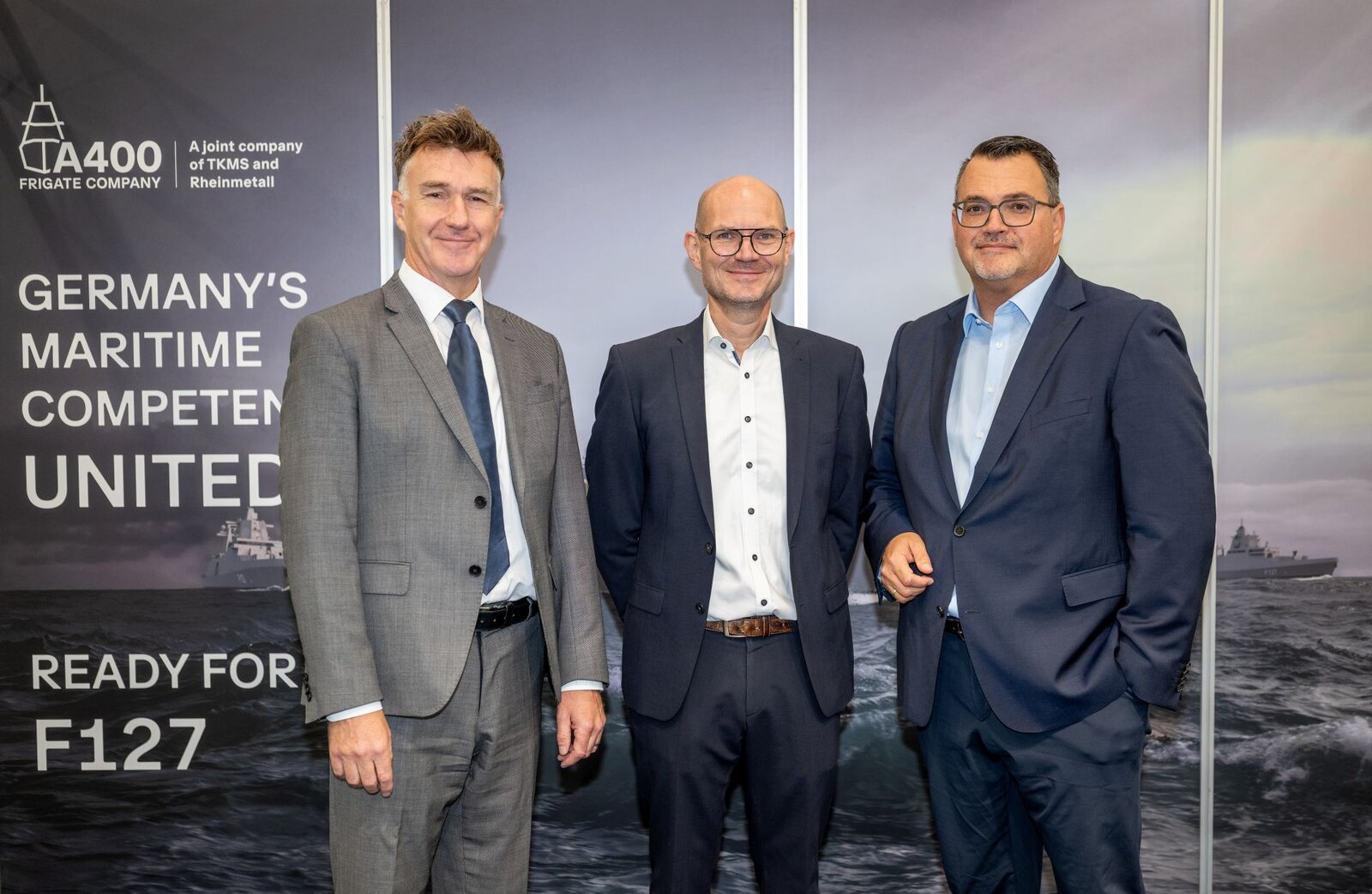
TKMS has advanced the design of Germany’s proposed F127 air-defence frigate following detailed work with the Federal Ministry of Defence, the German Navy, the Federal Office of Bundeswehr Equipment, Information Technology and In-Service Support, and industrial partners. The ship is being developed through A400 FC GmbH, led by TKMS with Rheinmetall as co-partner, and is based on the MEKO A400 design.
The programme is being shaped around long-range air defence and ballistic missile defence rather than a predetermined hull specification. German requirements include the ability to intercept ballistic missiles outside the Earth’s atmosphere, while the ship is also intended to protect naval formations and operate as a mobile element of NATO’s integrated air-defence architecture.
Those requirements are determining the platform’s dimensions and internal margins. Sensors, effectors, command-and-weapon-control systems, electrical demand, space, weight, and future growth reserves all feed into the present configuration, making F127 as much a systems-integration programme as a shipbuilding project. The MEKO architecture is intended to leave sufficient margin for later sensor, weapon, and electronic upgrades rather than fixing the ship around the equipment available at contract signature.
Domestic industrial participation is another central part of the proposal. Oliver Burkhard, CEO of TKMS, said: “Ninety percent of the value added would be generated in Germany.” TKMS says that share would include shipbuilding, systems integration, sensors, drives, electronics, and associated employment.
A domestic workshare at that level would spread the programme well beyond final assembly. Structural fabrication, propulsion, electrical distribution, electronic systems, software integration, testing, and acceptance would have to move through compatible production schedules, while specialist suppliers would need enough capacity to support construction and the fleet’s subsequent maintenance and upgrade cycle.
The harder engineering problems will sit at the interfaces between those systems. A hull can remain on schedule while radar arrays, combat-system software, power conversion, cooling, weapons integration, or certification create delays elsewhere. Concentrating much of the work within Germany may simplify parts of the logistics and support structure, but it does not remove the need to manage international equipment and tightly controlled technical interfaces.
The sensor architecture already illustrates that balance. Germany is preparing the SPY-6 radar family for F127, making it the system’s first international customer, while German shipbuilders and integrators remain responsible for incorporating the radar into the wider ship design. The final radar configuration has remained subject to programme work, placing a premium on electrical power, cooling, topside weight, processing capacity, and space for future modifications.
Ballistic missile defence raises the burden further. Detecting and engaging high-speed targets at extended range places demands on radar performance, track quality, communications, combat-system processing, and the time available to move targeting information through the engagement chain. A frigate intended to contribute to NATO air and missile defence therefore needs capacity that remains useful over decades rather than merely enough margin to pass acceptance with its initial equipment fit.
Naval service lives make those reserves particularly valuable. Processors, communications equipment, electronic-warfare hardware, radars, and missiles can pass through several generations while the underlying ship remains in commission. A later equipment change can drive secondary work in cooling, electrical distribution, structural reinforcement, cabling, and software, making allowances built into the original platform considerably cheaper than recovering lost margin during a mid-life upgrade.
TKMS says a prompt contract award could allow delivery of the first F127 by the middle of the 2030s. That timetable places long-lead equipment, shipyard capacity, combat-system integration, supplier qualification, and workforce planning on the critical path well before the first ship reaches the water.
F127 remains a procurement programme rather than a contracted production run, and the design will continue to be tested against cost, schedule, and technical risk. The work completed so far has nevertheless pushed the project closer to an executable ship specification, with unusually demanding radar, weapons, computing, and electrical requirements defining the platform from the outset. Procurement timing will now determine whether that engineering can be converted into a stable build programme early enough to sustain the mid-2030s delivery ambition.