IN Brief:
- Skunk Works has started work on four additional Vectis aircraft, taking the internally funded programme to five airframes.
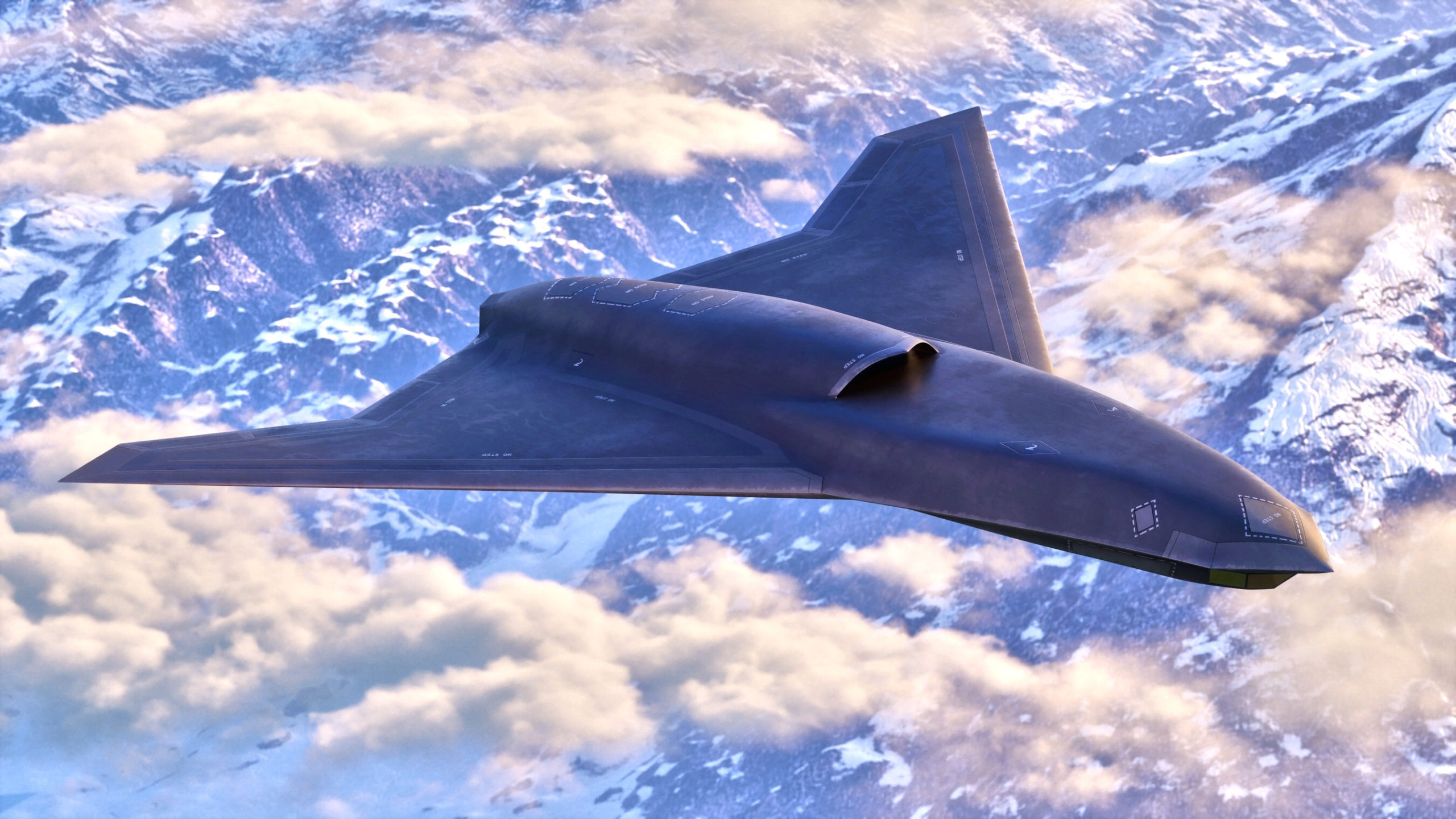
- Vectis is a Group 5 autonomous aircraft approximately 34ft long with a 38ft wingspan and tailless configuration.
- Lockheed is using digital design and reduced-tooling assembly methods to support lower labour content and potential higher-rate production.
Lockheed Martin has started work on four additional Vectis autonomous combat aircraft, expanding the internally funded Skunk Works programme from a single prototype to five airframes before the first aircraft has entered flight testing.
The company continues to target first flight by the end of 2027, but the decision to manufacture additional aircraft changes the programme from a one-off demonstrator effort into a broader development fleet. Lockheed intends to use the extra airframes to increase test capacity, mature production processes, and reduce the amount of programme learning dependent on a single prototype.
Vectis is a Group 5 uncrewed aircraft designed to operate independently or alongside crewed combat aircraft including the F-35. The latest dimensions put the aircraft at approximately 34ft long with a 38ft wingspan, while its tailless configuration and internal payload arrangement are intended to support survivability, range, and multi-mission flexibility.
Lockheed has also disclosed more about the aircraft’s dorsal intake, which is recessed into the upper fuselage. The configuration is intended to reduce drag and limit foreign-object ingestion when operating from austere airfields, where runway condition and dispersed support arrangements place different demands on an aircraft from those encountered at a permanent main operating base.
Vectis is being developed for the collaborative combat aircraft market rather than against a single declared procurement. The US Air Force selected General Atomics and Anduril for the first increment of its CCA programme, but later increments remain planned, while Lockheed is also positioning the aircraft for possible US Navy and international requirements.
That wider market helps explain the decision to fund more airframes before a customer has committed to the type. One prototype can demonstrate aerodynamic performance and flight-control behaviour, but a meaningful development campaign quickly creates competing demands for structural work, autonomy trials, mission-system integration, survivability testing, maintenance evaluation, and customer demonstrations.
A five-aircraft fleet gives Skunk Works greater scope to run those activities in parallel instead of repeatedly modifying the same prototype. It also forces manufacturing problems to emerge earlier. Building one aircraft can tolerate bespoke fitting, hand-finished components, and engineering intervention that would be unacceptable in a production programme; repeating the process across another four airframes exposes where tooling, tolerances, work instructions, and assembly methods require improvement.
Lockheed is addressing that issue through digital design and what it describes as determinate assembly with reduced dependence on large tooling fixtures. Components are designed with locating features intended to improve alignment during assembly, reducing repeated adjustment and the labour associated with bringing major structures into tolerance.
The approach is particularly relevant to collaborative combat aircraft because their economics differ from those of conventional crewed fighters. A CCA intended to be acquired in useful numbers cannot carry the same manufacturing burden as an aircraft produced at much lower volume and considerably higher unit cost.
Vectis is therefore testing Lockheed’s ability to apply advanced-aircraft engineering within a production system designed around lower labour content and greater repeatability. Skunk Works has said the aircraft moved from initial concept into wind-tunnel work in less than two months, reached a complete digital design within six months, and produced its first physical component within eight months of programme start.
Those development times matter only if the digital model remains aligned with the physical aircraft. Manufacturing five airframes provides a stronger test of that digital thread because engineering changes, supplier data, tooling, inspection, software configuration, and maintenance information have to remain controlled as the fleet grows.
The autonomy architecture forms another part of the production proposition. Vectis will use Lockheed’s MDCX command-and-control technology, which has also supported work involving the US Navy’s MQ-25. The company says Vectis can be controlled from the ground or operate alongside crewed aircraft, with human operators issuing mission commands rather than flying each aircraft conventionally.
That distinction becomes essential at scale. An air force planning to operate large numbers of collaborative aircraft cannot assign a traditional pilot workload to every platform. Autonomy has to manage routine aircraft control, navigation, sensor functions, and elements of mission execution while allowing human operators to supervise several aircraft and retain authority where required.
The additional builds therefore serve two purposes. They provide more hardware for flight, autonomy, and mission testing while creating an early production learning curve before any formal customer order exists. If Lockheed later competes for a larger CCA requirement, manufacturing data from five aircraft should provide a considerably stronger basis for estimating labour, tooling, and cost than a proposal derived from one demonstrator.
Vectis still has to demonstrate that its intended combination of survivability, autonomy, affordability, and range works in the air. Expanding the build from one aircraft to five nevertheless gives the programme more industrial substance: Skunk Works is not simply designing an aircraft for a future competition, but building enough hardware to discover whether the design can be manufactured repeatedly.