IN Brief:
- The Southwark factory contains three-axis and five-axis machining, turn-mill, wire-EDM, and climate-controlled metrology capacity.
- Isembard expects employment at the site to rise from 35 to 200 by the end of 2027.
- The company has expanded from four factories at the start of 2026 to 16 across the UK, Europe, and US.
Isembard has opened a 160,000 sq ft factory and global headquarters in Southwark, adding a substantial precision-manufacturing operation to its growing network of facilities serving defence, aerospace, robotics, and other high-specification industries.
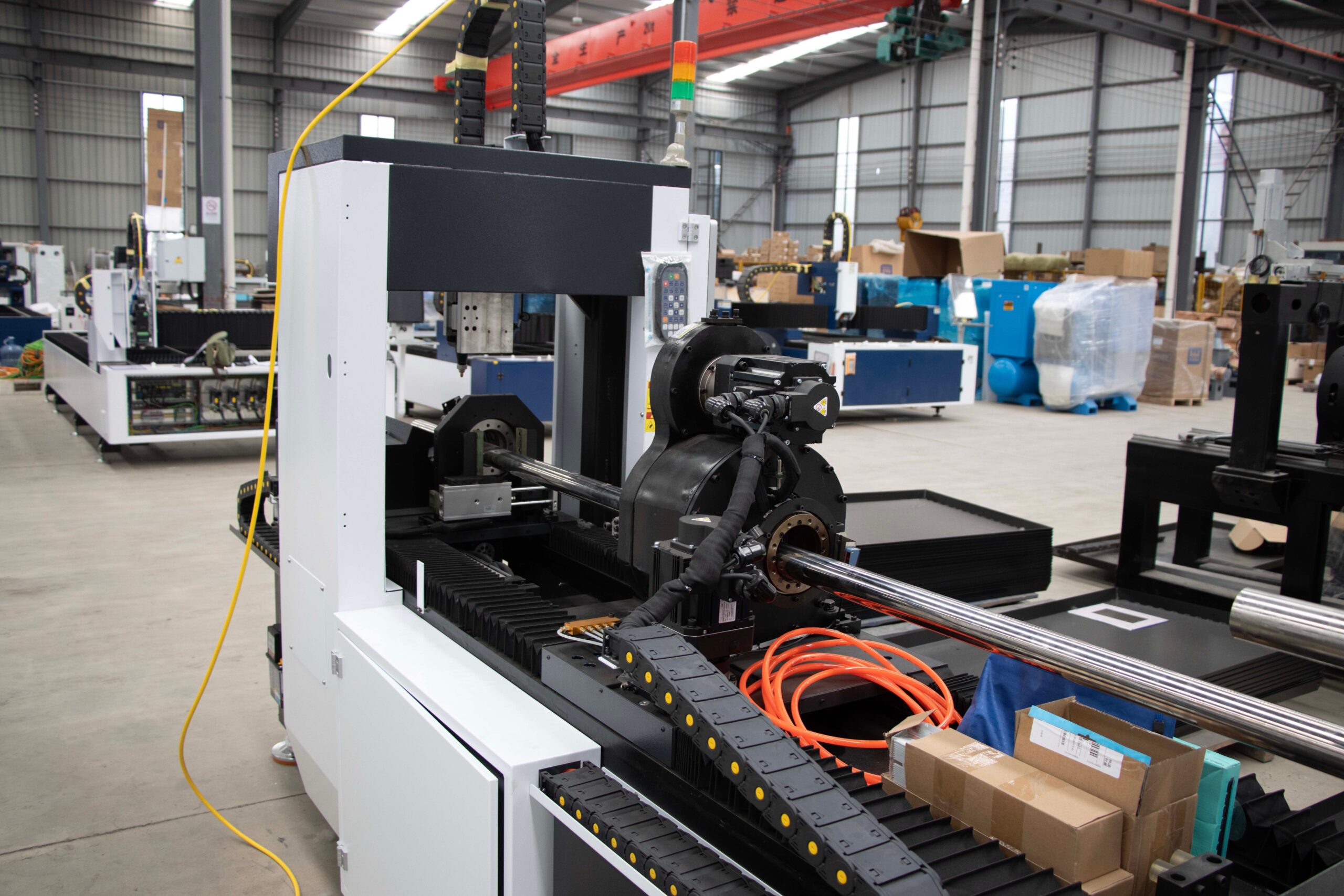
The London site combines corporate functions with an operating factory containing three-axis and five-axis milling machines, turn-mill equipment, wire electrical-discharge machines, and a climate-controlled metrology laboratory. Software and robotics engineers are based alongside the production floor, allowing manufacturing systems and the company’s MasonOS factory operating software to be developed against live component work.
Isembard currently employs around 35 people at Southwark and expects that figure to reach 200 by the end of 2027. Planned recruitment covers machining, manufacturing engineering, software, robotics automation, production, and supporting functions for a factory network that has expanded sharply during 2026.
The company began the year with four factories and now operates 16 across the UK, Europe, and US. Its longer-term plan is to establish a network of 100 owned and franchisee factories across the UK by the end of 2028, an expansion it says could support a further 2,200 skilled jobs.
The Southwark operation will manufacture precision components for customers including Anduril, Babcock, and Tekever, with applications covering drones, rockets, submarines, aircraft engines, robotics, and other complex equipment. The work places the factory in the less visible tiers of defence production where machining capacity, inspection, and component availability can determine whether larger platform programmes maintain their intended build rates.
Isembard was founded in London in late 2024 around a software-led manufacturing model. MasonOS is intended to standardise functions including quoting, scheduling, production control, and quality management across a distributed network of factories, while the individual sites retain machining and inspection capability close to their customers.
The company is attempting to bring more consistency to a component supply base that remains spread across large numbers of specialist engineering businesses. Such suppliers frequently hold decades of practical process knowledge and customer approvals, but capacity can be difficult to identify or transfer between sites, while succession and ownership changes can expose strategically useful production capability.
Operating a common software layer across multiple factories gives Isembard a route to coordinate that capacity without requiring every site to manufacture the same components. The challenge is ensuring that digital scheduling reflects the physical constraints of machining: setup time, tooling, fixturing, inspection, material availability, machine envelopes, and the disruption caused when a component requires another operation.
Locating software engineers beside the Southwark machines creates a direct development environment for those systems. Production data can be compared with real jobs, while automation and scheduling tools can be adjusted against the limitations encountered by machinists and manufacturing engineers rather than against an abstract factory model.
The equipment mix also reflects the variety of work required in aerospace and defence supply chains. Five-axis machining can reduce setups on geometrically complex components, turn-mill machines combine rotational and milling operations, and wire EDM allows hardened or difficult materials to be cut accurately where conventional tooling may be unsuitable.
Metrology then determines whether those operations have produced parts within controlled tolerances. For components entering aircraft, propulsion, submarine, missile, or uncrewed-system programmes, repeatable inspection and traceability are as important as the machining operation itself, particularly once work moves from prototypes into recurring production.
UK suppliers have been investing in comparable production processes as defence manufacturing demand increases. Wall Colmonoy, for example, has added vacuum precision casting capacity for aerospace and defence components, while other manufacturers are adding machining, additive manufacturing, inspection, and specialist-material capability.
Isembard’s location is unusual because it places a sizeable working factory in central London rather than a conventional manufacturing cluster. The company is effectively trading higher property costs against access to software, robotics, engineering, and technology talent, while its wider network provides the geographic manufacturing footprint required for larger volumes.
Floor area alone will not determine the factory’s contribution. Expanding employment from 35 to 200, increasing machine utilisation, transferring work across 16 sites, and maintaining consistent inspection standards will depend on qualified operators, stable processes, supplier availability, and enough recurring demand to keep high-value equipment productive.
The planned move towards 100 UK factories raises the same issue at network scale. A distributed manufacturing system becomes useful to defence customers only when work can move between sites without losing configuration control, inspection history, delivery predictability, or the process knowledge needed to produce difficult components repeatedly.
Southwark will therefore serve as both a factory and a test of Isembard’s operating model. If its software, automation, and machining network can reduce lead times while maintaining aerospace and defence quality requirements, the site will provide more than additional machine capacity; it will establish whether fragmented precision manufacturing can be coordinated as a larger production system.