IN Brief:
- PBS Aerospace has added 10,000 sq ft and two operating engine test cells at its Roswell, Georgia, factory.
- The expansion brings the US facility to 30,000 sq ft and supports annualised capacity of 5,000 turbojet engines.
- PBS is preparing a second production shift and targets capacity of 10,000 engines annually by 2028.
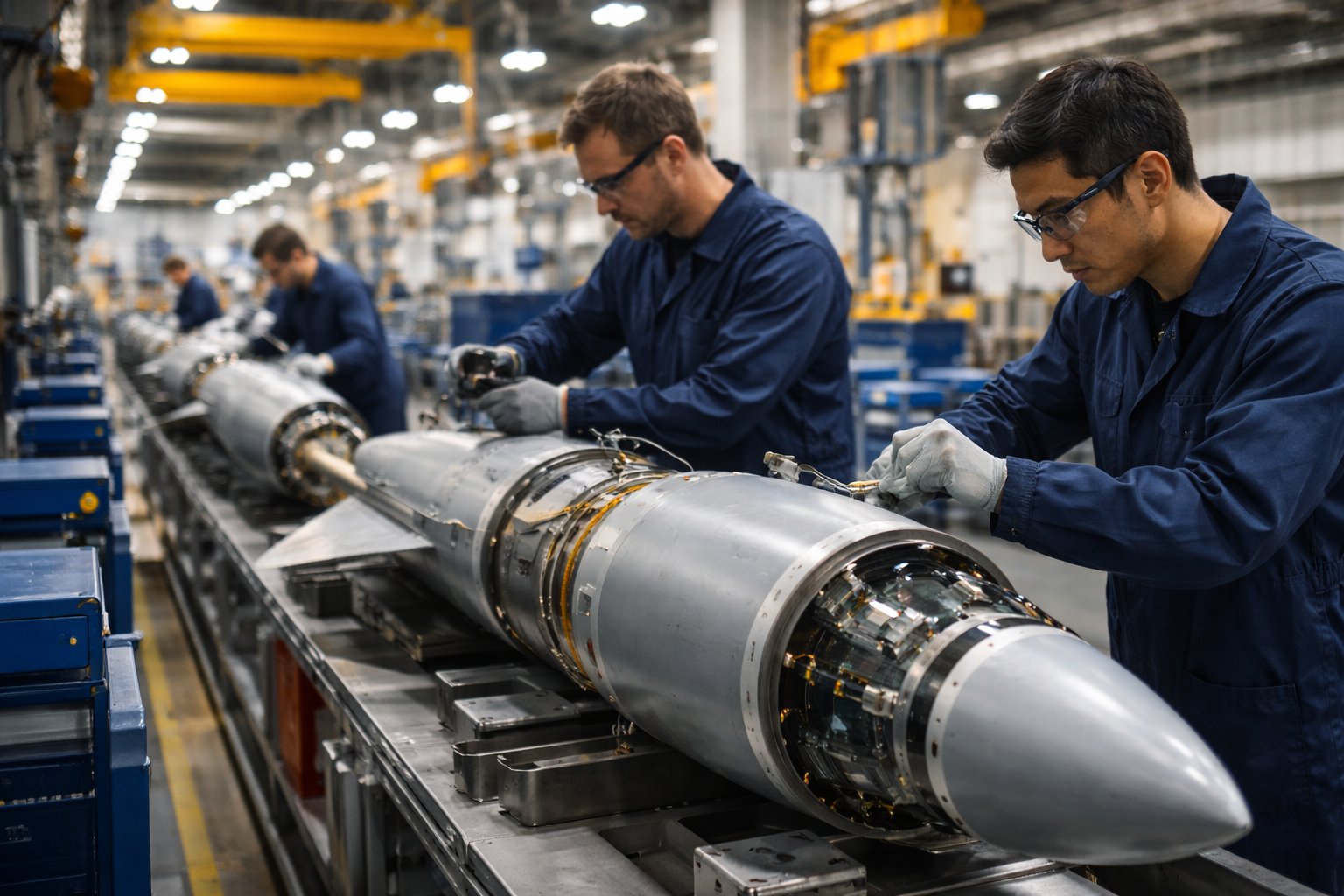
PBS Aerospace has completed a 10,000 sq ft expansion of its Roswell, Georgia, manufacturing plant, adding two engine test cells and doubling a capability that increasingly determines how quickly assembled small turbojets can become deliverable propulsion systems.
The latest buildout takes the facility to approximately 30,000 sq ft and supports an annualised production capability of 5,000 engines. PBS has also started preparing a second production shift as it works towards a stated capacity of 10,000 turbojet engines per year by 2028.
The expansion follows the start of production at Roswell in September 2025, when PBS opened its US headquarters after an investment of approximately $20 million. The company says the latest work represents its second completed expansion in twelve months, reflecting a decision to install production and test infrastructure ahead of the volumes expected from US defence programmes.
That sequencing matters in small turbojet manufacture because final test can become a production constraint even when enough assembly space exists. Every engine has to be run, measured, and accepted before shipment, so increasing component supply and assembly output achieves little if finished units accumulate while waiting for an available test cell.
Roswell’s two additional cells are already operating, raising the practical throughput ceiling rather than merely adding unused floor space. The site employs around 90 people and has moved into full-rate production of the PBS TJ40, while the first US-manufactured TJ80 engines have also been shipped.
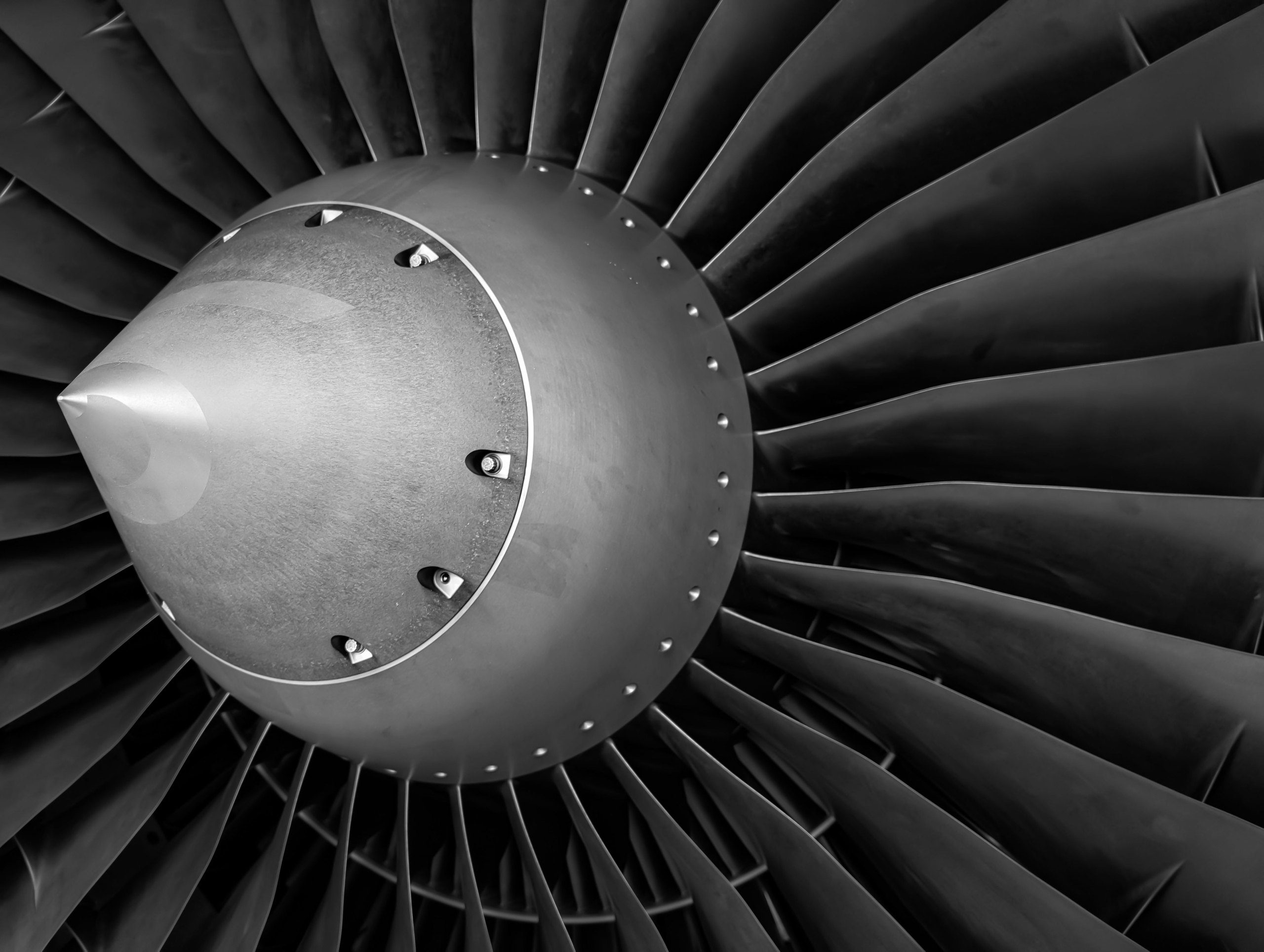
The TJ40 produces approximately 100lb of thrust and the TJ80 around 200lb, placing both engines in a propulsion segment increasingly associated with uncrewed aircraft, affordable cruise missiles, interceptors, and other systems where compact size, manufacturing cost, and production rate matter alongside outright performance.
PBS has been developing its US operation around that demand. The company is already involved in activity connected with the Department of Defense’s Family of Affordable Mass Munitions initiative, while an agreement with Zone 5 Technologies covers engines for the White Spike interceptor and wider US manufacturing requirements.
The company previously secured a US propulsion role connected with the FAMM effort, placing the Roswell expansion behind a defence requirement centred explicitly on producing weapons in quantities above the comparatively small volumes associated with many earlier precision-munition programmes.
Propulsion is one of the more demanding elements of that scaling exercise. A small turbojet still contains high-speed rotating assemblies, bearings, fuel systems, precision-machined parts, high-temperature components, and control hardware that have to perform predictably after storage, handling, launch, and sustained operation.
Increasing output therefore requires more than adding assemblers to a line. Manufacturing processes have to remain stable, suppliers have to produce qualified components at matching rates, and every completed engine has to pass acceptance testing before it can be released to a customer.
Engine test provides the final feedback loop. A cell has to reproduce controlled operating conditions, measure thrust and other engine parameters, identify abnormal vibration or temperatures, and generate a record showing that each production unit meets defined limits. When output rises into thousands of units, unnecessary minutes in the test cycle become a capacity issue in their own right.
PBS says every engine leaving the plant is run before shipment. Doubling test-cell availability is therefore a direct investment in throughput rather than a general factory expansion whose effect depends on later equipment installation.
The Roswell operation is also intended to localise a larger share of the engine supply chain. PBS entered the US programme with decades of Czech aerospace manufacturing behind the designs, but has been working towards greater US component manufacture and supplier participation to shorten delivery chains and meet customer expectations around domestic industrial capacity.
That localisation will determine how far the headline production targets can be sustained. A factory able to assemble 10,000 engines annually still depends on castings, machined parts, electronics, bearings, fuel-system components, materials, tooling, and specialist processes arriving at similar rates. One constrained supplier can undermine considerably more installed assembly capacity.
The decision to establish capacity before a programme of record fully underwrites it carries commercial risk, but it also addresses a recurring defence-production problem. Government demand can increase quickly after a procurement decision; machine tools, test cells, trained staff, qualified suppliers, and production processes cannot.
PBS has chosen to absorb part of that lead-time risk itself. The Roswell facility moved from an empty leased building in early 2025 to operating production within months, and the second expansion has now been completed little more than a year after the plant formally opened.
The next threshold will be sustained output rather than installed capacity. Running a second shift, maintaining test-cell utilisation, controlling quality as employment grows, and expanding the US supplier base will determine whether the 10,000-engine target becomes a repeatable production rate rather than a theoretical maximum.
For affordable-munitions programmes, that distinction is critical. Weapons can be simplified and demand can be signalled, but production rate ultimately depends on components such as engines emerging from qualified processes quickly enough to feed final assembly. Roswell’s additional test cells remove one identifiable constraint; the rest of the production system now has to expand at the same pace.