IN Brief:
- Royal IHC has received its first specific order under the Orka-class submarine programme.
- Initial work covers living-quarter design, with production and installation intended to follow.
- The package converts wider Dutch industrial-participation commitments into defined submarine engineering work.
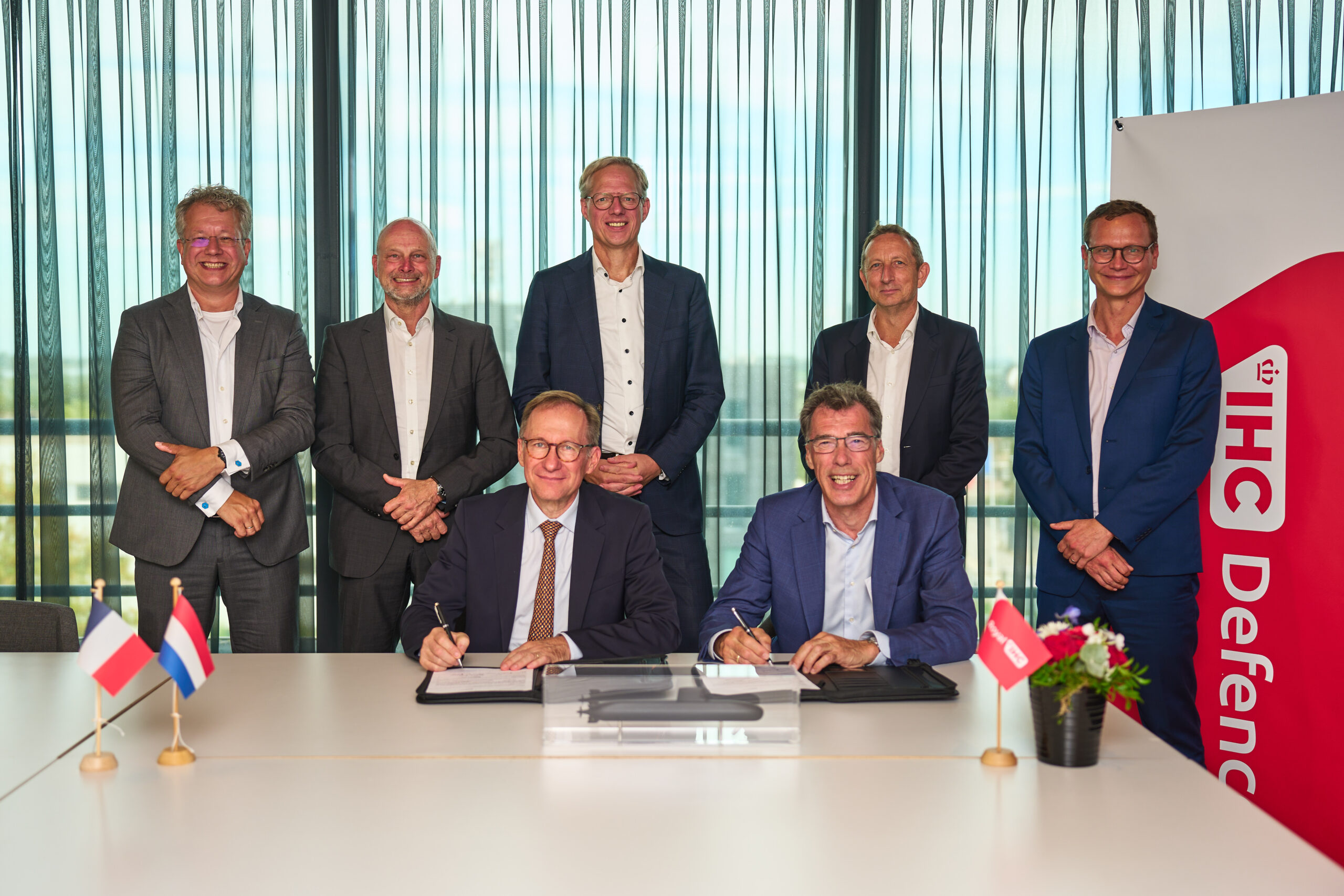
Royal IHC has received its first specific work order under the Netherlands’ Orka-class submarine programme, with Naval Group contracting the Dutch shipbuilder to contribute to the design of onboard accommodation for the future submarines.
Under the initial contract, Royal IHC will work on the design of living quarters for the Royal Netherlands Navy’s future boats. A subsequent phase is intended to bring the company into production and installation of the accommodation within the modules, converting earlier industrial-cooperation commitments into defined engineering and manufacturing work.
The order sits within the Replacement of the Netherlands Submarine Capability programme, under which Naval Group is supplying four Orka-class boats to replace the Walrus class. The submarines will be named Orka, Zwaardvis, Barracuda, and Tijgerhaai, with the first two due within ten years of the September 2024 delivery-contract signature and the remaining pair following later.
Royal IHC’s role is broader than the accommodation package alone. A strategic agreement signed with Naval Group in June 2025 covers development and delivery of modules and steel structures for all four submarines, making the company one of the largest Dutch industrial participants in the programme. The latest order is the first defined package placed against that wider relationship.
Construction of Royal IHC’s modules was expected to begin in the second half of 2026, supported by new facilities and secure production areas in the Netherlands. The company and Naval Group have worked together on submarine knowledge and industrial integration since 2018, giving the current order a long preparation path rather than creating a new supplier relationship from scratch.
Accommodation occupies a tightly constrained part of submarine design. Living spaces have to fit around structure, ventilation, electrical services, piping, access routes, safety requirements, and neighbouring equipment inside a pressure hull where volume is limited. Weight, maintainability, noise, and damage-control considerations also affect how the compartment can be engineered and installed.
Carrying the same company from design into production reduces the divide between engineering intent and fabrication. Interfaces, tolerances, installation sequence, access requirements, and service routes can be resolved during design with an understanding of how the module will later be built. That continuity is particularly useful in submarine construction, where changes to one compartment can have knock-on effects across structures and distributed systems.
The arrangement supports the industrial cooperation agreement between Naval Group and the Dutch Ministry of Economic Affairs. That framework was designed to keep Dutch companies and research organisations involved over the programme’s life, placing significant work into the national maritime sector while retaining knowledge needed for maintenance and later modernisation.
Domestic participation also has a lifecycle role. Submarines remain in service for decades, during which equipment is modified, suppliers change, obsolescence has to be managed, and major refits require access to original design and production knowledge. Companies familiar with modules, interfaces, materials, and manufacturing records provide a deeper support base than suppliers engaged only for peripheral fabrication.
Naval Group is using the Team Orka structure to assemble that network. Dutch companies have already been allocated work in engineering, hydraulic systems, and onboard services, while Royal IHC brings heavy maritime engineering and module capability. Responsibility is therefore distributed between the French prime contractor and a deliberately embedded Dutch industrial base rather than confined to final assembly work.
The current contract does not disclose its value, detailed module schedule, or the exact production scope expected to follow the design phase. Those points will determine how much work moves through Royal IHC’s facilities during the build cycle. The significance of the latest order lies in the shift from a broad partnership agreement to contracted work on an identifiable submarine module.
The Orka industrial-cooperation arrangements are expected to direct about €1 billion of work to Dutch companies and knowledge institutes. That figure spans a much wider programme than Royal IHC’s latest order, but it establishes the scale of the local industrial commitment surrounding the four-boat purchase. Royal IHC’s module and steel-structure work links part of that commitment directly to facilities, protected production areas, engineering knowledge, and long-term manufacturing employment.
Release of the accommodation design into production, start of module fabrication, and installation on the first boats will provide the next measurable milestones. Those steps will show how the programme converts Dutch participation commitments into repeatable submarine-building capability as construction of the Orka class advances.