IN Brief:
- CAE USA has won a $300 million competitive recompete for the C-130H Aircrew Training System.
- The company will remain prime contractor through December 2035 across five US training locations.
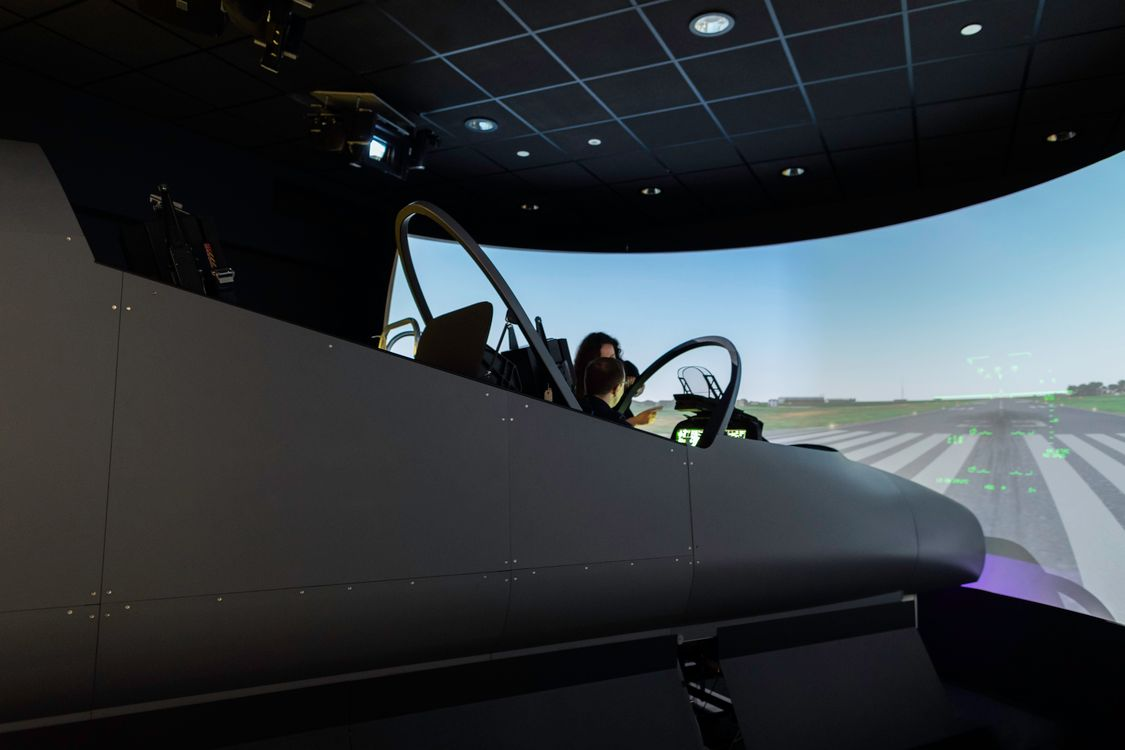
- Nine full-mission simulators and more than 45 additional training devices support pilots, flight engineers, navigators, and loadmasters.
CAE USA has secured a $300 million competitive recompete to continue operating the US Air Force’s C-130H Aircrew Training System through December 2035.
The award keeps CAE as prime contractor for training and sustainment across the Air Force Reserve and Air National Guard C-130H community. The scope covers programme management, instruction, maintenance, logistics support, cybersecurity, and continuing upgrades intended to keep the synthetic training environment aligned with the aircraft fleet.
The programme currently includes nine C-130H full-mission simulators and more than 45 additional aircrew training devices distributed across five US locations. Pilots, flight engineers, navigators, and loadmasters all use the system, giving the contract a broader training requirement than cockpit simulation alone.
Little Rock Air Force Base in Arkansas remains the centre of the network, housing the formal training unit and Training System Support Center. CAE also supports activity at Dobbins Air Reserve Base in Georgia, Wyoming Air National Guard Base, Minneapolis Air National Guard Base in Minnesota, and St Joseph Air National Guard Base in Missouri.
The contract is a training-system and support award rather than an aircraft acquisition. Its engineering significance lies in maintaining a distributed synthetic environment for an aircraft fleet whose service life extends much further than the computing and visual hardware used inside a simulator.
CAE first became prime contractor for the C-130H Aircrew Training System in 2018. The new award extends that responsibility for another nine years, creating a long sustainment period across equipment that has already been operating under the previous arrangement.
Simulator support over that timescale is not simply routine maintenance. Aircraft avionics, communications, navigation systems, procedures, and software can change while the training devices remain physically installed at the same bases. The synthetic environment has to follow those modifications closely enough that crews train against a representative aircraft configuration.
Configuration control becomes harder across a network of nine full-mission simulators and dozens of additional devices. Upgrades have to be introduced without creating inconsistent training baselines between sites, while instructors and maintainers need to understand which aircraft configuration each device represents at any point in the programme.
Computing obsolescence introduces another constraint. Commercial processors, displays, graphics equipment, operating systems, network hardware, and software dependencies can reach the end of support far sooner than a C-130 airframe, forcing simulator operators to replace underlying technology without changing the aircraft behaviour being represented.
That work requires engineering rather than straightforward IT replacement. New computing hardware has to reproduce timing, interfaces, visual behaviour, aircraft-system responses, and instructor functions closely enough that the modified device can remain qualified for training.
Cybersecurity is explicitly included in the new contract. Modern simulators contain networked computing, aircraft-representative software, mission databases, visual systems, communications interfaces, and support networks, creating an attack surface that has to be managed alongside conventional mechanical and electronic maintenance.
The requirement becomes more demanding as training devices become increasingly connected. Distributed and networked simulation allows crews to train with other aircraft or command nodes, but every additional interface creates another software baseline and security relationship that has to be controlled.
C-130H training also differs from a single-seat aircraft programme because qualification depends on crew interaction. Pilots, flight engineers, navigators, and loadmasters perform different functions that have to be coordinated during normal missions, abnormal situations, and emergencies.
Full-mission simulation allows those procedures to be rehearsed repeatedly without requiring an aircraft, fuel, range access, and maintenance support for every event. It also allows instructors to create equipment failures or operating conditions that would be unsafe or impractical to reproduce routinely in flight.
Synthetic training does not replace live aircraft time, but it can reduce pressure on operational fleets by moving part of qualification and continuation activity into devices where scenarios can be paused, repeated, or altered according to training performance.
The distributed C-130H system also has to support the different demands of Reserve and Air National Guard units. Training capacity has to be available at several locations while remaining consistent enough that crews moving between units and aircraft encounter familiar procedures and system behaviour.
The $300 million value covers the complete training and sustainment scope rather than a batch of new simulators. CAE has not disclosed how the contract value is divided between instruction, maintenance, logistics, cybersecurity, equipment upgrades, and other programme-management functions.
That distinction matters because a mature training system can require substantial engineering spending without adding many new devices. Hardware replacement, software development, visual-system upgrades, database maintenance, cyber accreditation, and configuration work can consume significant resources simply to keep existing simulators representative and available.
The recompete gives the Air Force continuity with an incumbent provider but also creates a measurable requirement through December 2035. CAE will have to sustain equipment already in service while introducing enough new technology to prevent computing obsolescence and aircraft modifications from widening the gap between simulator and aircraft.
Performance over the contract will therefore be determined less by the age of the physical simulator shells than by availability, fidelity, configuration management, and the pace at which upgrades reach all five locations. The Air Force has retained the existing prime contractor; the next nine years will test how effectively that training network can evolve alongside the C-130H fleet it supports.