IN Brief:
- Denmark has bought additional Weibel radars for detection, classification, and tracking within its counter-drone programme.
- The contract includes maintenance and continuing software updates to support the sensors through their service life.
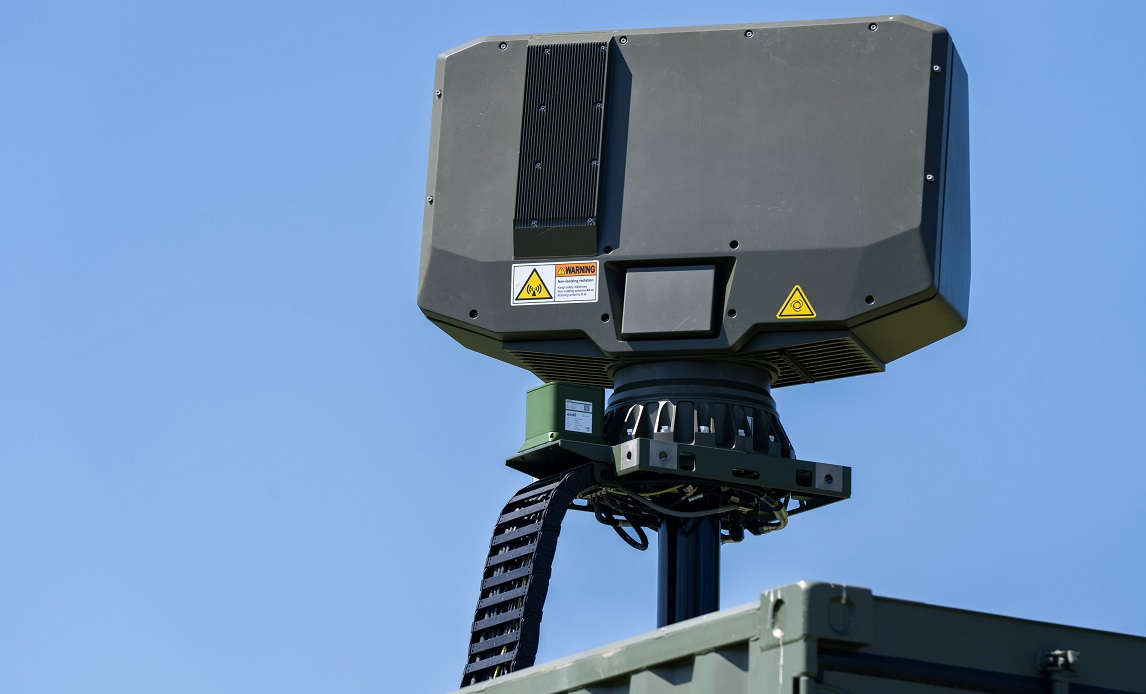
- FMI confirms the new systems use the XENTA-M5 model previously selected for Danish brigade air defence.
Denmark’s Defence Ministry Acquisition and Logistics Organisation has ordered additional radars from Weibel Scientific for the country’s counter-drone programme, expanding a sensor family already selected for brigade air defence.
The new systems will support detection, classification, and tracking of airborne threats and are intended for tasks including protection of critical military infrastructure. FMI has not disclosed the number of radars in the order, its financial value, or the planned delivery timetable.
The procurement includes an operations and maintenance agreement and continuing software updates, making lifecycle support part of the contract from the outset. FMI says the software provision is intended to allow the capability to develop as the threat environment changes.
The agency also confirms that the latest systems use the same radar model ordered in 2025 for Denmark’s 1st Brigade. That earlier contract identifies the equipment as Weibel’s XENTA-M5, four of which are scheduled for delivery between the fourth quarter of 2027 and the end of 2028 for the brigade’s Very Short Range Air Defence capability.
The 2026 counter-drone purchase is a separate procurement. FMI has not stated that it uses the same quantity, delivery schedule, container installation, or vehicle arrangement as the brigade order, so those details from the earlier contract cannot be carried across to the new deployment.
Reusing the XENTA-M5 gives Denmark a common radar family across two parts of its developing air-defence architecture. Operators and maintainers can build experience around the same sensor technology, while software, training, spares, and integration knowledge have greater potential for reuse than they would with an unrelated radar type.
Weibel describes the XENTA-M5 as an X-band radar designed for short-range air-defence and counter-UAS work. The published configuration uses digital-array beamforming and FMCW range-Doppler processing, with a nominal instrumented range of 75km and 60 degrees of elevation coverage.
Those manufacturer specifications define the product rather than the performance of Denmark’s specific deployment. Detection range against an individual drone depends on target size, flight profile, environment, clutter, configuration, and other factors, so the nominal instrumented range should not be read as a guaranteed counter-UAS detection distance.
The radar supports 3D surveillance, stop-and-stare tracking, and search-on-the-move operating modes. Weibel also lists ASTERIX as its digital data interface, allowing track information to be passed into compatible command-and-control systems rather than keeping detections inside a proprietary radar display.
That interface is important because a counter-drone sensor rarely operates alone. Radar detection normally feeds a wider chain that can include electro-optical identification, passive sensors, command software, and one or more defeat mechanisms. The quality and consistency of the track passed between those systems can determine how quickly an operator moves from detection to identification and response.
Small drones create a difficult surveillance problem because their speed, radar signature, and flight altitude can place them among birds, vehicles, terrain returns, and other clutter. Weibel’s XENTA architecture uses range-Doppler processing and classification techniques designed to distinguish low, slow, and small aerial targets while retaining conventional short-range air-defence functions against larger or faster threats.
The software-update provision in Denmark’s latest contract gives the supplier a continuing role after hardware delivery. Classification algorithms, clutter handling, track behaviour, and interfaces can all change over the radar’s service life as users encounter new target types or integrate the sensor into additional command systems.
FMI says the new radars will contribute to a combined situational picture of drone activity over Denmark. That description places the procurement beyond local point protection, because detections from several locations become more useful when they can be correlated and presented within a wider air-defence picture.
Funding comes from Denmark’s Accelerationsfonden, which has been used to bring defence capabilities into service more rapidly. The radar purchase sits within a broader rebuilding of Danish ground-based air defence after the country committed to new short-, medium-, and longer-range capabilities.
The procurement also gives a domestic supplier an expanding position in that architecture. Weibel designs and manufactures radar systems in Denmark and has supplied tracking equipment internationally for decades, while the XENTA family was developed specifically around short-range air-defence and drone-detection requirements.
Commonality does not remove the integration task. The counter-drone programme still has to connect the new sensors to command systems, establish deployment patterns, train crews, maintain software baselines, and determine how radar tracks trigger further identification or defensive action.
The undisclosed quantity and delivery dates leave the immediate scale of the expansion unclear, but the procurement direction is established. Denmark is extending a radar family already entering brigade service into a wider counter-drone role and has included maintenance and software evolution in the contract rather than treating the sensors as static equipment.
Delivery and integration will show how far that common sensor architecture can be carried across tactical air defence and fixed-site protection. The current order gives Weibel another role in Denmark’s air-defence build-up while providing FMI with a radar model it has already selected, contracted, and begun integrating elsewhere in the force.