IN Brief:
- The ALPEX LOG experiment ran at the Swiss Bure training area on 10–12 November.
- Wheeled and tracked ground vehicles were evaluated for logistics and casualty evacuation, while drones transported stores and surveyed buildings.
- The EDA has released no comparative vehicle performance results, rankings or procurement awards from the exercise.
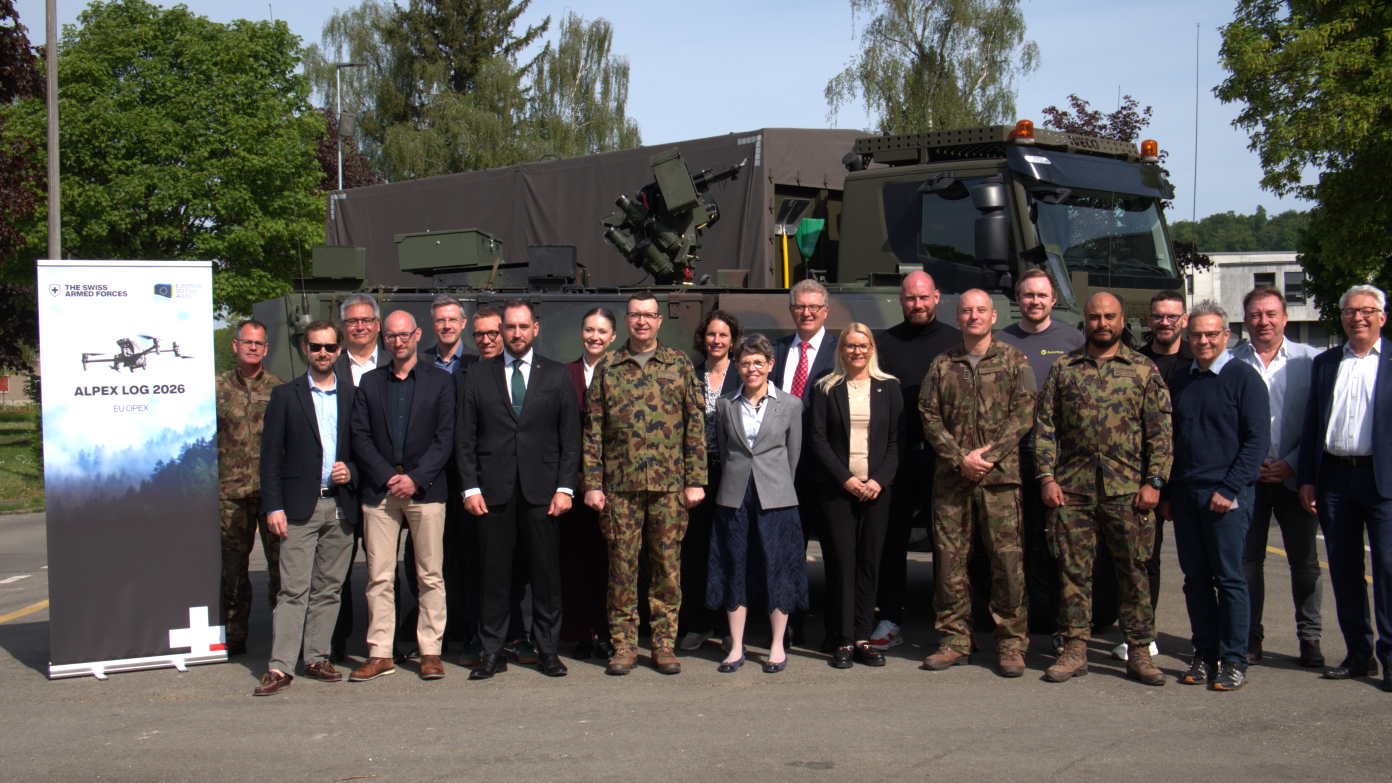
The European Defence Agency (EDA) and the Swiss Armed Forces have completed three days of trials examining how aerial drones and uncrewed ground vehicles could support military logistics in built-up areas. The Alpine Experiment Logistics campaign, known as ALPEX LOG, ran from 10 to 12 November at the Swiss military training area in Bure, in the Jura region.
Soldiers from a Swiss tank battalion and military logistics units joined companies providing the equipment at Bure’s urban training village. Their tasks included moving supplies forward, transporting casualties and surveying routes and buildings. ALPEX LOG was the first European Defence Agency operational experimentation campaign held outside the European Union, under Switzerland’s established cooperation arrangements with the agency.
Wheeled and tracked uncrewed ground vehicles were evaluated for carrying goods and assisting the movement of casualties. Aerial drones carried loads and surveyed buildings and nearby ground. The participating military units included personnel from a tank battalion and logistics formations, placing the systems alongside intended users rather than testing their capabilities exclusively in a laboratory setting.
Buildings, narrow access routes and limited sightlines complicate the movement of autonomous vehicles. A ground platform can encounter loose surfaces, kerbs, debris and pedestrian traffic while losing a clear radio path to its operator. Bringing stores to a unit or recovering a casualty requires equipment to follow a useful route under supervision, not simply to navigate a pre-marked course in controlled laboratory conditions. Such demands explain the use of a military training village for the trials.
Wheeled and tracked platforms offer different compromises in traction, weight distribution, speed and maintenance. A tracked vehicle may negotiate uneven ground that restricts a wheeled one, but suitability also depends on payload weight, clearance, turning space and battery or fuel endurance. Engineers and operators have to consider how supplies are loaded and unloaded at each end of a journey. The EDA has not released comparative scores identifying a superior platform at Bure.
Aerial vehicles carried goods and scouted buildings during the experiment. They can bypass obstacles that stop a ground carrier, although usable payload is constrained by aircraft mass, available power, weather and the distance to the destination. Flight between structures adds navigation, route management and communications challenges. The agency describes the tasks performed but has not named a standard aircraft, published measured performance or awarded a procurement contract.
Evacuating a casualty imposes different requirements from moving ordinary cargo. A suitable vehicle needs secure patient support, controlled movement and procedures for loading and recovery, while its use must fit within the medical support chain. ALPEX LOG assessed the potential role of uncrewed transport in that task; a demonstration does not establish clinical certification, medical suitability in every situation or readiness for deployed service.
The aircraft’s reconnaissance role complemented the logistics trials by surveying buildings and approaches before other platforms moved. Aerial images can help identify obstacles or changes in a route, provided the information reaches the people controlling the operation in time to inform their decisions. Video transmission, operator interfaces and reliable command links are therefore part of the complete equipment system, alongside vehicle mobility and carrying capacity.
Developers worked directly with military personnel, allowing feedback on loading, controlling, transporting, charging and maintaining the machines. Testing with intended users can expose constraints that are hard to reproduce in development facilities, including awkward access to a payload compartment or controls that demand excessive attention. The findings can then shape further prototypes or a defined requirement before military procurement begins.
The Swiss event follows related EDA logistics trials in Italy in 2025 and operational experimentation in Portugal earlier in 2026. Those campaigns established experience in bringing companies and military users together, although they did not constitute qualification of every vehicle subsequently taken to Bure. Platforms, tasks and operating environments can differ substantially between exercises.
Switzerland’s role was made possible through its cooperation arrangements with the EDA, updated in 2025. Hosting an operational experimentation campaign outside the EU gives the agency another military environment and partner organisation in which to gather evidence. The Bure training village provided a defined location for assessing how equipment worked among buildings while remaining within a controlled military exercise.
The EDA plans to make operational experimentation a central activity of its Centre for European Defence Innovation. Findings from exercises such as ALPEX LOG can inform future requirements, but moving an evaluated system into service involves further work on reliability, training, interoperability, maintenance, security and funding. None of those downstream steps was announced as complete when the agency reported the Swiss exercise.
The EDA reported the completed trials on 13 November without providing a ranking of systems, comparative performance data or follow-on orders. Military users and participating companies will need to assess the feedback against their own requirements before pursuing further trials or purchases. The outcome currently documented is a completed three-day evaluation of how aerial and ground uncrewed systems could support urban military logistics.