IN Brief:
- Rheinmetall Nordic’s new Skoppum facility provides 4,579 square metres of defence engineering and production space.
- The site opens with 100 employees, is designed for 127 and can expand by about another 5,000 square metres.
- Work spans electro-optics, fire control, situational awareness, weapon accessories, integration and lifecycle support.
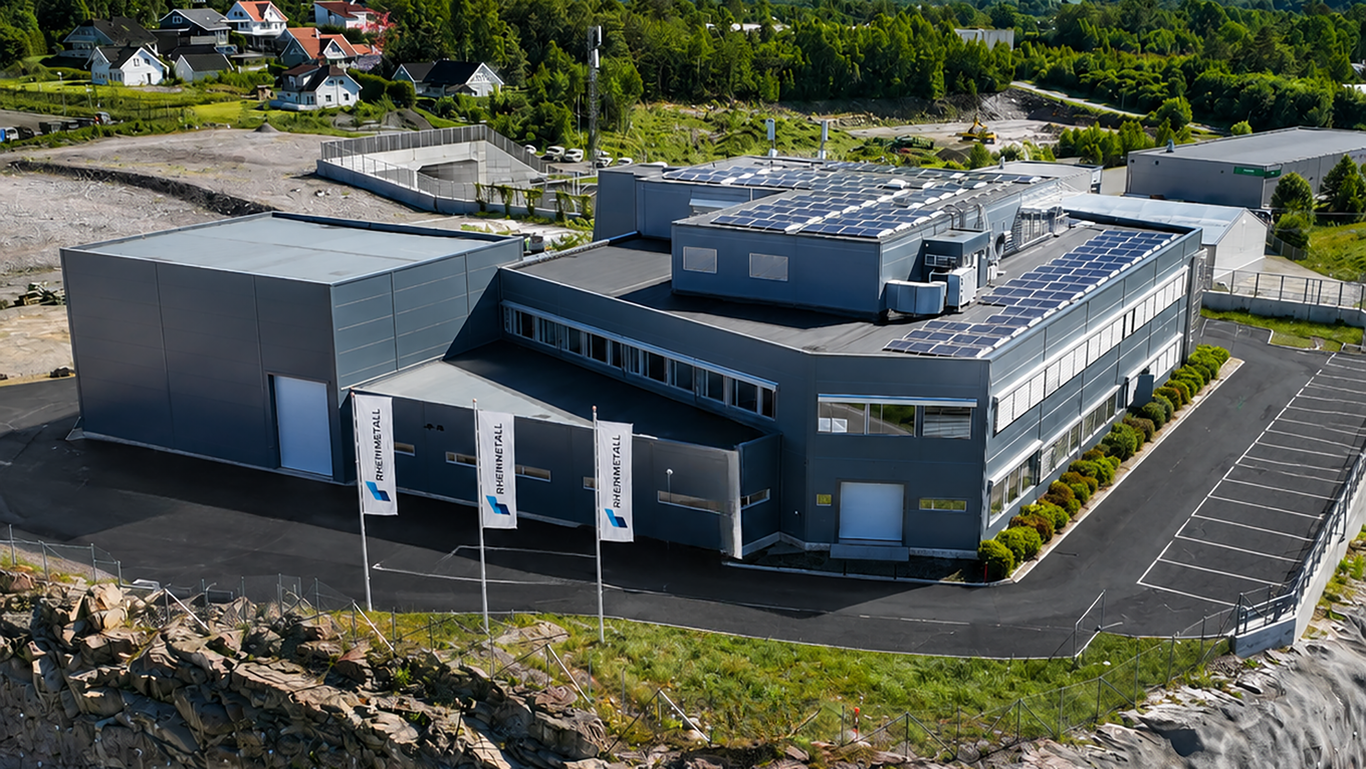
Rheinmetall has opened a new facility at Skoppum in Norway, expanding local capacity for defence system development, manufacturing, systems integration, logistics and lifecycle support.
The 4,579-square-metre site is operated by Rheinmetall Nordic AS and has been designed for 127 employees. One hundred staff are based there at opening, while the surrounding site provides scope for a further expansion of about 5,000 square metres.
Rheinmetall has taken the facility on a 15-year lease, giving the Norwegian subsidiary a larger permanent industrial base for technologies including electro-optical systems, fire control, situational awareness equipment, weapon accessories and broader systems integration.
The site will support the Norwegian Armed Forces, international customers and other companies within the Rheinmetall group. Its combination of development, production, integration, logistics and customer support brings several stages of a defence product’s lifecycle into one operation.
That arrangement is particularly relevant to electro-optical and fire control systems, where hardware manufacture represents only part of the engineering workload. Sensors, software, computing, interfaces and weapon integration have to remain aligned through qualification, fielding, maintenance and later upgrades.
Keeping those activities closer together can shorten the route between an operational issue and the engineering organisation responsible for resolving it. The same technical teams can also support configuration changes and obsolescence work after initial production has moved into a sustainment phase.
Rheinmetall Nordic says the larger premises provide greater production flexibility and improve collaboration between departments and programmes. No output target, capital expenditure figure or contract directly tied to the opening has been disclosed, so the measurable change is additional physical and organisational capacity rather than a stated increase in annual production.
The site starts with 100 of its 127 planned positions occupied, leaving some immediate room for recruitment without another expansion. The possibility of adding roughly 5,000 square metres would represent a more substantial second phase, although Rheinmetall has not announced a timetable for that development.
Norwegian defence procurement has placed growing emphasis on domestic support and industrial resilience, particularly for equipment expected to remain operational over long service lives. Maintenance, software updates, system modifications, configuration control and component replacement can generate engineering demand long after the original production contract is complete.
A local industrial footprint also reduces the number of interfaces between the equipment user, engineering authority and manufacturer when systems require repair or modification. That does not remove dependence on international supply chains, but it keeps more of the integration and technical-support function within the customer country.
Rheinmetall Nordic has more than 70 years of experience in the Norwegian defence sector. The subsidiary combines local development and manufacturing activity with technology and resources drawn from the wider Rheinmetall organisation, giving the Skoppum site a role in both Norwegian programmes and international group work.
The opening forms part of a wider expansion of European defence production capacity as governments seek higher output, shorter lead times and greater equipment availability. Those requirements depend on factories, test equipment, qualified suppliers and skilled employees well before completed systems reach military customers.
The technical portfolio at Skoppum also reflects the growing software content of land and sensor systems. Electro-optical equipment and fire control increasingly depend on processing algorithms, data interfaces and software configuration alongside optics and mechanical hardware, creating a continuing integration requirement during upgrades.
Lifecycle support therefore provides a potential source of sustained workload beyond new production. A sensor or fire control system may remain fitted to a platform for many years while processors, displays, software or interfaces are replaced several times during the platform’s service life.
Morten Kjørum, chief executive of Rheinmetall Nordic AS, said the site would provide a foundation for greater capacity while strengthening the company’s support for customers and partners. The 15-year lease and available expansion area give the subsidiary room to develop that workload without another near-term relocation.
The next measure will be utilisation. With an established workforce already occupying most of the planned headcount, future contracts, recruitment and any decision to use the additional expansion area will show how quickly the extra space translates into higher engineering, production and support throughput.