IN Brief:
- A collaborative robot now assists with precision fastening on F-35 Communications, Navigation and Identification modules.
- Northrop Grumman says the operation has fallen from hours to several minutes.
- AI assisted inspection is also being introduced to identify possible defects before modules leave production.
Northrop Grumman has introduced collaborative robotics and artificial intelligence into F-35 avionics production, cutting one Communications, Navigation and Identification module assembly task from hours to minutes while expanding automated quality inspection.
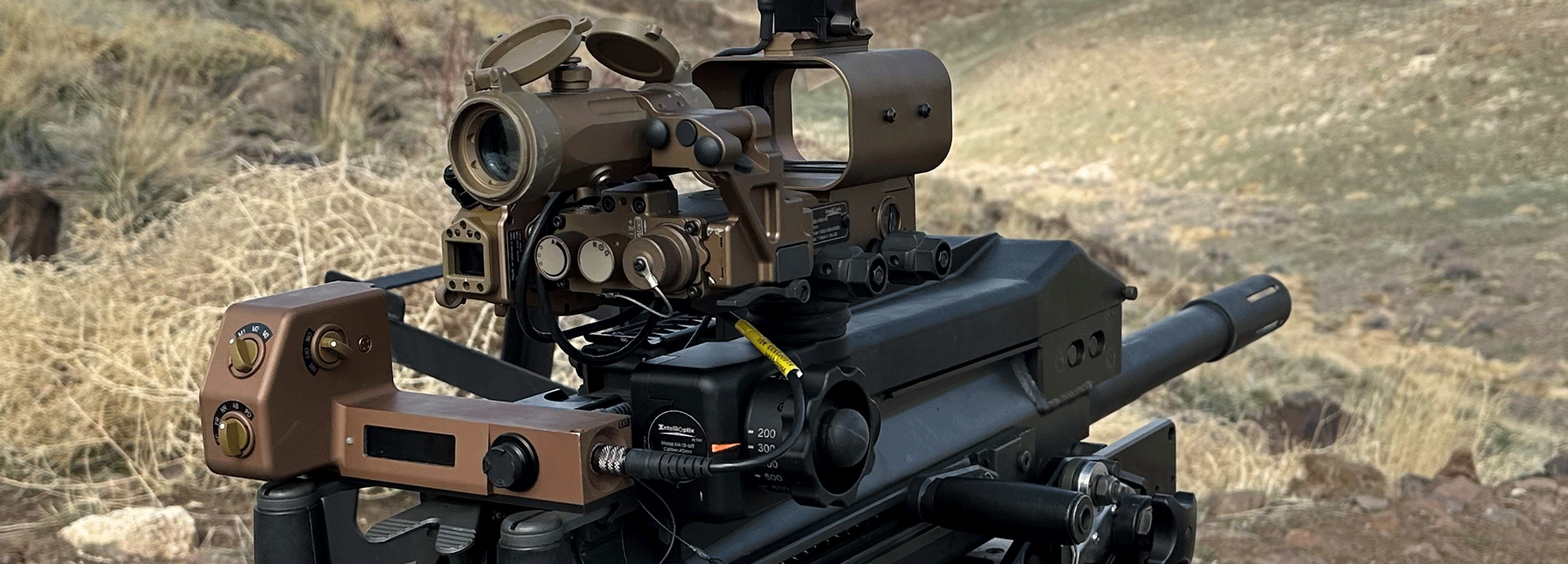
Northrop Grumman has installed a collaborative robot, or co-bot, on its CNI production line to assist technicians with the precise installation of bolts used to attach the module’s front housing. The company says the operation previously took hours and can now be completed in several minutes, freeing technicians for other production work.
The CNI system is one of Northrop Grumman’s principal contributions to the Lockheed Martin led F-35 programme. It combines communications, navigation, identification, and data link functions in an integrated avionics architecture, reducing the need for separate pieces of equipment and giving the aircraft a common system for several mission critical functions.
That makes production repeatability important well beyond the fastening operation itself. CNI modules have to meet mechanical tolerances, electrical performance requirements, environmental standards, and configuration controls before they reach aircraft integration. An inconsistent assembly step can increase inspection and rework even if the component remains technically repairable.
The co-bot is intended to work alongside technicians rather than replace the whole assembly process. It handles a repetitive, precision dependent fastening task while production staff monitor the operation and manage the surrounding build. Collaborative robotics can be useful in aerospace because volumes are lower and product access is more variable than in automotive factories, making narrowly targeted automation easier to justify than a fully fixed production line.
Northrop Grumman is applying a similar approach to inspection. The company says artificial intelligence based quality systems are being introduced to identify possible defects before completed modules leave the factory. The public material does not disclose the underlying inspection model or acceptance thresholds, so the significance lies in the process change rather than in a claimed autonomous quality decision.
Earlier detection can reduce the amount of work attached to a defect. A problem found immediately after assembly can be corrected before final test, packing, or shipment, while a fault identified later may require a completed module to re-enter the production process. Automated screening therefore has value if it shortens the feedback loop without creating a high level of false calls that technicians then have to investigate.
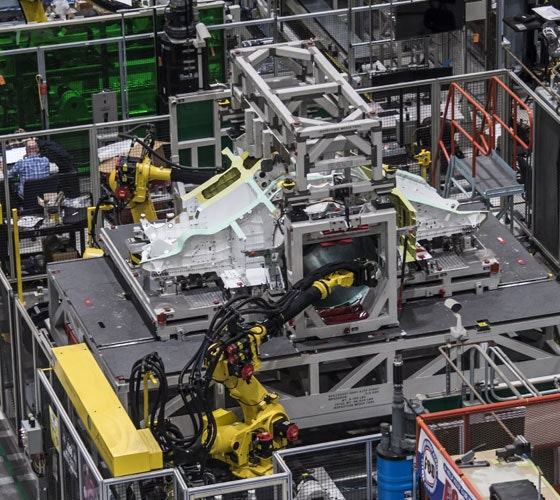
The avionics work sits alongside a much longer automation programme on the F-35 centre fuselage. At Northrop Grumman’s Aircraft Integration Center of Excellence in Palmdale, California, the Integrated Assembly Line contains more than 115 build stations and 22 automated systems. The company says the line now completes an F-35 centre fuselage every 30 hours while producing structures for all three aircraft variants.
Northrop Grumman developed that line by combining aerospace tooling knowledge with production methods drawn from the automotive sector. Automated equipment is used where repeatability and machine control bring a clear benefit, while technicians remain responsible for operations that require access, judgement, adjustment, and mixed model flexibility. The CNI co-bot follows the same logic on a smaller scale.
The company now supplies more than one major system for each aircraft. Alongside the centre fuselage and CNI suite, Northrop Grumman supports radar, low observable technology, sustainment, and other mission system work. Production changes therefore have to be introduced without destabilising deliveries into a programme serving US forces and a large international customer base.
Automation also shifts workforce requirements rather than eliminating them. A co-bot reduces technician time on one fastening task, but it creates demand for programming, maintenance, calibration, process engineering, and production data management. Artificial intelligence assisted inspection still requires engineering authority to decide whether a flagged anomaly is a defect, an acceptable variation, or a problem with the inspection process itself.
That distinction matters in military aerospace, where traceability and configuration control are part of the product. A faster operation is useful only if torque, sequence, tool condition, inspection evidence, and final acceptance remain controlled. The most valuable automation therefore tends to be the kind that removes repetitive touch time while generating better process data for the technicians and engineers responsible for the finished module.
Northrop Grumman’s latest changes are modest beside building an entirely new factory, but they target production stages that recur across every unit. Cutting hours from a repeated CNI assembly task can accumulate across a long aircraft programme, particularly when combined with earlier defect detection and a centre fuselage line already designed around repeatable automation.
The next measure will be whether the same approach can be extended without simply moving bottlenecks elsewhere. If collaborative robotics and automated inspection reduce touch time while preserving quality and traceability, their contribution will be less about replacing labour than allowing skilled staff to spend more time on integration, troubleshooting, and other work that remains difficult to automate.